
As a senior leader, I’ve been incredibly excited about AI and its ability to help our teams be better and more efficient at our work. As part of my efforts to implement AI, our team has AI goals for the year, and we talk in our staff meetings about AI successes and failures every week. Additionally, I am working to ensure our team has the tools they need and the culture is right for AI innovation (link to last week). However, as I think about our overall approach to AI, I have recognized a gap that may exist in many organizations. Middle managers play a significant role in the successful implementation of AI at our organizations, and they are often overlooked in AI conversations.
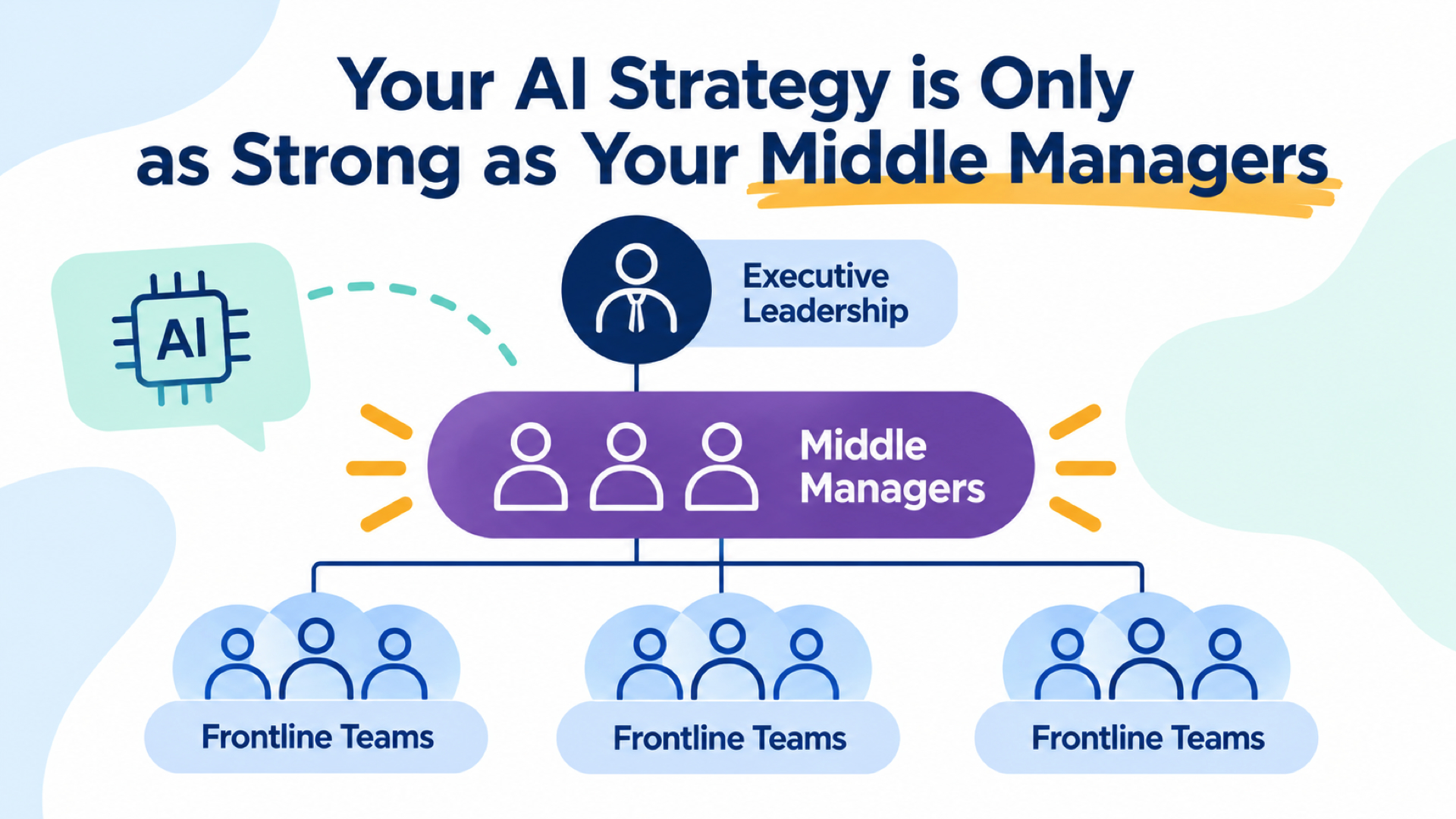
Middle managers are tasked with translating institutional and divisional priorities into daily tasks and objectives, which means they are the ones responsible for ensuring that the AI vision I set is implemented consistently. This also means they have the power to either expedite or slow AI progress. Because they oversee daily tasks, they can either prioritize or deprioritize AI in favor of other tasks. Additionally, middle managers are heavily involved in decisions about which AI tools are recommended for the team, meaning they directly impact the daily AI use on our teams.
Because of this, middle managers are a key audience that senior leaders should work with to ensure successful AI use and adoption. However, I feel too often we ask these team members to do this work without enough support and preparation.
Six Ways Leaders Can Support Middle Managers in AI Adoption
1. Empower Middle Managers – Give middle managers the flexibility to experiment without needing approval on every single idea. Too often, middle managers feel like they must be taskmasters and implement a task that’s been presented. Instead, we can empower middle managers by giving them guardrails (most likely around security and budget) and letting them explore how AI might be beneficial. The freedom to experiment is scary at first, but hearing they are trusted and their expertise is valued goes a long way in giving them confidence to lead in this work.
2. Encourage Big Thinking – Middle managers have a much better understanding of where things work and where things are broken in our offices because they see it every day. In implementing AI, the tendency is to use it to replace a part of an existing process. However, bigger gains can happen if we encourage middle managers to think more broadly about how AI could work. By encouraging them to tap into their expertise, they can help us figure out how to build even better systems using AI instead of just augmenting an existing process.
3. Invest in Their Leadership Development – AI professional development is often focused on the frontline employees who are building the tool. This is important but AI leaders also need additional support. Leading a team to implement an AI goal requires additional leadership development. Without training, skills like how to evaluate new products and how to determine new success metrics can be a challenge. Additionally, middle managers may need help managing employees who are at different levels of familiarity with AI. As senior leaders, we need to provide more opportunities for middle managers to develop these skills and become confident in leading AI initatives.
4. Give them a Seat – Find ways to get middle leaders engaged in AI conversations across the campus. Being able to hear how other departments are using the tools will give them valuable context. Additionally, learning about how the university is thinking about AI guiding principles and policies will help these leaders understand important institutional AI context. The context helps them become better leaders because they an understanding of where the university wants to go, and they aren’t hearing that information funneled through multiple people.
5. Make time for them – Leading this kind of work is hard work. There will be moments they need help thinking through a decision or how to implement an approach. As leaders, we are pulled in a myriad of different directions. However, we must prioritize pausing other work to help these leaders when they ask for it. Middle managers need to know they’re empowered, but they also need to know they’re not alone. If they’re wrestling with something, there is incredible value in knowing that we will take the time and work through it with them. That knowledge helps them be more open to big ideas because they know they’re supported.
6. Celebrate Success – As a leader, it is easy to focus on the next thing and forget to thank our people for their hard work. This is particularly true for middle leaders. We tend to focus our praise on the person who did the AI work and developed the tool. The leader who coached through the process and helped make it happen is much more likely to be overlooked. Finding a way to celebrate middle managers is important to give them the confidence to keep leading AI work on our teams.
Our AI strategy is only as strong as our middle managers leading this work. AI is one of the most fundamental shifts our industry has ever seen, and we are asking middle managers to do much of the heavy lifting to make it successful. If we want our AI goals and objectives to succeed, we need to empower and support our middle managers to do this work in a supportive and encouraging environment.

Carrie Phillips
Chief Communications & Marketing Officer at UA Little Rock
Dr. Carrie Phillips is the Chief Communications & Marketing Officer at UA Little Rock where she is charged with telling the university’s incredible story. She considers herself part creative and part analyst but fully curious to solve challenges in higher education. Carrie earned her doctorate from Texas Tech University where she studied how regional public universities are using marketing efforts to mitigate the enrollment cliff. Prior to joining UA Little Rock, she worked 14 years at Arkansas Tech University where she led a brand study, the first comprehensive brand campaign and oversaw collateral development for the current comprehensive campaign. Carrie is a member of the American Marketing Association and holds the Professional Certified Marketer credential. She is also chair-elect of the District IV Cabinet for CASE and a member of UCDA. Finally, she is a puppy mom to Eleanor Belle—a 10-pound maltipoo.