


About the Blog
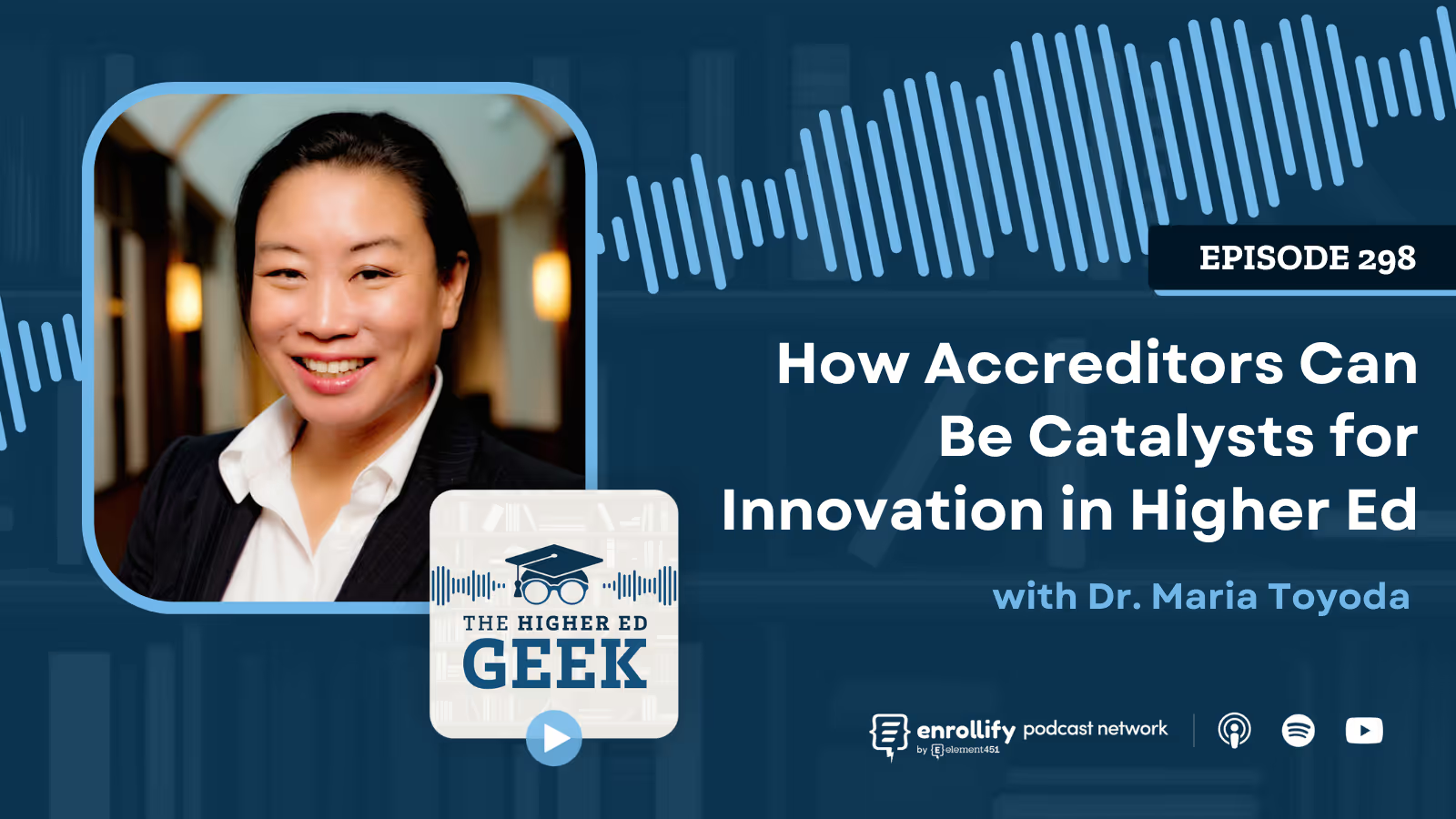
Episode 298 of The Higher Ed Geek Podcast takes on a subject that rarely gets the spotlight in higher ed circles: accreditation. While many of us think of accreditation as a bureaucratic box-checking exercise, Dr. Maria Toyoda—President and CEO of WASC—joined host Dustin Ramsdell to reveal a more dynamic, student-centered story.
Accreditation, she explained, is less about compliance and more about continuous improvement. In fact, when done well, accrediting agencies can serve as true partners for institutions navigating turbulence in policy, technology, and student needs.
Accreditation as Partnership, Not Policing
Dr. Toyoda began by dismantling one of the biggest myths about accrediting bodies—that they exist only to enforce compliance. While compliance is certainly part of the role, she emphasized that WASC (and other institutional accreditors) see their primary responsibility as helping colleges and universities define their missions and measure progress against them.
“Accreditation isn’t about swooping in, inspecting, and leaving,” she said. “It’s an ongoing conversation.”
That conversation centers on student success. Institutions are asked to deeply understand who their students are, where they come from, and what they need to thrive. Accrediting agencies, in turn, provide data, training, and support to help institutions continuously improve.
A Noisy Policy Environment
The timing of Dr. Toyoda’s new role at WASC coincides with a period of heightened scrutiny around accreditation. Executive orders, federal guidance, and high-profile lawsuits have created what she calls “a lot of noise, but not many clear signals.”
For example, one executive order pushed for institutions to analyze program-level data without reference to race or ethnicity, while another federal mandate soon after required collecting data with those markers. The back-and-forth has left many institutions confused about what’s expected.
Dr. Toyoda’s advice: don’t get distracted by the noise. Focus on the underlying values—accountability, transparency, and student return on investment. Accreditors and institutions alike should continue refining their practices while waiting for clearer federal direction.
The Changing Landscape of Accreditation
One of the more headline-grabbing shifts in recent years was the move away from regionally based accreditation. Since 2017, institutions have technically been able to choose their accreditor regardless of geography.
While this hasn’t triggered a mass migration yet, Dr. Toyoda believes competition among accreditors is ultimately healthy. “We welcome it,” she noted. “Competition makes us better. Innovation is good. A level playing field is good.”
Still, switching accreditors is far from simple. Institutions develop deep relationships with their agencies, and the work of reaffirmation requires significant time and resources. As a result, most schools will weigh the decision carefully, often aligning it with the natural cycle of accreditation reviews.
Students at the Center
For all the complexity of policy and process, Dr. Toyoda returned again and again to the north star of accreditation: students.
“Knowing who your students are is probably the most important thing for an institution,” she said. Accrediting agencies play a critical role in pushing colleges and universities to interrogate whether they’re truly student-centered. That means lowering barriers, measuring outcomes, and continuously adapting programs to meet evolving needs.
At WASC, this focus on students threads through every standard and review process. The ultimate test isn’t whether a document is filed or a checklist is completed—it’s whether students are succeeding.
Innovation and the AI Horizon
Looking to the future, Dr. Toyoda predicts that innovation—and particularly artificial intelligence—will reshape not only higher ed institutions but also accrediting agencies themselves.
WASC is already piloting AI tools to streamline back-office functions, and Dr. Toyoda sees vast potential for AI to transform teaching, learning, and even employment markets. The challenge, she noted, is for institutions and accreditors alike to remain agile in adapting to these changes.
“AI isn’t something we can deny or put off,” she said. “We all have to find our own way of being prepared for those changes.”
Advice for Driving Change
The episode closed with a piece of timeless advice from Dr. Toyoda for anyone working to drive change in education:
- Know your mission. Ensure your institution’s goals are clearly defined and aligned with the students you serve.
- Measure what matters. Build a relevant set of KPIs and track them scrupulously.
- Close the loop. Don’t just collect data—analyze it, act on it, and measure again.
- Pilot and innovate. Try new approaches, but anchor them in evidence and analytics.
Final Thoughts
This episode offered a rare window into accreditation as more than a regulatory burden. Through Dr. Toyoda’s lens, accreditation emerges as a powerful partner in accountability, innovation, and student success.
At a time when higher ed faces turbulence from shifting policies, financial pressures, and emerging technologies, her perspective is both grounding and energizing: accreditors are not here to police institutions, but to walk alongside them in building futures where students thrive.

.svg)
.svg)
