


About the Blog
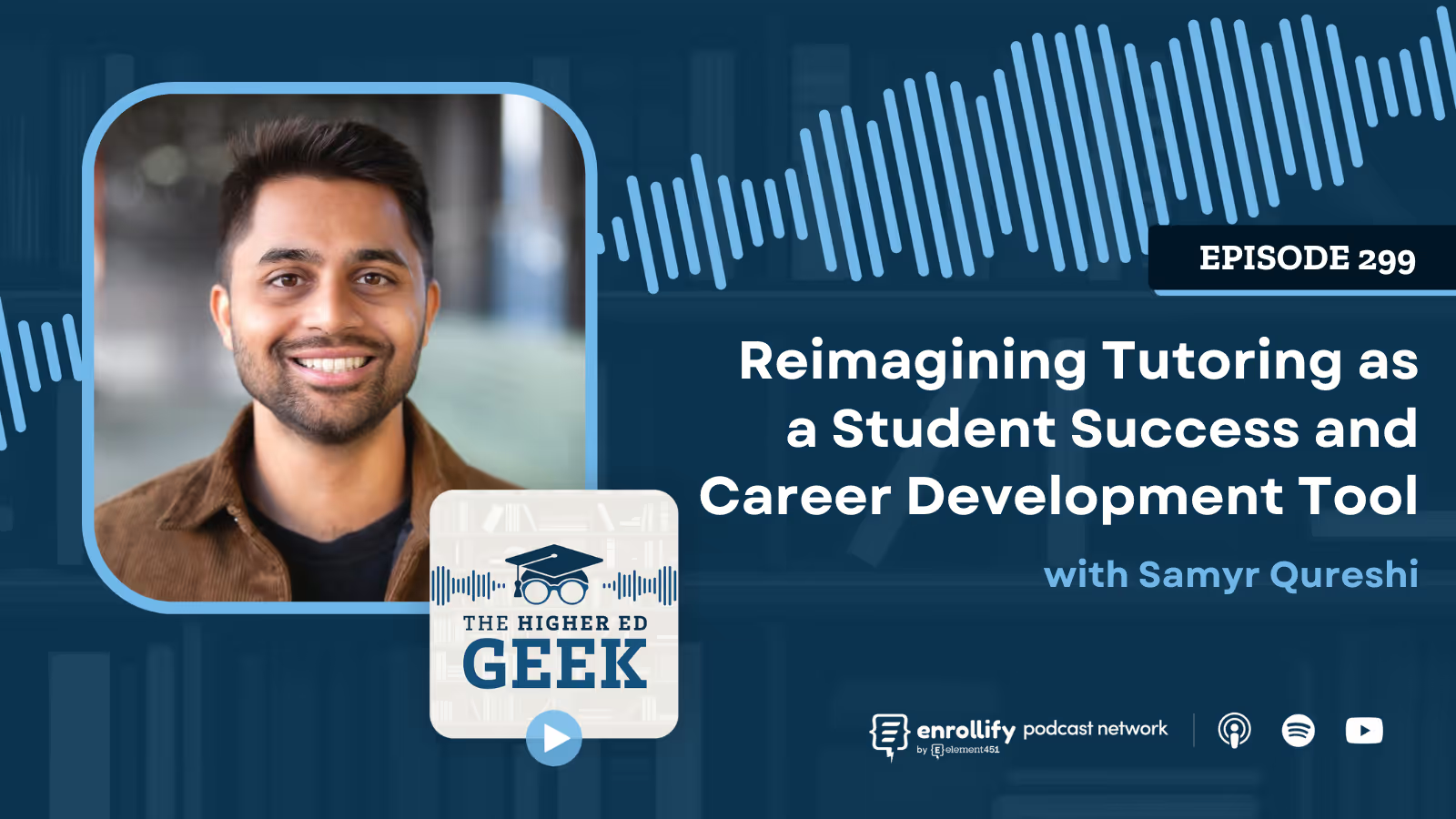
Peer tutoring isn’t new—but what if it could be reimagined to not only help students succeed academically but also prepare them for the workforce? That’s the vision Samyr Qureshi, co-founder and CEO of Knack, is bringing to life.
In episode 299 of The Higher Ed Geek Podcast, host Dustin Ramsdell welcomes Samyr back to the show to explore how Knack has grown since their last conversation in 2019. Together, they unpack how the platform is reshaping tutoring into a scalable, high-impact practice that benefits both learners and tutors.
Rethinking Tutoring Beyond the Center
Traditional tutoring centers have long been a staple of student success strategies, but they’re costly and often limited in scope. Institutions staff them to cover the toughest courses, but gaps remain—especially for students who need support at odd hours or in niche subjects.
Knack flips this model by enabling colleges and universities to tap into their own top-performing students as peer tutors. Using an Uber-like platform, institutions can scale support in a cost-effective way while creating meaningful campus employment opportunities.
From Student Support to Career Development
What makes Knack truly stand out is its dual mission:
- For tutees: More accessible, equitable, and personalized learning support.
- For tutors: A transformative employment opportunity that builds durable skills like communication, patience, and leadership.
As Samyr notes, “We pitch it as the best job on campus—not just because it pays more than dining hall work, but because it develops transferable skills students can take into interviews and careers.”
Through structured reflections and pathways, Knack helps student tutors translate their experiences into professional stories they can share with employers. It’s tutoring as both academic support and career development.
Proving Impact With Data
Since 2019, Knack has partnered with nearly 100 campuses—from flagship R1s to regional universities and community colleges. With the help of leaders like Dr. George Kuh, founder of the High-Impact Practices (HIP) framework, Knack has been able to show measurable retention gains for institutions like the University of Florida, University of New Hampshire, and Hampton University.
Backed by $20 million in venture capital and recognition such as the Lumina Prize, Knack is demonstrating that peer tutoring can and should be considered a high-impact practice in higher education.
The Role of AI and What’s Next
While some speculate AI might replace tutors altogether, Samyr argues the opposite: AI should augment human tutoring, not replace it. Imagine a tutor entering a session with visibility into a student’s AI-generated transcript of struggles, then using that data to guide more empathetic, effective coaching.
Looking ahead, Knack is:
- Integrating with platforms like EAB to give institutions a unified view of student service usage and outcomes.
- Expanding partnerships across systems, enabling community college students to connect with tutors at four-year institutions.
- Exploring downstream pathways, potentially connecting high school students to college tutors to support recruitment and transfer pipelines【user transcript】.
A Call for Culture Change in Higher Ed
In closing, Samyr reflects on the need for higher ed leaders to embrace risk and innovation. Too often, change gets stalled by committees and task forces while students miss out on timely support. His advice: create cultures where trying, failing, and iterating are not only safe but rewarded.
As Dustin notes, Knack’s work shows how innovation doesn’t have to be flashy—it can be deeply human, rooted in relationships, and designed to scale what already works.
Key Takeaways from the Episode
- Tutoring as a high-impact practice: Knack makes peer-to-peer support scalable, accessible, and mission-aligned.
- Dual benefit model: Tutors gain transferable skills and career readiness while tutees receive personalized support.
- AI as an enhancer, not a replacement: Technology can make human tutoring smarter, not obsolete.
- System-level innovation: Partnerships between two-year and four-year schools can create seamless learning and enrollment pathways.
- Leadership matters: Change requires a culture that rewards risk-taking and innovation.


.svg)
.svg)
