


About the Blog
The MBA has long been higher ed’s gold standard — a ticket to elite networks, leadership roles, and higher salaries. But as today’s professionals weigh cost, time, and career outcomes more critically than ever, business schools are being forced to answer a harder question: What is an MBA actually worth in 2025?
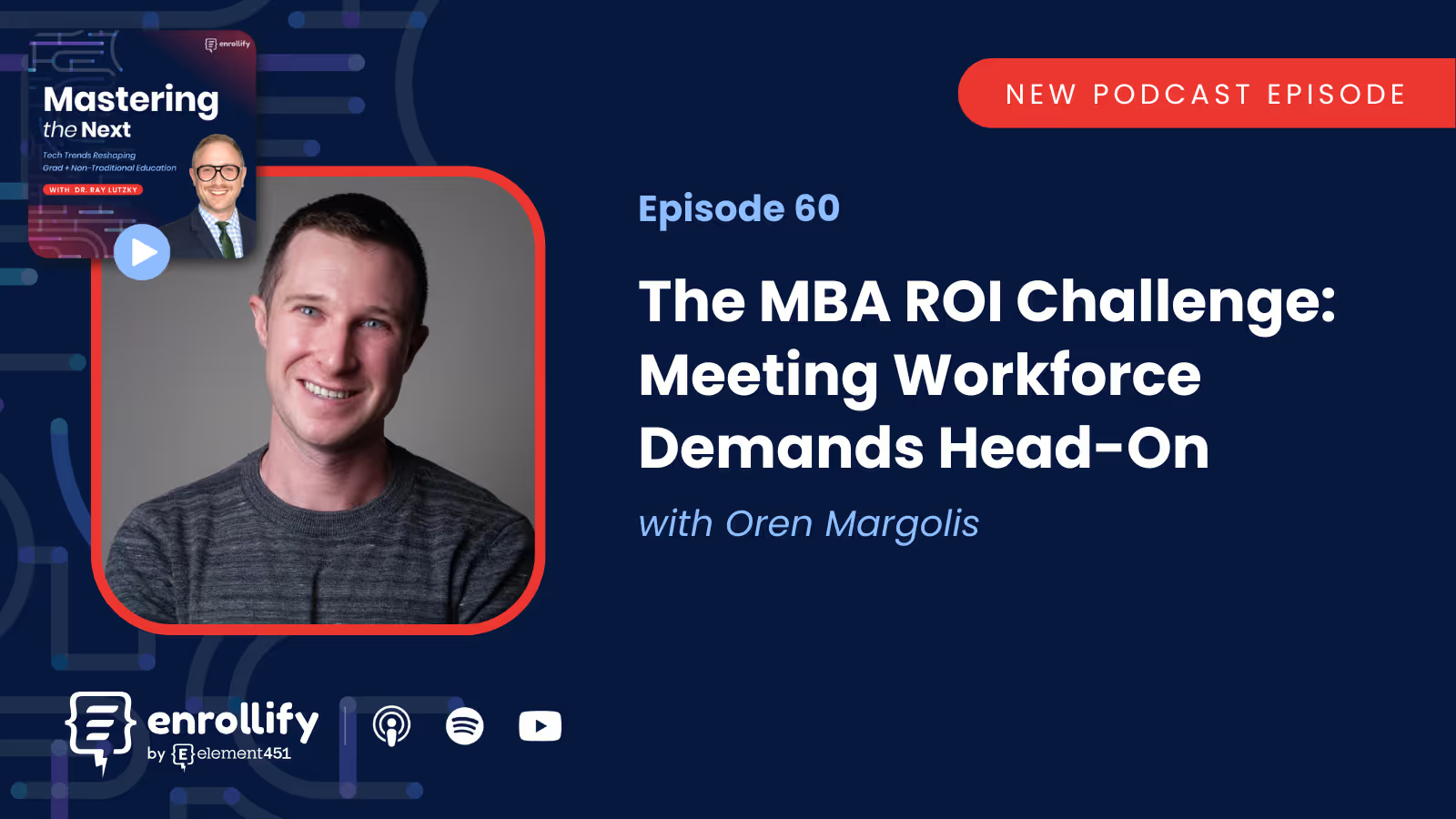
In the latest episode of Mastering the Next, host Dr. Ray Lutzky sits down with Oren Margolis, MBA admissions consultant, leadership coach, and former NYU Stern admissions leader, to explore how MBA programs are adapting (or not) to shifting market demands and changing student expectations.
Beyond the Buzzwords: Flexibility and Familiarity
Oren notes that while today’s MBA formats — from hybrid degrees to accelerated one-year programs — look innovative, the underlying motivations aren’t new. “There have always been questions about the value of an MBA,” he says. “What’s changed is how students define ROI and the tools schools have to meet them there.”
With more learners accustomed to digital environments, the appeal of hybrid and online options has grown. These programs promise flexibility for working professionals and access for students who might not live near elite institutions. Yet, the core promise of the MBA — career advancement, network building, and leadership development — remains the same.
The ROI Reckoning
For decades, MBA marketing revolved around salary outcomes: earn X% more after graduation. But as Oren argues, this short-term view of ROI no longer fits today’s unpredictable job market.
“Most MBA seekers think about ROI in a two-year window — what’s my salary now, and what will it be after? But that’s shortsighted. The real return comes in the 5, 10, or 20-year trajectory.”
Oren encourages both students and institutions to widen the lens — to view the MBA not just as an income multiplier, but as an accelerant for long-term career adaptability, resilience, and leadership capacity.
Leadership as the New Currency
One of the most practical — yet often underestimated — benefits of an MBA, Oren argues, lies in structured leadership training.
“There are a lot of people in leadership positions who’ve never really learned what good leadership looks like. MBA programs, at their best, provide that foundation.”
Courses in organizational behavior, business ethics, and strategy — once dismissed as academic formalities — have become crucial in shaping emotionally intelligent, systems-oriented leaders who can navigate ambiguity. That’s something short courses and online certificates still struggle to replicate.
Pedigree vs. Practicality
While elite programs like Wharton, Harvard, and Stern carry undeniable brand value, Oren believes the “pedigree premium” shouldn’t overshadow the real differentiator: skill development.
“Pedigree isn’t the only long-term accelerator. Many mid-tier programs offer exceptional grounding in the skills employers actually need — if they can clearly articulate that value.”
For schools without a century-old brand, the challenge is to shift messaging away from prestige and toward outcomes that emphasize growth, leadership, and real-world performance.
The New MBA Equation
As micro-credentials, certificates, and AI-driven learning options flood the market, students must ask harder questions before applying:
- Why am I pursuing this degree?
- What am I actually solving for — skills, network, or career transition?
- Does this format align with my lifestyle and long-term goals?
- How credible are the program’s career promises?
“It’s shocking how many people know they want an MBA but not why,” Oren says. “Understanding your ‘why’ — and your risk tolerance — is the first step to making a sound investment.”
The Future of the MBA
As Dr. Lutzky reflects in the episode’s close, the MBA isn’t dying — it’s evolving. The programs that will thrive are those that redefine their worth not just through financial metrics, but through transformation: how they teach students to think, adapt, and lead in complex systems.
“The question isn’t whether the MBA has a future,” he concludes. “It’s whether business schools can reimagine it quickly enough to stay relevant.”


.svg)
.svg)
