


About the Blog
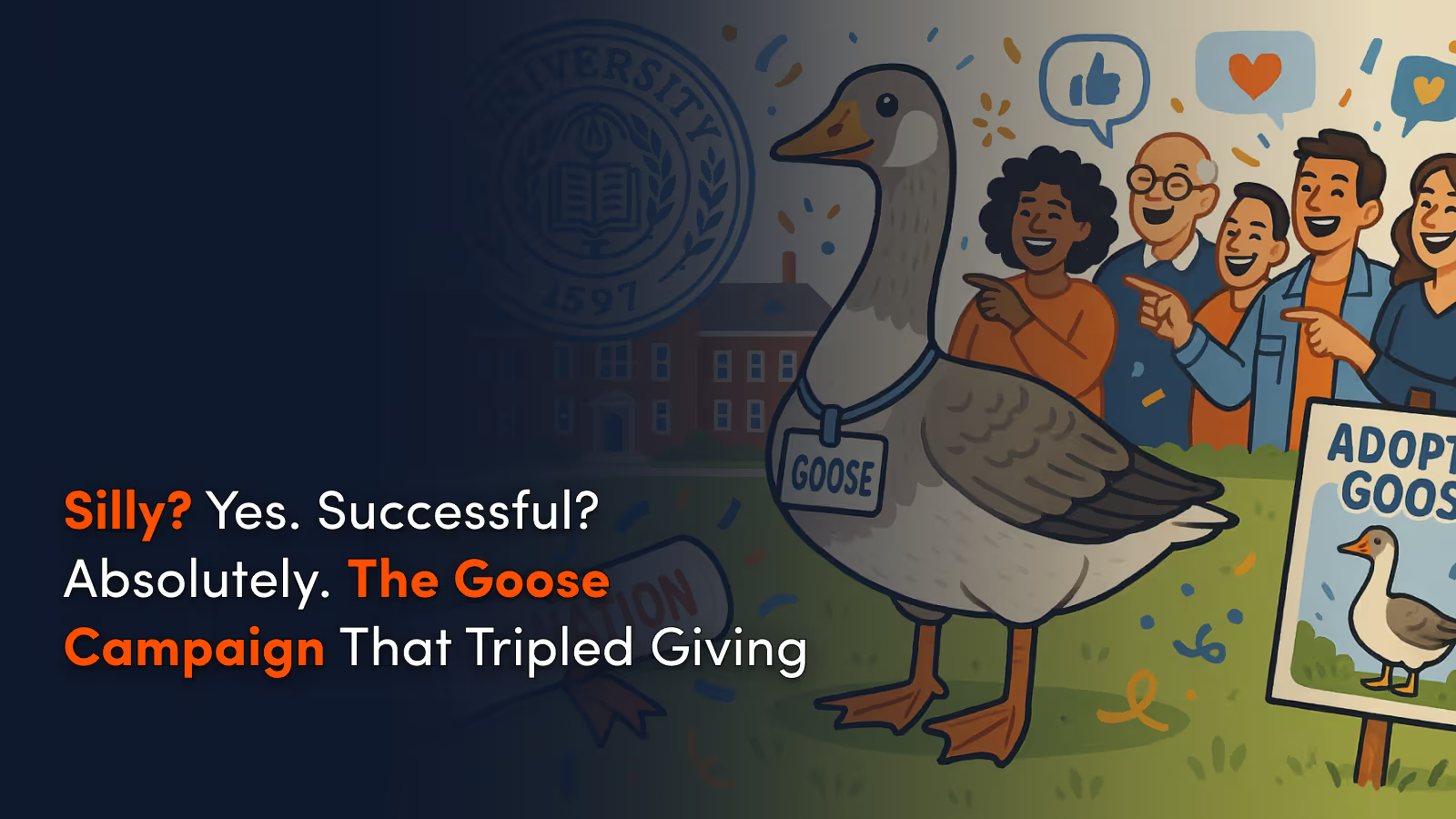
In this episode of Talking Tactics, host Day sits down with Stormie Harless and Reggie Hayes of Ball State University to unpack one of the most unconventional (and successful) Giving Day strategies we’ve seen: letting donors name a goose. That’s right—by offering donors the chance to christen one of the university’s infamous campus geese, Ball State more than tripled donations to its unrestricted fund. The episode explores how humor, personalization, and strategic planning turned a quirky idea into a powerful fundraising win. If you're searching for fresh fundraising inspiration, you won’t want to miss this.
Key Takeaways
- Tripled Unrestricted Fund Gifts: Donations to the Ball State Fund surged from 145 to over 500 thanks to the goose-naming campaign.
- Inspired by a Peer Institution: The idea was sparked by Ohio University’s squirrel-naming initiative, showing how shared creativity drives innovation in higher ed.
- Low-Cost, High-Impact: Canva templates and email automations—no big budget, just a dedicated team and clever strategy.
- Behavioral Psychology at Work: Giving donors the chance to name a goose created emotional buy-in and instant gratification.
- Pre-Campaign Content Made a Difference: A spoof video featuring real geese, sentimental music, and dry humor set the tone and helped the campaign go viral.
- Perfect for Engaging Young Alumni: The playful tone and shareable content struck a chord with younger donors.
- Time-Intensive but Worth It: Each certificate took 6–8 minutes to create, but the resulting engagement made it more than worthwhile.
Everything You Need to Know About Tripling Unrestricted Giving with a Goose-Naming Campaign
What challenge was Ball State trying to solve?
Like many institutions, Ball State was facing a common but stubborn hurdle: getting donors to give to the unrestricted fund. These funds are critical for addressing institutional priorities, but they’re often overlooked because they lack emotional pull. Despite strong overall participation on “One Ball State Day,” unrestricted giving consistently lagged. The team needed something to breathe new life into this giving category.
So, how do you get donors to care about a line item that sounds as exciting as a blank check? The team turned to creativity and behavioral psychology. They needed to give donors an emotional reason to connect to an otherwise vague initiative—and naming a goose, it turns out, was the answer. The result? They found a way to bridge logic and emotion in a way that got results.
This campaign wasn't just about laughs—it was about transforming how people think about giving. It proved that if you can connect donors to a tangible (or even feathery) outcome, you can drive action for even the most overlooked funds.
Where did the goose-naming idea come from?
Inspiration often starts with a little healthy envy. Reggie Hayes saw Ohio University’s squirrel-naming campaign and had a lightbulb moment. Ball State had something even more iconic—campus geese. Known for their grumpy personalities and territorial nature, these birds were already campus legends. Why not use them as the hook?
Reggie and Stormie pitched the idea internally and quickly gained traction. The quirkiness of naming a goose was too good to pass up. Plus, Ball State's founding year (1918) gave them the perfect donation ask: $19.18 to name a goose and support the unrestricted fund. It was meaningful, playful, and just the right level of weird.
What made the idea click was its relatability. Everyone at Ball State has a goose story. By anchoring the campaign to a shared (if mildly traumatic) experience, the team created a giving moment that felt personal, and that’s what fundraising is all about.
How did they bring the campaign to life?
Execution was scrappy, strategic, and absolutely delightful. Stormie and Reggie assembled a small “Goose Team” to bring the vision to life. Canva was their best friend—they used it to design hundreds of unique goose-naming certificates. Each donor who gave $19.18 or more received a personalized PDF with their goose’s new name and a seal of approval.
On the backend, they worked with their Giving Day platform provider to add a field where donors could submit their goose's name. This meant tracking names, managing submissions, and keeping the process as seamless as possible for donors. Still, the work was largely manual, with each certificate taking 6–8 minutes to complete.
Despite the time commitment, the payoff was huge. The certificates became social currency—donors posted them online, shared names with friends, and started a buzz that extended well beyond the campaign itself. It was labor-intensive, but the virality and engagement made it worth every minute.
How was the campaign promoted?
Two weeks before Giving Day, Ball State dropped a Sarah McLachlan-inspired video that would set the tone. It was melodramatic, tongue-in-cheek, and featured slow-motion footage of real campus geese. The voiceover pleaded for help in finding “forever names” for these misunderstood creatures. The result? Comic gold—and serious engagement.
The video was pushed across all major social platforms: Facebook, Instagram, LinkedIn, and Twitter. The intentionally over-the-top tone grabbed attention and sparked conversation. Alumni, especially younger ones, loved it. It felt different from the usual Giving Day fare, and that difference made it stand out.
By leading with humor and heart, Ball State tapped into something powerful: people want to give to campaigns that make them feel something. Whether that’s laughter, nostalgia, or campus pride, this campaign harnessed it all.
What results did they see?
The numbers are eye-popping. Gifts to the unrestricted fund jumped from 145 to over 500. More than 330 geese were named in the first year, turning what’s usually a tough sell into one of the most popular giving options. Even in the second year—with less novelty—the campaign continued to perform well.
Equally important was who gave. The goose campaign resonated with younger donors, a demographic notoriously difficult to engage in higher ed fundraising. Many of them were first-time donors or lapsed alumni who were reactivated by the campaign. The certificates gave them something to share, talk about, and feel proud of.
The effort also sparked internal excitement. Staff rallied around the Goose Team, and the campaign created a contagious energy on campus. That momentum alone helped amplify results across the board.
What were the biggest challenges?
The campaign wasn’t without hurdles. First, it was time-consuming. Each certificate was made manually in Canva and individually emailed to the donor. That process doesn’t scale easily, but it can be improved with automation or clearer segmentation.
There was also some confusion. The goose-naming field appeared on all donation pages, even if donors weren’t giving to the right fund. Some people expected a certificate regardless, which created follow-up headaches. In the future, the team plans to refine instructions and clarify eligibility.
Despite these issues, the pros far outweighed the cons. The buzz, social sharing, and meaningful engagement all justified the manual work. And the team came away with a refined playbook for future iterations.
Can this work at other institutions?
100% yes. Reggie and Stormie made it clear: this campaign wasn’t about fancy tools or big budgets—it was about being bold, creative, and a little silly. Every campus has its version of a “goose.” It might be a mascot, a quirky building, or an inside joke. The key is making it personal and shareable.
This is a plug-and-play model. Use Canva. Tap into humor. Offer naming rights, custom certificates, or digital rewards. The beauty of this approach is its flexibility—it can be adapted to your audience, brand, and goals. Just make sure your team is ready to lean in and have fun.
This kind of campaign also aligns perfectly with the psychology of giving. When donors feel a personal connection to their gift, they’re more likely to give—and to share. That’s how you move beyond the transaction and into transformation.
Want to hear the full behind-the-scenes story of Ball State’s goose-naming campaign? Tune in. Get inspired, get creative, and maybe even start brainstorming what (or who) your campus community might want to name next.
Listen now on Enrollify, and check out more higher education podcasts for fresh strategies and bold ideas.


.svg)
.svg)
