


About the Blog
Search Is Changing — And Higher Ed Needs to Catch Up
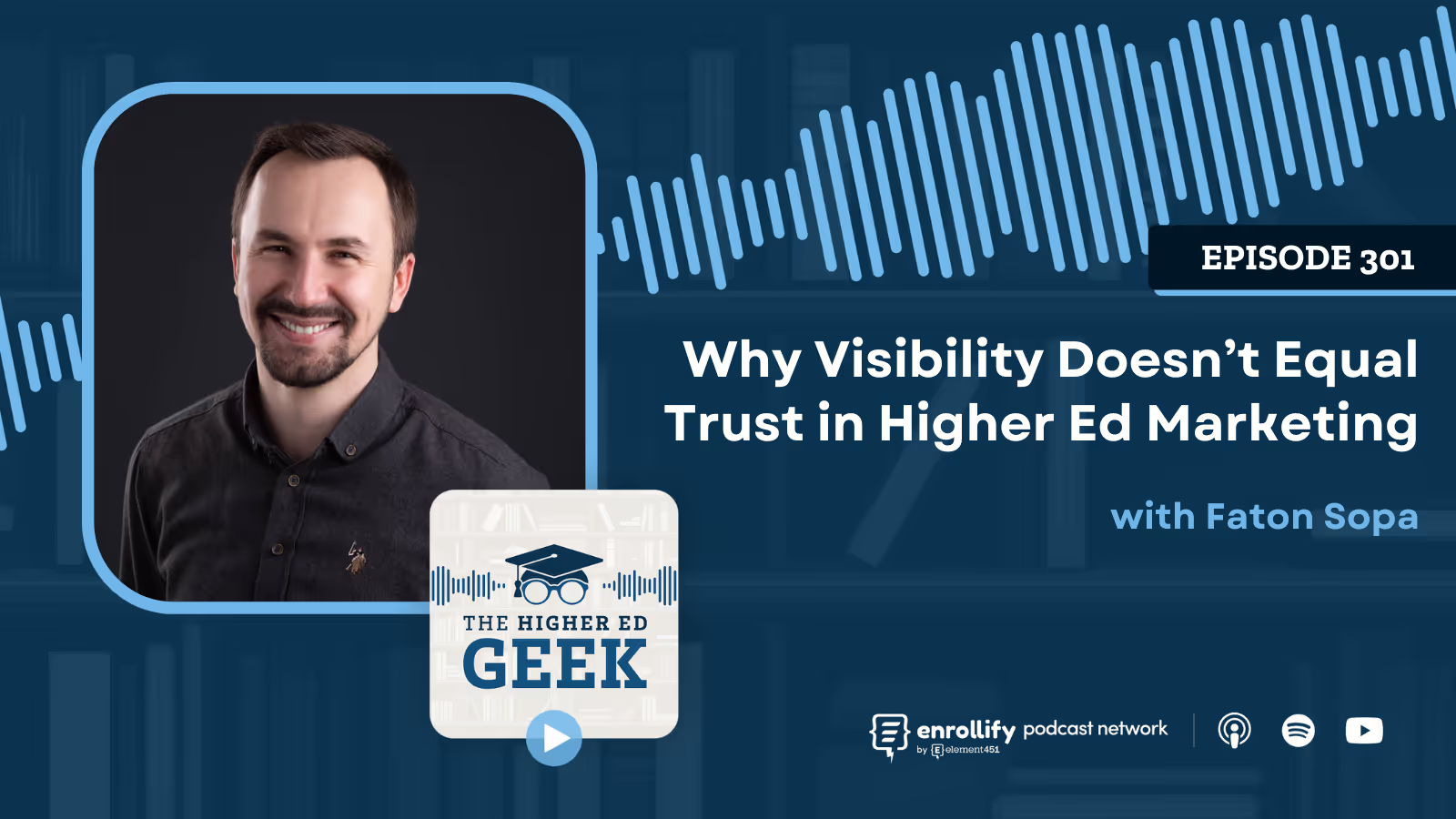
For years, colleges and universities have relied on Google rankings and keyword strategies to attract prospective students. But according to Faton Sopa, co-founder of Manaferra, that playbook is officially outdated.
In episode 301 of The Higher Ed Geek Podcast, host Dustin Ramsdell sits down with Sopa to discuss The State of Student Search — a sweeping new study by Manaferra that explores how today’s undergraduates, graduates, and adult learners search for, validate, and ultimately choose their college.
Their findings are a wake-up call for enrollment and marketing leaders everywhere: the student journey has splintered across platforms, generations, and technologies — and the old “keyword-first” mindset no longer works.
From SEO to Omnichannel
Sopa explains that the research began when his team realized that most institutions were pouring time and budget into SEO strategies that no longer moved the enrollment needle.
“We saw schools investing heavily in a single channel — Google Ads, social, or SEO — while ignoring how students actually behave today,” he says. “So we wanted to understand how they search and where they make decisions.”
Manaferra surveyed 1,500 enrolled students across the U.S., spanning undergraduate, graduate, and adult learner populations. The team then paired those insights with third-party search data to map out the full “search-to-decision” journey.
What they found confirmed a major shift: today’s students don’t just use Google. They toggle constantly between search engines, social media, Reddit, AI tools, and institutional websites — often within minutes.
Key Finding #1: 80% of Students Switch Platforms During Their Search
One of the most striking takeaways: four out of five students change platforms mid-search, and not because of budget or access issues — but because of trust and authenticity.
“Students said they switched platforms because they couldn’t find enough information or wanted something more human,” Sopa explains.
That means the fix isn’t necessarily more advertising — it’s better content. Institutions that show up consistently across platforms with transparent, human-centered messaging have a far better chance of being found and chosen.
Key Finding #2: Adult Learners Are Driving AI Adoption
Another insight that surprised Sopa’s team: adult learners are using AI tools like ChatGPT and Gemini at nearly double the rate of undergraduate students.
“More than three in ten adult learners said they used AI to ask about programs, admissions, and rankings — and many found the answers more helpful than official college websites,” Sopa notes.
That’s a seismic change. Because AI doesn’t have a second page of results, institutions that fail to optimize for AI-driven discovery risk disappearing entirely from the student journey.
“If you’re not part of that AI-generated answer, you basically don’t exist in that moment,” says Sopa.
Key Finding #3: Social Media Is No Longer Just “Top of Funnel”
Another myth the research shattered: social media isn’t just for awareness anymore.
Students are revisiting platforms like TikTok, YouTube, and Instagram after they’ve built their shortlists — using them as a gut check before committing.
“They’re looking for ‘Day in the Life’ videos, real student experiences, and signals of belonging,” Sopa says. “A single authentic clip can outweigh a whole section of your website.”
This makes authenticity and student-generated content not just nice-to-haves, but vital decision-stage assets.
From Channels to Journeys
Sopa hopes this research helps institutions shift from a channel-based mindset (“We need more TikTok posts”) to a student-journey mindset (“Where and when are students asking questions — and do we answer them there?”).
“Students don’t care about channels,” he says. “They care about getting their questions answered: What can I do with this degree? Can I afford it? Will I belong here?”
He encourages marketers to map those questions across each stage of the funnel — awareness, shortlisting, and decision — and audit whether their institution is visible and clear in each moment.
A Playbook for the Future
So what’s next for higher ed marketing in this omnichannel, AI-driven era?
- Audit Your Visibility — Where do you actually show up when students search across Google, YouTube, Reddit, and AI tools?
- Create for Clarity — Replace jargon with real answers to real questions.
- Humanize Your Content — Authentic stories and social proof now carry more weight than polished marketing pages.
- Think “Prompt,” Not “Keyword” — As search moves from queries to conversations, institutions need to optimize for how students ask, not just what they type.
- Use Data to Convince Leadership — Sopa encourages marketers to use the report as a boardroom tool: “Here’s the data showing why we need to invest differently.”
Why It Matters
As Ramsdell concludes, “It’s not going to get less competitive to recruit students. Research like this helps institutions make smarter investments — based on evidence, not assumptions.”
In an era where friction costs conversions and attention spans are fleeting, the message is clear: if you’re not visible, authentic, and helpful across every platform — including AI — you’re invisible.

.svg)
.svg)
