


About the Blog
When one in three students on your campus is an athlete, athletics isn’t just a department — it’s an enrollment engine. But at many small and mid-sized private institutions, athletics and admissions still operate in silos, leading to mixed messages, duplicated outreach, and missed opportunities to connect with prospective students.
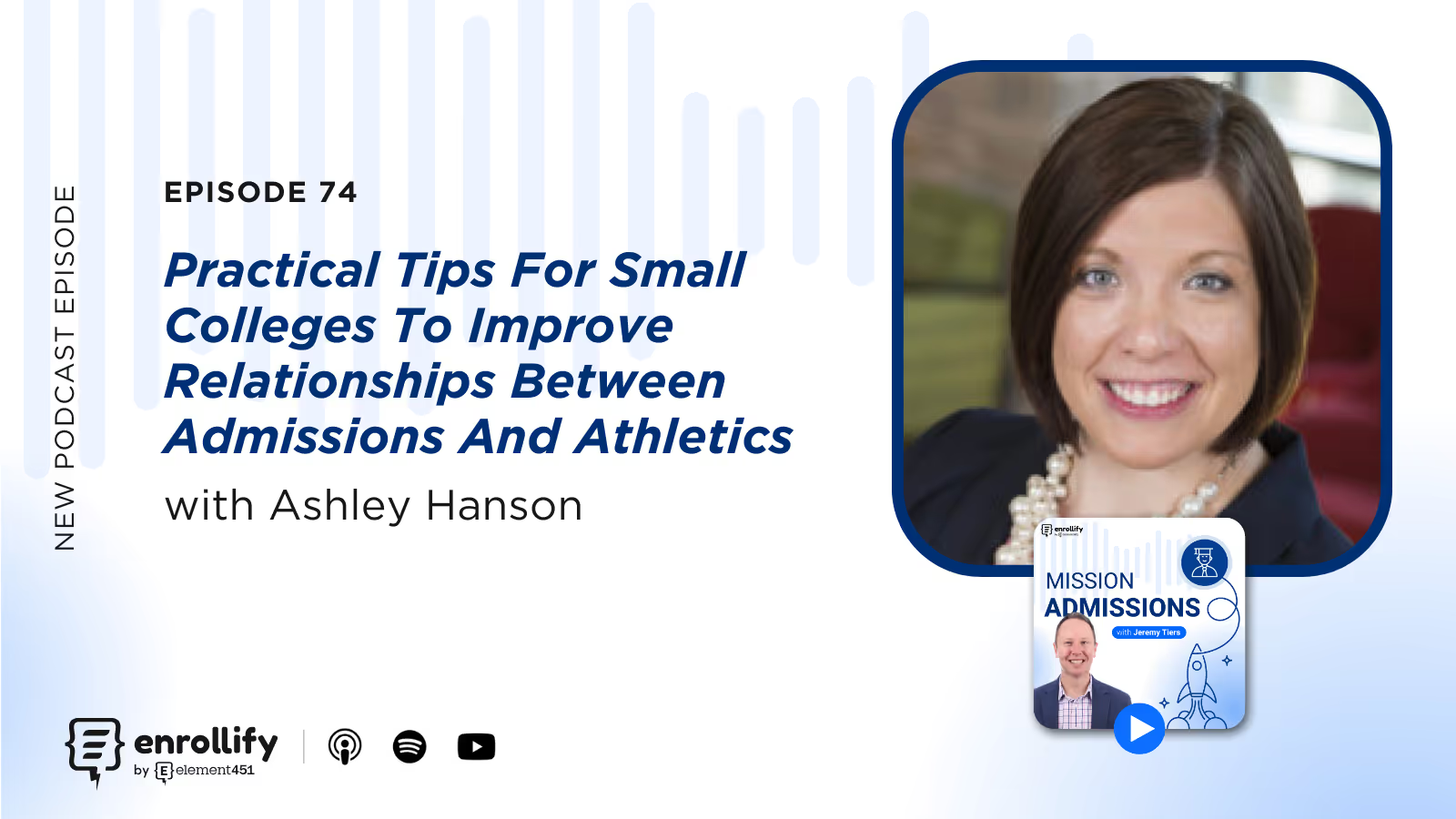
On this episode of Mission Admissions, host Jeremy Tiers sits down with Ashley Hanson, Vice President for Enrollment and Marketing at Carthage College, to unpack how her team broke down those barriers — and how collaboration between athletics and admissions has fueled a 9% increase in overall enrollment in just six years.
The Power of Alignment: One Goal, One Team
Hanson credits Carthage’s success to a campus-wide culture of shared goals and transparency. Every week, both athletics and admissions share reports with campus stakeholders — not just coaches, but faculty, department heads, and even the visual and performing arts programs.
“We’re all working toward the same recruitment goals,” Hanson explains. “It’s not athletics doing their thing in a silo. It’s everyone, across campus, focused on bringing in students who fit and will thrive.”
That alignment extends all the way up to Carthage’s athletic director, Ryan Kain, who meets with Hanson regularly — sometimes daily — to align strategies and set team-specific recruitment goals. Coaches aren’t just filling rosters; they’re helping the college reach its broader enrollment targets.
Tech That Talks (and Teams That Listen)
Carthage’s collaboration is powered by smart systems and seamless data sharing. The college uses Slate as its admissions CRM and ARi for athletic recruiting — two systems fully integrated to keep communication and reporting consistent.
“When a coach enters a recruit into ARi, it’s automatically fed into our admissions funnel,” Hanson says. “That student instantly joins our communication plan. Coaches don’t need to send scholarship reminders or follow-up emails — we handle that.”
This two-way data flow eliminates duplication and ensures that every prospective student-athlete receives the same consistent, personalized communication throughout the recruitment process.
Reimagining the Campus Visit
Hanson also redefined how Carthage manages student-athlete visits — one of the most complex parts of the recruiting process.
Rather than enforcing a one-size-fits-all policy, Hanson meets one-on-one with each new coach to co-design their visit flow. Some prefer to lead the entire experience themselves; others lean on admissions for tours, financial aid conversations, or next-step counseling.
“Giving coaches a choice builds trust,” Hanson says. “It’s not about taking control away — it’s about creating a partnership where everyone knows their role in delivering a great experience.”
Admissions staff even train current student-athletes who lead tours for recruits, ensuring they highlight the right mix of academic, social, and athletic touchpoints.
Building Respect Through Longevity
Carthage’s admissions team operates differently from most small colleges — intentionally so. Hanson credits much of their success to a stable, seasoned staff.
Instead of hiring only recent graduates, Carthage recruits professionals with 6–24 years of experience, creating a team that coaches trust to handle sensitive conversations about scholarships, timelines, and outcomes.
“That longevity builds credibility,” Hanson says. “Coaches know when they call, they’re getting someone who understands both recruitment strategy and the student experience.”
Beyond Athletics: Meeting Students Where They Are
While athletics plays a major role in enrollment, Carthage hasn’t lost sight of non-athlete recruitment. The college’s Aspire Center, launched five years ago, embeds career and internship planning from day one. Students are matched with a career specialist before they even enroll — a differentiator that has helped Carthage grow total applications to 11,000+ last year.
“Students today are thinking about outcomes before they even apply,” Hanson notes. “Aspire helps us show them exactly what that journey looks like — and that makes a huge difference.”
Takeaway for Enrollment Leaders
For Hanson, collaboration starts with conversation — and curiosity.
“If you don’t have a great relationship with athletics, start by asking questions,” she says. “How do they recruit? What tools do they use? How can you make their job easier? And go to their games! Show up. Relationships grow from shared experiences.”
Her biggest advice? Stop chasing “best practices” that don’t fit your institutional context. What works for your peers may not work for you — and that’s okay. The best practice is the one that works on your campus.
🎧 Listen to the Full Episode
Hear the full conversation between Jeremy and Ashley on Mission Admissions, Episode 74 — available now on the Enrollify Podcast Network.


.svg)
.svg)
