


About the Blog
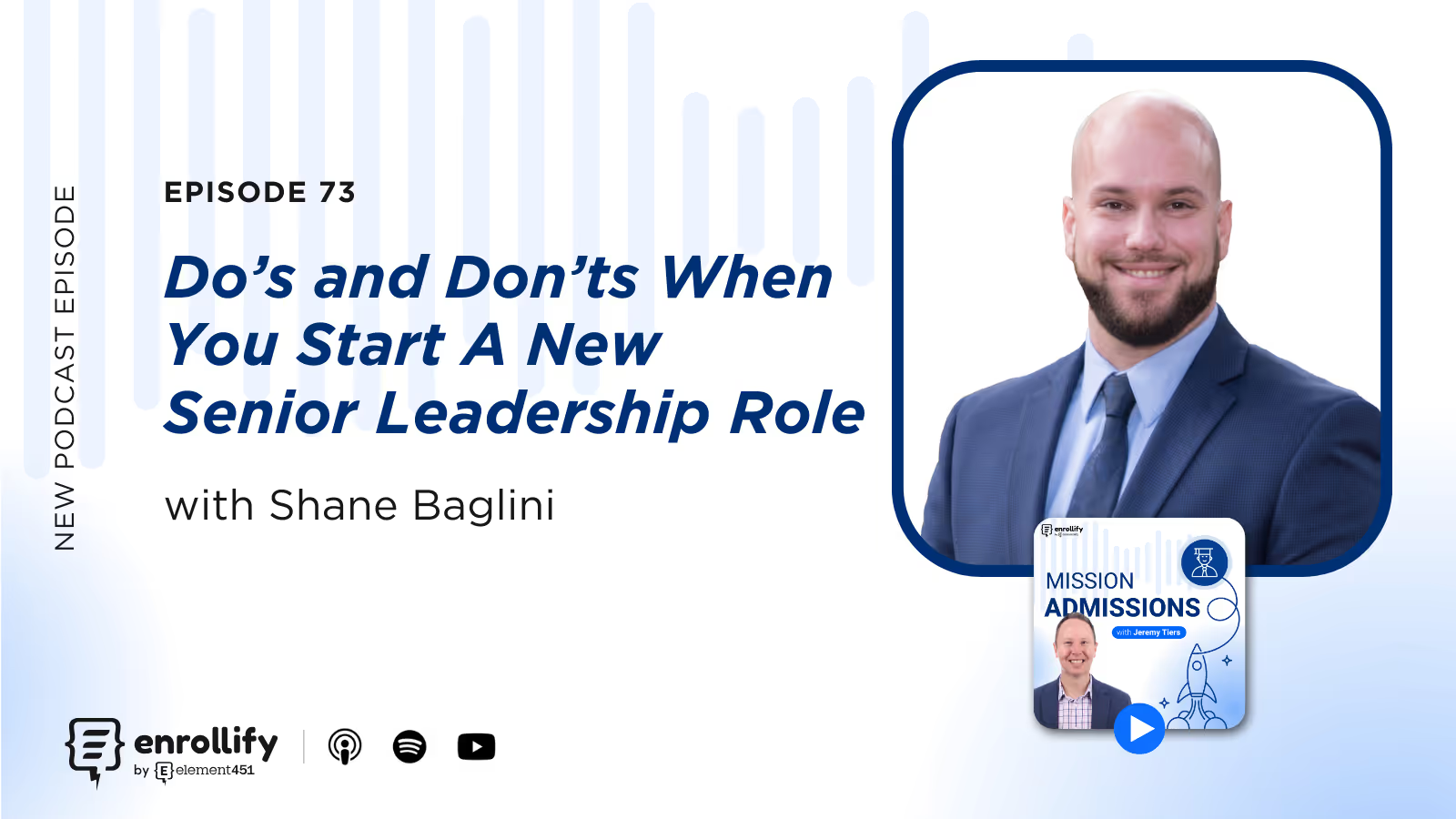
Starting a new leadership role in higher education isn’t just about learning systems or mastering processes—it’s about learning people. In episode 73 of Mission Admissions, host Jeremy Tiers sits down with Shane Baglini, Executive Director of Marketing and Communications at William & Mary, to unpack what it really looks like to step into a senior role with confidence, humility, and a plan.
From Muhlenberg to William & Mary: Knowing When It’s Time to Move
Before taking the leap to William & Mary, Baglini was thriving at Muhlenberg College. But like many professionals at smaller, tuition-dependent institutions, he found the lack of upward mobility and constant cycle of enrollment pressure difficult to sustain long-term. When the opportunity arose at William & Mary, it just felt right.
Even though the move meant uprooting his young family, Baglini and his wife prioritized stability—both in the institution and in the role. William & Mary’s 333-year legacy and long-tenured staff offered that reassurance. “You don’t stay somewhere for 15 years unless it’s a place that treats people the right way,” he said.
Relationship Building as the First Order of Business
Baglini’s first 90 to 120 days were what he called a “road show.” He met with departments, schools, and campus units to introduce himself, learn their stories, and listen more than he spoke. About 70% of those early conversations, he said, were dedicated to listening.
He credits a piece of advice from Seth Odell: “Know the people first, then the role.” That became his leadership mantra.
“Relationship building bridges the gap between what you’re hearing and what you’re seeing,” Baglini explained. “It’s about showing people you’re here to help, not just to manage.”
Leading Through Connection
With a team of 20 and three direct reports, Baglini’s early goal was to establish trust—both with his immediate team and across campus. He believes strongly that leaders can maintain close relationships with their staff while still setting expectations.
“I want my team to know I’m here to clear roadblocks, to let them shine,” he said. “That’s my job now—facilitating great work, not just doing it.”
His approach includes one-on-one time with direct reports, skip-level meetings with secondary staff, and a genuine presence at social events. “People want to know you’re available,” he added. “You can say you have an open-door policy, but people need to see you mean it.”
Lessons from the Listening Tour
One of the biggest surprises from his first few weeks was the strength of William & Mary’s onboarding experience. “It was the best I’ve ever been part of,” Baglini said. “My calendar was filled with introductions, lunches, even happy hours. I had a 50-page onboarding booklet with key bios—it made me feel at home fast.”
He also learned that saying “yes” to everything early on is a fast track to burnout. Instead, he adopted a phased approach:
- First 30 days: Listen and learn.
- Next 30 days: Evaluate.
- By day 90: Begin to shape a plan.
“It’s okay if you’re not immediately contributing,” Baglini said. “You’re not supposed to know everything yet.”
Confidence Over Imposter Syndrome
Even with years of leadership experience, Baglini admitted imposter syndrome crept in. His advice? Remind yourself that you belong.
“Never let anyone make you feel like you don’t belong,” he said. “Walk into every meeting knowing you were hired for a reason—you’re supposed to be there.”
He credits mentors like Melissa Richards for helping him refine his leadership mindset and strategies, especially when balancing visibility and empowerment across large teams.
The Power of Prioritizing People
If he could redo anything, Baglini said he’d take a more deliberate inventory of the most essential relationships on campus from day one—those “best friend” partnerships that drive collaboration and institutional success.
For him, that means strong alignment with Enrollment Management, Advancement, and other strategic areas. “These are everyday relationships that make or break our ability to do good work,” he said.
Final Thoughts
Shane Baglini’s first 90 days at William & Mary are a playbook for anyone entering a new leadership position in higher ed:
- Listen more than you talk.
- Prioritize people over projects.
- Be intentional, not reactionary.
- Remember: confidence is contagious.
As Jeremy Tiers puts it, “The kind of leader you are in those early days sets the tone for everything that follows.”


.svg)
.svg)
