






About the Episode
Got a story to tell? An innovative idea to share? Fill out our guest nomination form and let's chat!
About the Episode:
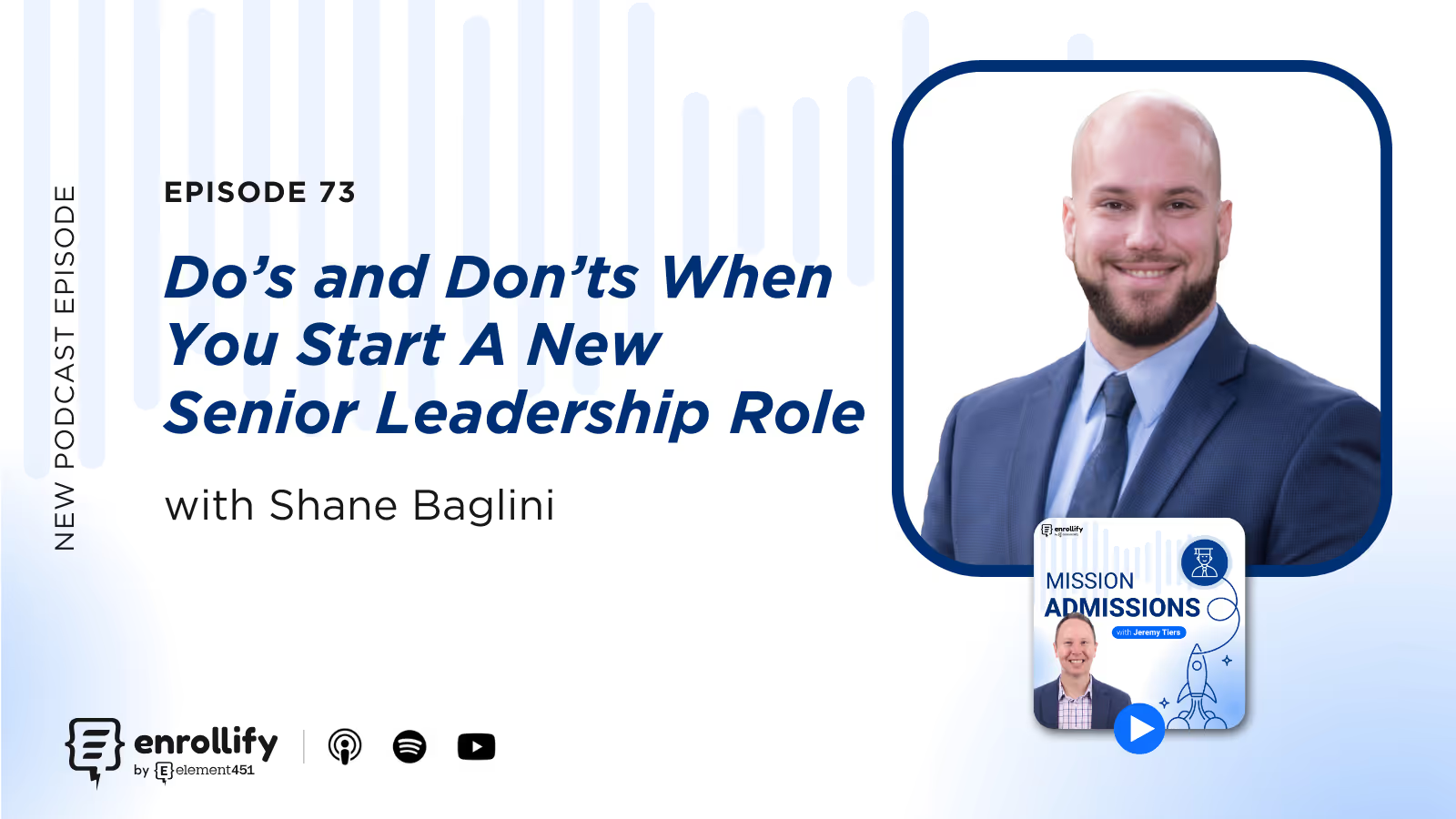
In this episode of Mission Admissions, host Jeremy Tiers sits down with Shane Baglini, Executive Director of Marketing & Branding at William & Mary, to unpack what it really looks like to navigate the first 90 days in a new senior leadership role in higher ed. Shane shares the intentional strategies he used to build trust, gain clarity, and set priorities after stepping into his role at a new institution. Whether you're considering a leadership move or currently leading a team, this episode offers invaluable insights into managing transitions with purpose and confidence.
Key Takeaways
- Build relationships before jumping into strategy. Shane emphasizes the power of relationship-building as the foundation for success in any new role.
- Onboarding matters more than you think. A well-organized onboarding process sets the tone for employee confidence, productivity, and long-term retention.
- Establish boundaries early. Saying “yes” to everything is a fast track to burnout—especially in senior roles.
- Prioritize your “best friend departments.” Identifying key campus partnerships early on ensures better collaboration and organizational alignment.
- Adopt a leadership mindset from day one. Overcoming imposter syndrome and leading with confidence is essential for cultivating trust across teams.
- Empower your team through presence and availability. Being a visible, approachable leader drives employee engagement and success.
- Use data and feedback loops. Implementing tools like 360 surveys helps leaders understand how to better support their teams.
Episode Summary: Questions This Episode Answers
How do you know you’re ready for a senior leadership role in higher ed?
Shane shares that readiness for leadership isn’t just about skills—it’s about timing, personal growth, and the right opportunity. After years of gaining experience in smaller institutions, Shane felt he had hit a professional ceiling due to limited staff size and upward mobility. When the opportunity at William & Mary appeared, everything from the job description to the institution’s reputation aligned with his personal and professional goals. Despite the personal challenges of relocating with young children, the institutional stability and leadership longevity at William & Mary were strong indicators that this was the right move.
What should your first 90 days in a leadership role actually look like?
Spoiler alert: it’s not about diving into big projects. Shane outlines a three-phase plan—learn, listen, then lead. For the first 90 to 120 days, Shane went on a “listening tour” to meet with departments across campus. Rather than rushing into strategy, he focused on understanding organizational dynamics and building trust. This approach helped him avoid assumptions and gather the context he needed to drive smarter, more aligned decisions later on.
How do you build relationships with both direct and indirect reports?
Shane explains that the balance between managing direct reports and staying accessible to the broader team is crucial. His early weeks were spent primarily with his three direct reports—building rapport, understanding their work styles, and showing them he’s a reliable, supportive leader. But he didn’t stop there. Monthly social hours, informal check-ins, and skip-level meetings helped him engage the rest of his 20-person team. He also implemented a 360 feedback survey to uncover blind spots and create better connection opportunities.
How do you resist the urge to say yes to everything?
New leaders often fall into the trap of saying yes to prove their value. Shane warns against this approach. Instead, he credits a well-structured onboarding plan for protecting his time early on. He also recommends mapping out a 30-60-90 day plan and being honest about what needs to wait. “Being present and learning,” he says, “is more valuable than jumping into execution mode too early.”
What’s the role of feedback and self-awareness in leadership?
As part of his commitment to being an accessible and effective leader, Shane uses feedback tools to gauge how well he’s supporting his team. He shares how regular feedback loops—like 360 surveys—help him course-correct in real time. He also talks openly about battling imposter syndrome and choosing a leadership mindset: showing up confidently, even when everything’s new.
What’s the best way to identify strategic relationships across campus?
One of Shane’s biggest takeaways? He wishes he had mapped out his “must-have” campus relationships earlier. Departments like enrollment and advancement were essential to his team’s success, and while every campus relationship matters, some partnerships require immediate investment. For future leaders stepping into new institutions, Shane recommends identifying your strategic partners during onboarding and prioritizing those relationships from day one.
What’s Shane’s best advice for first-time senior leaders?
His advice is simple but powerful: Don’t let anyone make you feel like you don’t belong. Be intentional about who you spend time with, ask more questions than you answer in the beginning, and never underestimate the power of showing up. “People want confident, stable leadership,” he says. “So believe you’re meant to be in the seat you’re in.”
Connect With Our Host:
Jeremy Tiers
https://twitter.com/CoachTiers
Register for the AI Engage Summit — Oct 15–16, 2025
👉 Join us online from 12–4 PM ET each day for two afternoons of AI insights and training. Free to attend with on-demand access included. Register now.







.svg)
.svg)
