


About the Blog
As AI and digital transformation reshape education, one truth remains: learning is still a deeply human endeavor.
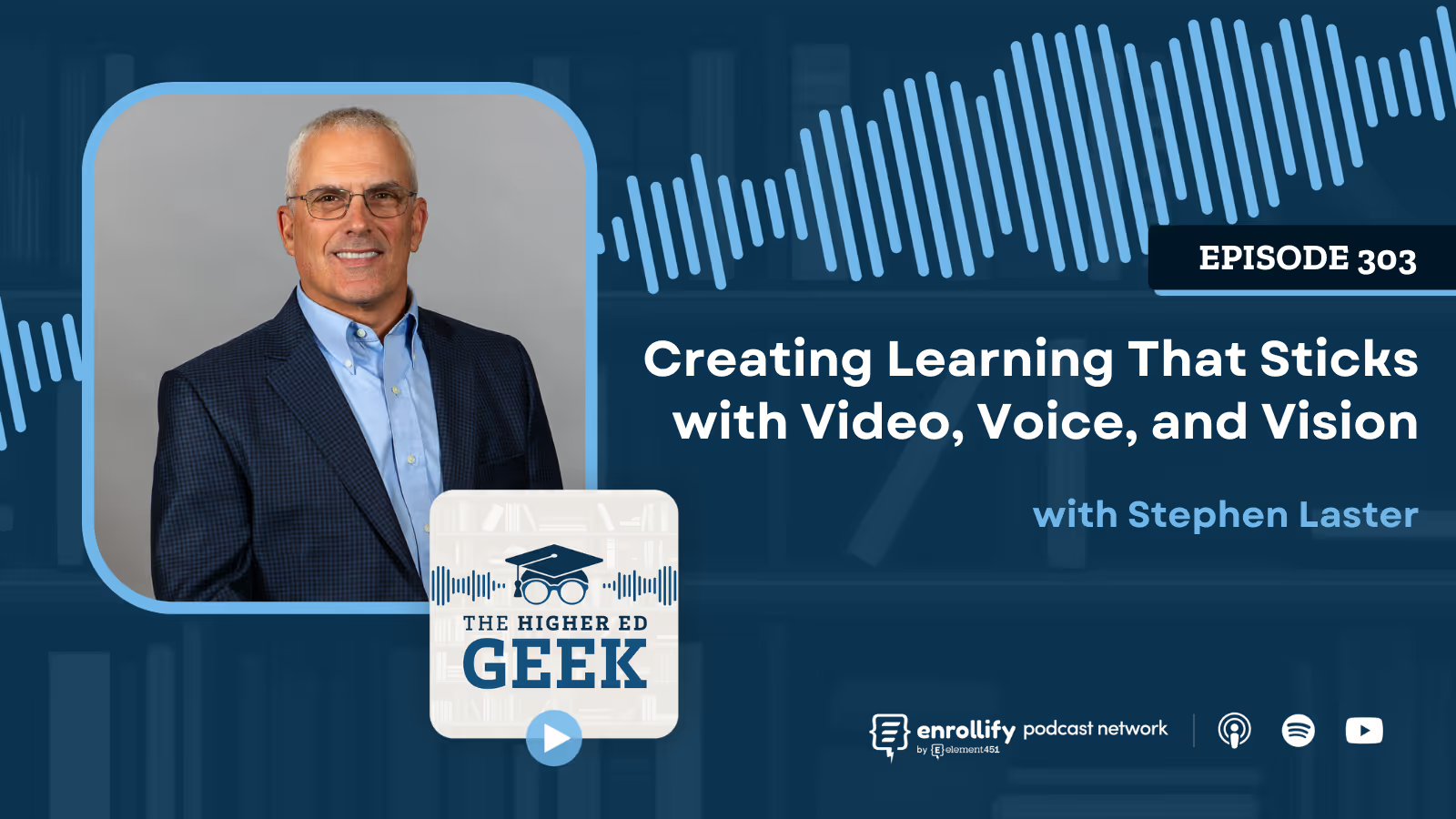
In this episode of The Higher Ed Geek Podcast, host Dustin Ramsdell sits down with Stephen Laster, CEO of Panopto, to unpack what “pedagogy first” really means in an era defined by artificial intelligence, audio-visual learning, and an evolving digital campus.
With more than two decades of experience across Harvard Business School, McGraw Hill, Ellucian, and D2L, Laster brings both perspective and urgency to the question facing every institution right now — how can technology enhance learning without erasing the humanity that makes education meaningful?
Education’s Human Core
Laster’s career began in the early 2000s helping Babson College build one of the first blended MBA programs in the country — a move that, at the time, felt radical. Two decades later, his conviction hasn’t changed: technology should serve pedagogy, not overshadow it.
He argues that learning at its core is social and relational — built on mentorship, curiosity, and shared discovery. What has evolved is how we deliver that experience. From the days of mailing CD-ROMs and VHS tapes to today’s interactive video and AI-generated transcripts, the tools have changed — but the mission hasn’t.
“High-quality access at scale,” he explains, “is the new equity challenge in higher education.”
The AI Moment: Purpose Over Novelty
Generative AI has dominated headlines, but Laster urges educators to see past the hype. The real opportunity lies in purposeful application — using AI to make learning more engaging and more efficient for both students and instructors.
At Panopto, that means using AI to:
- Automatically transcribe and summarize lectures.
- Transform static presentations into interactive, avatar-driven learning moments.
- Provide real-time feedback loops for learners and instructors.
These tools aren’t meant to replace professors but to amplify their impact. Many faculty members, Laster notes, have brilliant ideas but lack the time, confidence, or resources to produce multimedia content. AI bridges that gap — turning imagination into instruction.
The Layer Cake of EdTech
To Laster, successful digital learning is built like a “layer cake.”
At the foundation are interoperability standards — the invisible glue that allows LMSs, CRMs, and media tools to work seamlessly together. Organizations like 1EdTech (formerly IMS Global) have made it possible for students to move fluidly across platforms without losing focus or progress.
“Technology should fade into the background,” he says. “When it doesn’t, students lose momentum and stress levels spike.”
On top of that foundation sits the pedagogy layer: thoughtful instructional design, active learning, and inclusive assessment. AI and automation form the top tier — enhancing engagement, accessibility, and feedback, but always grounded in purpose.
Lessons from a Dyslexic Learner
Laster’s personal story underscores his empathy for learners who experience education differently. Growing up dyslexic, he found early refuge in technology. His first computer — an Apple II — became the foundation for his learning style.
That same understanding drives his belief that education technology must adapt to diverse needs, especially now that half to two-thirds of students identify as visual or auditory learners. Video-based learning platforms like Panopto give those students access to material in ways traditional text alone never could.
Redefining Faculty Empowerment
If technology is to serve learning, faculty must be at the center of the process. Laster outlines a few principles for campuses building digital transformation strategies:
- Designate leadership. AI and EdTech adoption require clear champions — whether a CIO or a dedicated innovation lead — to bridge academic and operational priorities.
- Create space for experimentation. Encourage faculty to pilot new approaches, reflect on outcomes, and share results.
- Invest in support and training. When new systems roll out, back them with real people who can help faculty translate tools into teaching.
- Integrate student feedback. Learning innovation must include the learner’s voice — not just administrative vision.
- Prioritize seamlessness. The moment tech gets clunky, the pedagogy collapses. Simplicity wins.
For Laster, these aren’t “nice-to-haves.” They’re what separate a digital strategy that scales from one that stalls.
Learning from Resistance
Every new wave of technology faces skepticism — from early word processors to spreadsheets to ChatGPT. Laster recalls bringing his first computer to college in the 1980s and being told that if he didn’t handwrite his essays, they couldn’t possibly reflect his original thought.
Today, the same mindset surfaces in the AI debate. The question isn’t whether to use AI in learning, he says, but how to use it ethically, transparently, and pedagogically.
Just as calculators reshaped math education and PowerPoint redefined lectures, AI will eventually blend into the everyday rhythm of teaching — not as a shortcut, but as a scaffold.
What Comes Next
Laster believes the institutions that thrive in this next era of education will be those that:
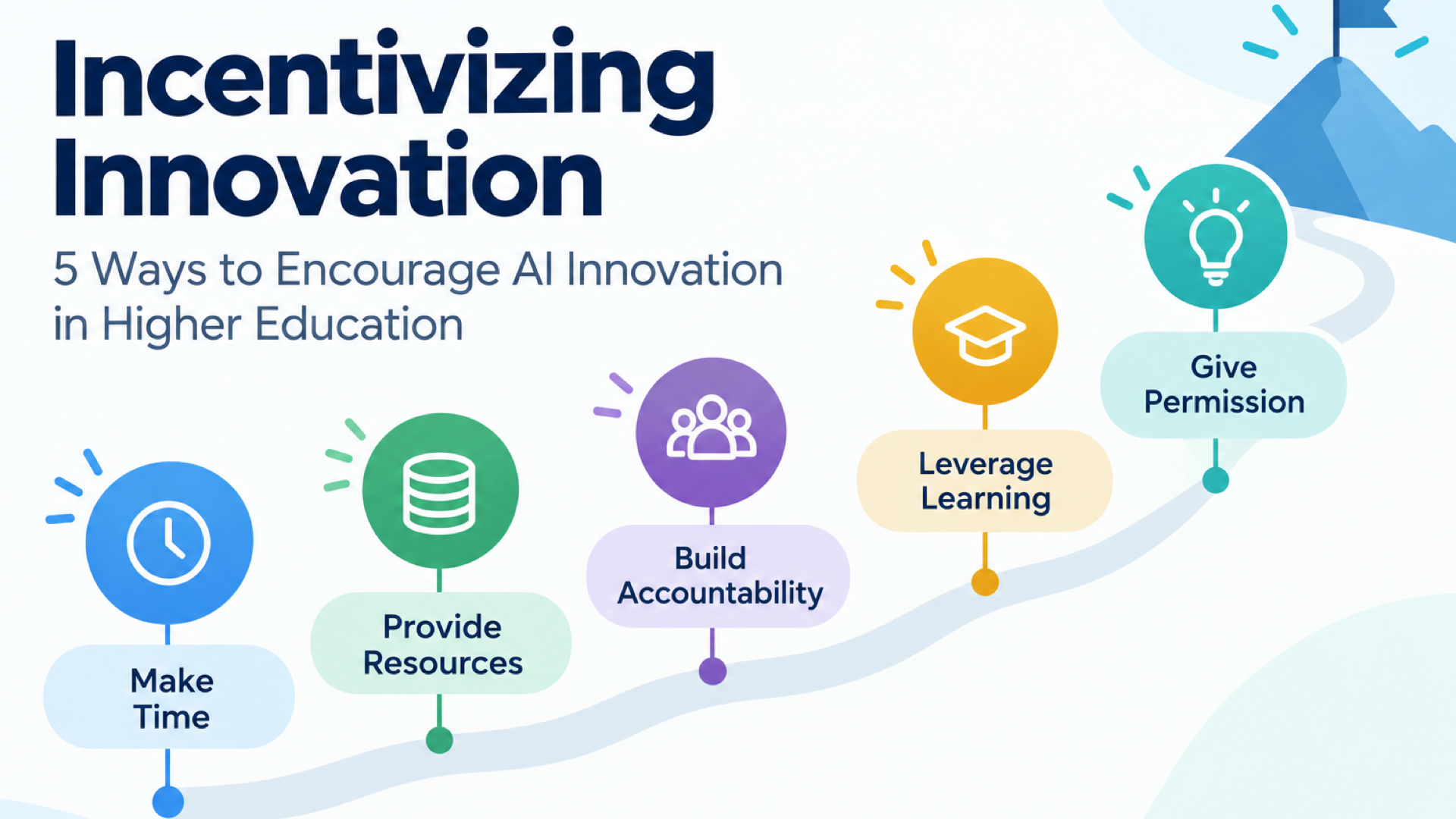
- Foster faculty innovation through dedicated time and recognition.
- Align technology adoption with institutional mission.
- Commit to AI literacy for both educators and students.
- Leverage video and auditory tools to meet learners where they are.
The future of EdTech, he says, won’t be defined by who has the flashiest tools but by who uses them to make learning more human.
🎧 Listen to the Full Episode
Explore how Panopto CEO Stephen Laster is reimagining pedagogy in the age of AI on The Higher Ed Geek Podcast.

.svg)
.svg)
