


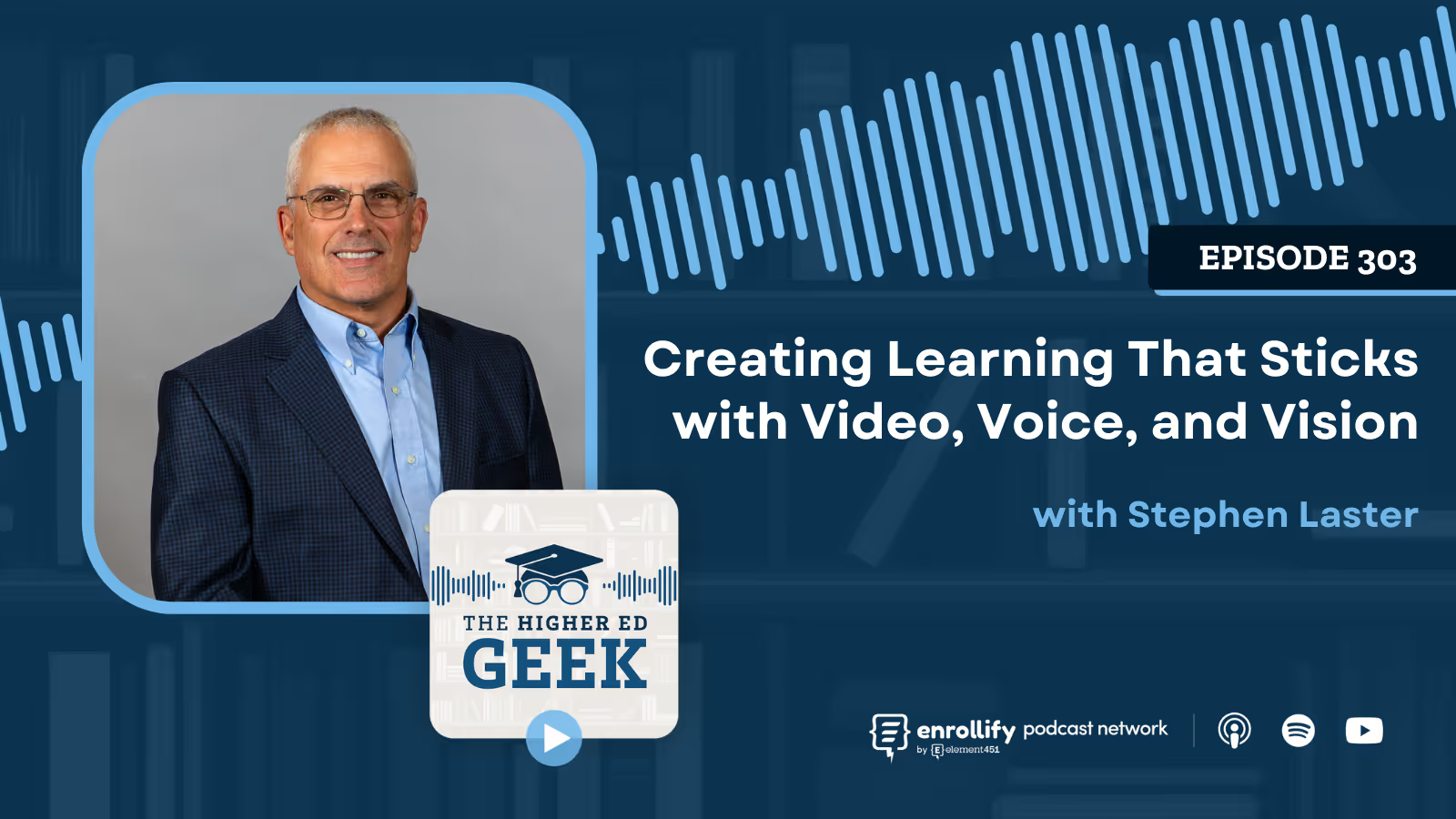




About the Episode
Got a story to tell? An innovative idea to share? Fill out our guest nomination form and let's chat!
About the Episode:
Stephen Laster, CEO of Panopto and a 25-year veteran in the edtech space, joins Dustin to talk about how smart technology—and especially AI—can elevate educators rather than overshadow them. From his early days pioneering blended MBA programs to leading at institutions like Harvard Business School and McGraw-Hill, Stephen shares how technology should be applied to serve pedagogy, not the other way around.
In this episode, you'll hear why seamless digital ecosystems matter, how institutions can build effective AI strategies, and why empowering faculty is the key to meaningful innovation. With a refreshingly human-centered view, Stephen helps us rethink what's possible when tech meets intention.
Key Takeaways
- AI is a Tool, Not a Threat: Generative AI should be purposefully integrated into pedagogy to enhance — not replace — the educator’s role. It’s about amplifying creativity, not automating connection.
- Design for Seamless Learning: Interoperability and intuitive tech are critical. Students need platforms that work together effortlessly, especially when studying late at night or under stress.
- Visual and Auditory Learning Is the Future: With nearly two-thirds of students preferring visual/audio formats, tools like Panopto empower faculty to meet students where they are — in ways they actually learn best.
- Empowering Faculty, Not Overwhelming Them: Institutions that create time, space, and support for faculty to experiment with technology will see the biggest transformation wins.
- Transformation Requires Strategy: A strong digital strategy includes institutional alignment, short experimentation cycles, feedback loops with students, and clarity on mission-driven outcomes.
Episode Summary: What You’ll Learn from This Conversation with Stephen Laster
Who is Stephen Laster, and what brought him to Panopto?
Stephen Laster brings over two decades of experience in EdTech, with leadership roles at prestigious institutions and companies like Harvard Business School, Ellucian, and McGraw Hill. As a dyslexic learner himself — and a parent of dyslexic children — his personal story fuels his passion for making learning more accessible and effective. Now as CEO of Panopto, he’s championing video-based, accessible learning at scale through intuitive, AI-powered tools.
How is the role of EdTech evolving in response to AI and digital transformation?
Stephen emphasizes that EdTech is no longer about flashy tools — it’s about invisible tech that works seamlessly in the background while empowering meaningful teaching and learning in the foreground. He credits industry-wide standards and interoperability as the bedrock for this progress, allowing faculty and students to work across systems with minimal friction.
Generative AI is seen as an opportunity, not a disruptor — when used wisely. Tools like Panopto use AI to generate automatic video summaries, transcripts, and even avatar-driven educational content, reducing the time burden on faculty while increasing engagement for students.
What should institutions focus on when building a digital or AI strategy?
Stephen outlines several key pillars for successful implementation:
- Leadership Alignment – Institutions need clear, empowered leadership roles guiding digital strategy across both the administrative and academic sides.
- Room for Experimentation – Institutions should reward and protect space for faculty to experiment with new technologies in teaching.
- Student-Centric Experiences – Learning tools must be seamless, interoperable, and designed around student preferences — especially for visual and auditory learners.
- Data-Informed, Mission-Driven Decisions – Strategy should be grounded in student feedback, learning outcomes, and aligned with the institutional mission.
Is there a wrong way to use AI in education?
Yes — and institutions must be vigilant. Stephen and Dustin discuss real-world missteps, like faculty relying too heavily on AI to grade or provide feedback, undermining the educator-student trust. The key is thoughtful integration: AI should assist, not dictate. Pedagogical integrity must always come first.
What distinguishes an EdTech company from a general tech company?
Stephen offers a compelling insight: EdTech companies understand that education has its own sacred workflows — like grading, feedback, and student engagement. Unlike e-commerce or corporate SaaS platforms, education software must be built with emotional intelligence and pedagogical nuance.
About the Show: The Higher Ed Geek Podcast explores the impact of edtech on the student experience by speaking with diverse leaders from institutions, companies, and nonprofit organizations. Each week we aim to provide an engaging, fun, and relevant dose of professional development that honors the wide range of work happening all across the higher ed ecosystem. Come geek out with us! The Higher Ed Geek Podcast is hosted by Dustin Ramsdell and is a proud member of the Enrollify Podcast Network.
Connect With Our Host:
Dustin Ramsdell
About The Enrollify Podcast Network:
The Higher Ed Geek is a part of the Enrollify Podcast Network. If you like this podcast, chances are you’ll like other Enrollify shows too!
Some of our favorites include Generation AI.
Enrollify is produced by Element451 — the next-generation AI student engagement platform helping institutions create meaningful and personalized interactions with students. Learn more at element451.com.





.svg)
.svg)
