


About the Blog
If you think innovation in higher ed only comes from elite institutions with sprawling campuses and massive endowments, think again.
In a recent episode of The Higher Ed Geek, Dr. Mark Milliron, President of National University, gave a masterclass in what it really means to design for today’s learners—not the ones we wish we had, but the ones we do.
The result? A roadmap for what all institutions—no matter their size or mission—can and should steal from the playbook of so-called "opportunity universities."
First, What Is an Opportunity University?
Opportunity universities are built for social mobility. They are high-access, high-impact institutions that often serve working adults, military-affiliated students, first-gen learners, and those juggling complex lives. They prioritize flexibility without compromising on quality—and they produce graduates who thrive.
National University is a prime example: it serves over 50,000 degree-seeking students annually and another 80,000 in workforce training, operating almost entirely online or in hybrid models. Most importantly, it was built for non-traditional students, not retrofitted for them.
1. They Design For, Not Around, Their Students
National doesn’t just accommodate working learners—they design with them in mind from day one. Their model? One course at a time in four- or eight-week formats. It’s radically different from the 16-week, five-class juggernaut most traditional campuses offer, and it works because it respects learners’ time, energy, and realities.
“It’s not a better-than conversation,” Milliron says. “It’s about building models for different students at different ages and stages.”
Too many institutions still view online or part-time learners as an afterthought. Opportunity universities make them the main event.
2. They Obsess Over Student Fit and Belonging
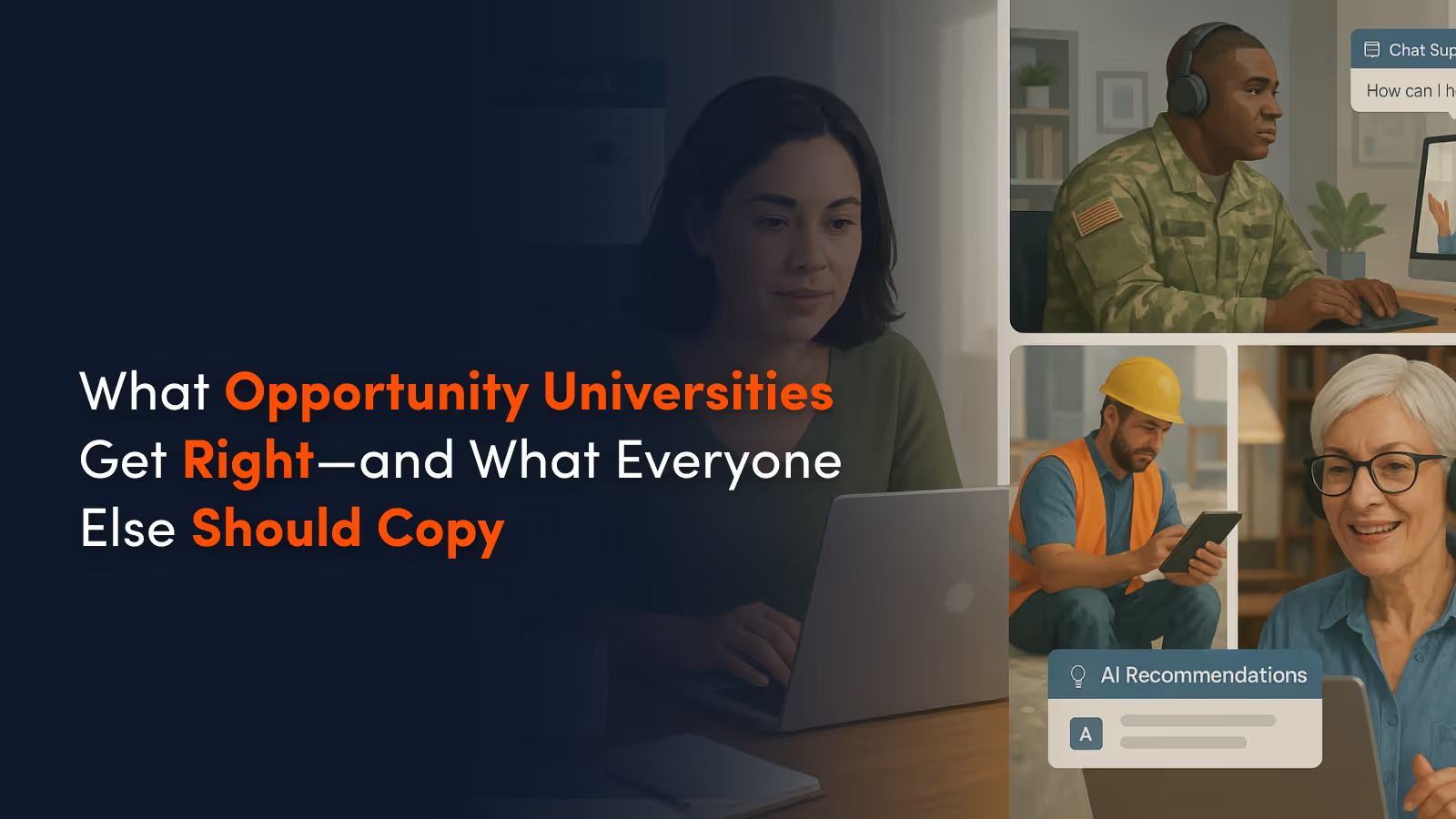
Milliron challenges us to reconsider our mental image of a “college student.” The majority of today’s students aren’t 18-year-olds walking across a leafy quad—they're “Anders”: parents and students, workers and students, veterans and students.
National University designs an experience where those students don’t just fit in—they belong. From peer navigation to flexible support systems, they’ve built a culture that says, “This place was made for you.”
3. They Treat Support Like a Strategy, Not a Slogan
Forget cookie-cutter advising or one-size-fits-all tutoring. National uses a model of “whole human education”—a blend of academic, financial, and emotional scaffolding that adjusts based on where the student is in their journey.
Some students are rockstars who just need a clear path. Others need wraparound support. All of them deserve a system that meets them where they are and adapts as they grow.
4. They Don’t Chase Growth—They Earn It
Instead of leading with ads and automation, opportunity universities grow through what Milliron calls “be good to grow.” Their #1 recruitment tool? Student referrals. Because when the experience is that strong, people talk.
“Students better be telling other students about you,” says Milliron. “That’s how you know you’re doing it right.”
5. They Leverage AI with Purpose, Not Panic
National University is leaning into AI with clarity and intent. Their approach: teach about AI in every discipline, use it with students to improve support and operations, and prepare students to thrive beyond it with durable human skills like leadership, ethics, and collaboration.
It’s not just about automation—it’s about augmentation. AI helps free up time to deepen human connection. That’s the real opportunity.
So, What Should Everyone Else Copy?
Not the structure. Not the tech stack. Not even the marketing funnel.
What traditional institutions should emulate is the mindset:
- Know who your students are.
- Design for them.
- Invest in the student experience.
- Align innovation with mission—not ambition.
- Let excellence drive your growth.
“There isn’t one best way,” Milliron reminds us. “But if you focus on helping your students learn well, finish strong, and launch effectively, good things will follow.”
Final Take
Opportunity universities like National aren’t anomalies. They’re trailblazers. And while not every school needs to copy the model, everyone can copy the intent: to serve students as they are, not as we imagine them to be.
Because in a world where 40 million Americans have some college but no degree, the question isn't "How do we get more 18-year-olds?"—it's "Are we ready for the rest of them?"


.svg)
.svg)
