






About the Episode
About the Episode:
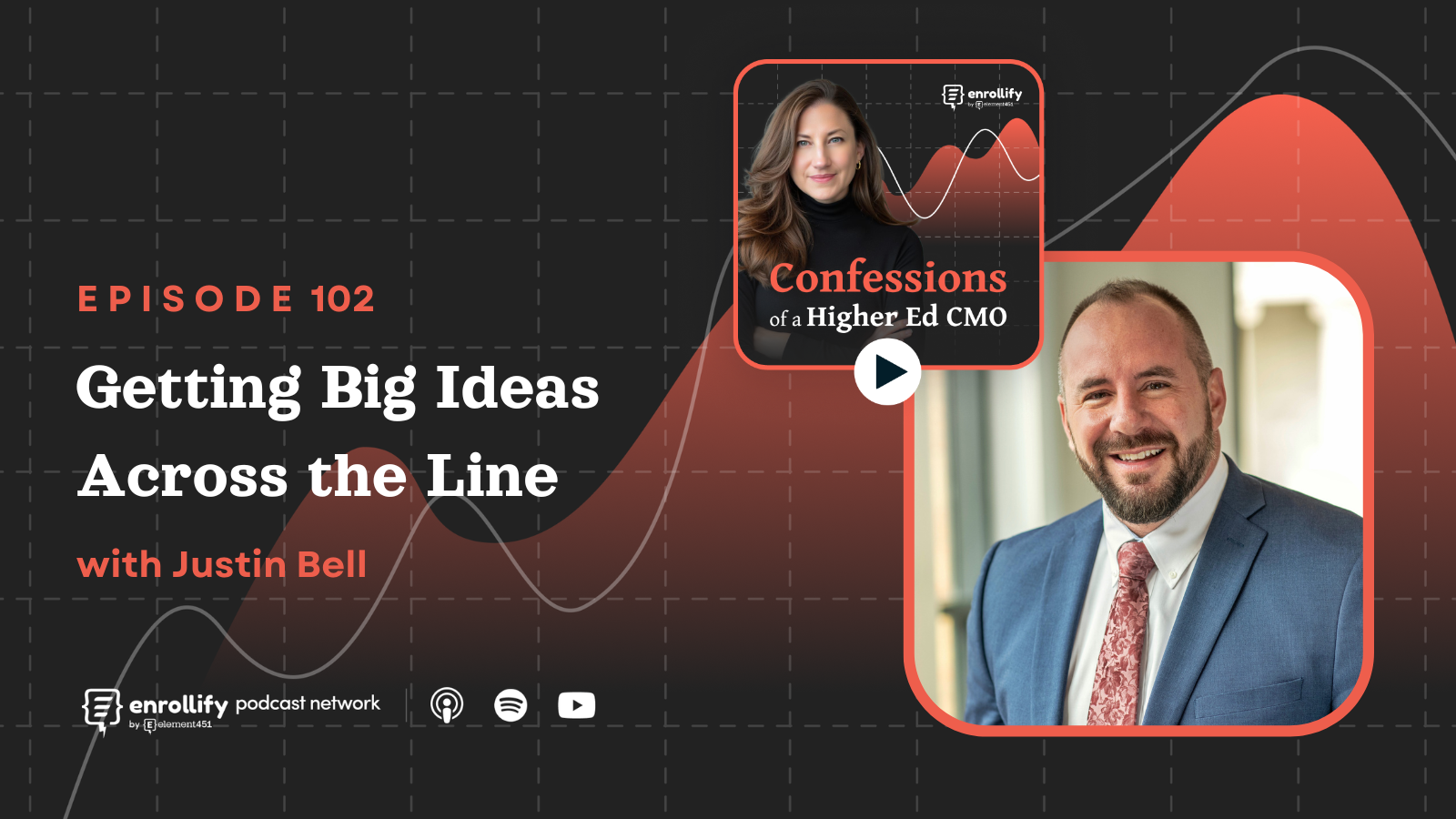
Jaime Hunt chats with Justin Bell, Vice President for Marketing and Communications at Fordham University, unpacking how bold leadership and innovative thinking can transform enrollment marketing. This episode dives into how Bell restructured Fordham’s marketing operations into an in-house agency model, leveraged data analytics in higher education, and embraced experiential campaigns to drive measurable growth. From AI-powered content optimization to viral brand moments, this conversation is packed with actionable insights for modern marketers. If you’re exploring trends in higher education marketing, this episode is a must-listen.
Key Takeaways
- Building an in-house agency model can eliminate silos and strengthen marketing strategy for student recruitment
- Listening first is critical before executing organizational change or rebranding efforts
- AI-powered dashboards can elevate higher education content marketing by making writers more data-driven
- Experiential marketing is emerging as a top trend in higher education marketing for building trust
- Creative campaigns (like pop-ups and live events) can drive measurable enrollment outcomes
- Leadership buy-in—especially from the president—is essential for transformation success
- Data-backed storytelling helps justify bold ideas and sustain long-term investment
Episode Summary
How Do You Successfully Restructure a Higher Ed Marketing Team?
Transforming a higher ed marketing division isn’t about quick fixes—it starts with intentional listening. Justin Bell spent his first six months at Fordham University gathering insights from stakeholders, faculty, students, and external audiences. This dual-focused listening strategy helped him understand both operational inefficiencies and brand perception gaps, setting the foundation for meaningful change.
One of the biggest shifts Bell implemented was merging communications and marketing into a unified, in-house agency model. By aligning teams around shared goals and eliminating redundancies, Fordham created a more agile and collaborative structure. This approach mirrors best practices from the corporate world, where integrated teams deliver more cohesive and impactful campaigns.
The result? A clearer organizational vision, stronger collaboration, and improved team morale. Bell emphasizes that restructuring isn’t just about org charts—it’s about empowering people, creating growth pathways, and aligning talent with institutional goals. For leaders considering similar changes, the message is clear: take your time, involve your team, and build with intention.
How Can Data Analytics and AI Improve Higher Education Content Marketing?
One of the most compelling innovations discussed in this episode is Fordham’s AI-powered content performance dashboards. By integrating data analytics in higher education with predictive AI modeling, Bell’s team տվել writers real-time insights into how their content performs—and how it could perform better.
These dashboards go beyond basic metrics like page views or bounce rates. They provide actionable recommendations, such as keyword optimization and headline improvements, enabling writers to create more SEO-friendly content. This approach not only boosts visibility but also fosters a culture of continuous improvement among content creators.
Initially, some team members were hesitant—especially those with journalism backgrounds. But over time, they saw how AI could enhance, not replace, their work. The payoff has been significant: increased organic traffic, stronger engagement, and a more data-driven approach to storytelling. This is a powerful example of how AI in higher education can elevate both strategy and execution.
What Role Does Experiential Marketing Play in Student Recruitment?
Bell’s “hottest take” is clear: experiential marketing is the future of enrollment marketing. In a crowded and competitive landscape, institutions must go beyond digital channels to build authentic, trust-driven relationships with prospective students and influencers.
Fordham’s campaigns illustrate this perfectly. From a surprise Jimmy Fallon and The Weeknd pop-up concert to a “Fordham Pizza Shop” activation at NACAC, these experiences created memorable, shareable moments. More importantly, they aligned with institutional goals and delivered measurable results—like a 50% increase in applications from Ohio בעקבות the NACAC campaign.
Experiential marketing isn’t just about flashy moments—it’s about strategic storytelling and long-term brand building. Bell encourages institutions to “crawl, walk, run” by starting small and experimenting with local activations. When done right, these experiences can shape perception, build trust, and drive sustained enrollment growth.
How Do You Measure the Success of Bold Marketing Campaigns?
Bold ideas are only as valuable as the results they deliver. Bell emphasizes the importance of tying every campaign to measurable outcomes, from application increases to engagement metrics. By tracking performance over time, Fordham can demonstrate ROI and secure continued investment in innovative strategies.
For example, the NACAC pizza shop wasn’t just a creative stunt—it was a calculated investment in relationship-building with guidance counselors. The follow-up strategy included personalized outreach and ongoing engagement, turning a one-day activation into a long-term pipeline for student recruitment.
This data-first mindset is essential for modern marketers. It not only validates creative risks but also builds credibility with leadership. In an era where budgets are tight and expectations are high, being able to connect marketing efforts to enrollment outcomes is a game-changer.
Connect With Our Host:
Jaime Hunt
https://twitter.com/JaimeHuntIMC
Enrollify is produced by Element451 — the next-generation AI student engagement platform helping institutions create meaningful and personalized interactions with students. Learn more at element451.com.




.svg)
.svg)
