






About the Episode
Got a story to tell? An innovative idea to share? Fill out our guest nomination form and let's chat!
About The Episode:
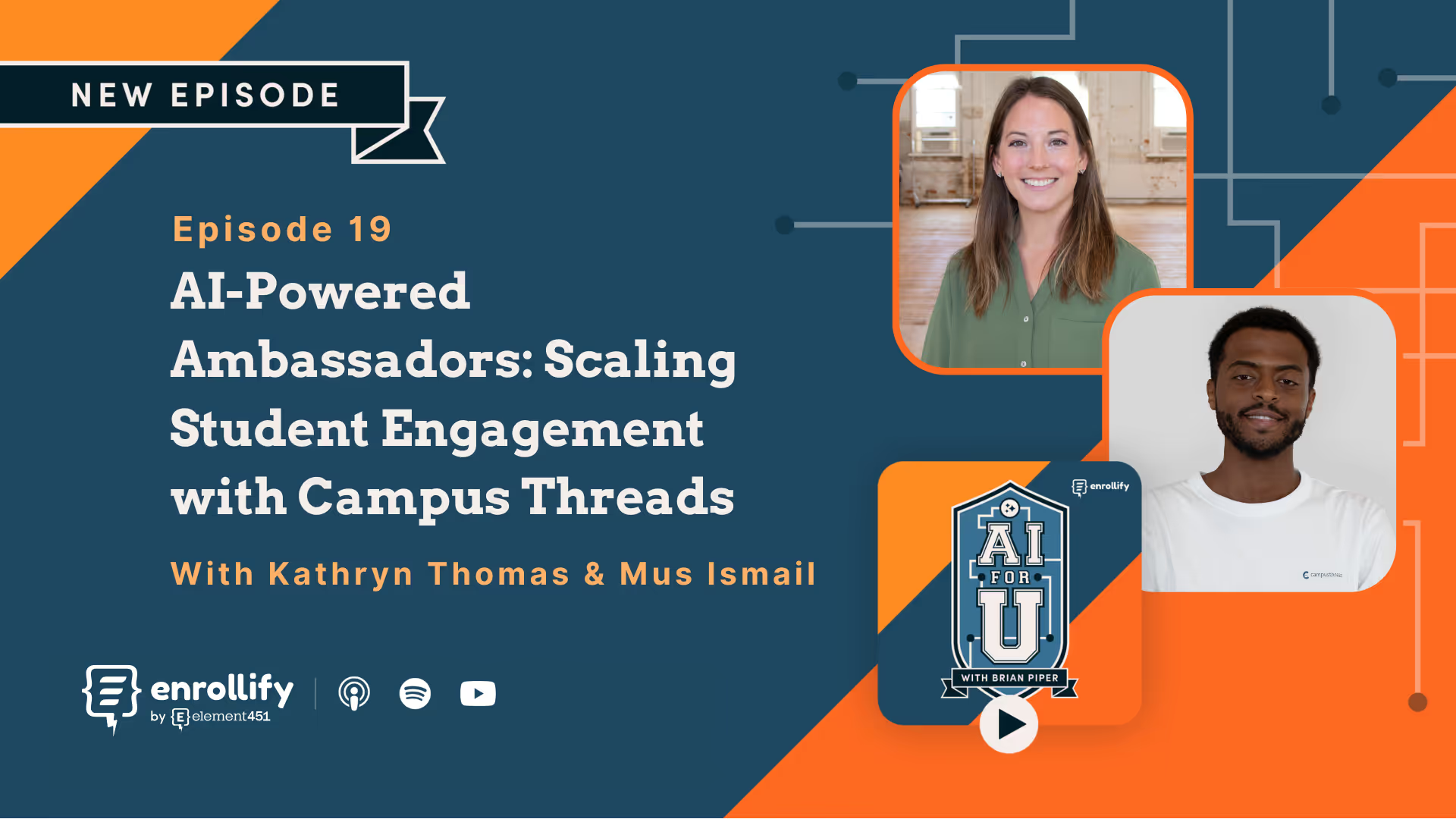
How can AI enhance student ambassador programs without replacing the human connection? In this episode, Brian sits down with Kathryn Thomas and Mus Ismail from Campus Threads to explore how AI is revolutionizing student recruitment. They discuss the power of AI-driven insights, strategies for scaling ambassador programs, and the importance of breaking down institutional silos. Whether you're in admissions, marketing, or student services, this episode offers practical takeaways on using AI to work smarter — not harder.
Join us as we discuss:
- Why transparency is key when using AI
- How AI can help you scale your ambassador program
- An easy action step you can take to communicate across departments
To hear this interview and many more like it, subscribe on Apple Podcasts, Spotify, or our website, or search for AI for U with Brian Piper in your favorite podcast player.
What is Campus Threads and how does it innovate on traditional student ambassador programs?
Campus Threads is a modern ambassador platform designed to offer more equitable and scalable access to student ambassador programs for institutions of all sizes. Like other ambassador tools, it allows prospective students to chat with current students about life on campus, academic programs, and more. But where Campus Threads stands out is in its integration of AI—not to replace human connection, but to amplify and support it.
AI plays a background role by extracting key conversation themes, powering a dashboard of insights for admins, and offering features like smart matchmaking between ambassadors and prospects. It even allows ambassadors to tag in subject-matter experts or triage questions within the platform, ensuring nuanced responses for a wide array of student inquiries.
How does AI improve the management and training of student ambassadors?
Onboarding and continuous training are some of the biggest pain points for administrators managing student ambassadors—especially when students are constantly cycling in and out of the role. Campus Threads has introduced an AI-powered training suite that generates onboarding materials, updates, and even quizzes in seconds. This allows administrators to efficiently push out new information, track understanding, and ensure all ambassadors stay on message with institutional guidelines and values.
Even more impressive, the AI system supports ambassadors in real-time by offering smart suggestions for answers during conversations and acting as a knowledge base they can consult on demand—without relying on overburdened admissions staff.
What are the biggest obstacles to AI adoption in higher ed?
Time constraints top the list. Kathryn points out that while genuine crises are rare, higher ed professionals are constantly dealing with distractions and "noise" that pull focus away from long-term strategic initiatives like AI adoption. One of her solutions? Leadership must carve out protected time and space for teams to explore and implement AI thoughtfully.
Another major barrier is a lack of understanding and internal transparency around what AI does and how it functions. Mus emphasizes that institutions need to demystify AI. For example, Campus Threads shows exactly what the AI is learning from conversations, allowing users to see how data is being interpreted and used. This type of openness can help overcome fear and drive broader buy-in.
How can schools already running ambassador programs start using AI?
If you’ve got an existing ambassador program, think about where your team is spending the most time—onboarding, managing schedules, updating materials—and look for opportunities to automate. AI can generate training modules, analyze conversations for insights, and even moderate chats to ensure quality control.
Data is also a goldmine. As Mus notes, schools should be capturing feedback from ambassador conversations to better understand what prospective students care about. From common concerns to content gaps, AI can help turn those insights into actionable marketing strategies.
Kathryn also offers a simple but effective tactic: turn your ambassador platform data into a bi-weekly newsletter and share it across departments. This kind of internal transparency helps break down silos and lets marketing, admissions, and even financial aid teams respond in real time to shifting student needs.
What’s next for AI in higher ed—and why should schools care now?
The rise of agentic AI—AI with autonomy to perform complex workflows—is poised to reshape how higher ed teams operate. Mus sees this coming fast, and Kathryn warns that institutions who wait too long may fall behind competitors who are already reaping the benefits of AI-fueled productivity and creativity.
They both agree: AI is not going away. Whether it’s automating repetitive tasks or enabling more strategic planning, the institutions that embrace AI now will be the ones best positioned to meet the evolving expectations of prospective students.
Episode prompt:
You are an expert builder of custom GPTs with a deep understanding of editorial style guides.
Create a system prompt for a custom GPT to act as a style guide for [institution name and URL], that conforms to the institutional style guide: [upload the document or link to your online style guide if available],
the brand identity: [upload or link to your online brand guidelines or any other resources that might be available].
The custom GPT should put content into canvas mode and make changes to the attached or pasted content. When the changes are made, create a list of what was changed and why. After the content is generated, if the user asks for highlights, highlight the changes within the document and reference the specific resource that indicates why the change was needed.
Connect With Our Host:
Brian Piper
https://www.linkedin.com/in/brianwpiper/
About The Enrollify Podcast Network:
AI for U is a part of the Enrollify Podcast Network. If you like this podcast, chances are you’ll like other Enrollify shows too!
Some of our favorites include Generation AI and Mastering the Next.
Enrollify is produced by Element451 — the next-generation AI student engagement platform helping institutions create meaningful and personalized interactions with students. Learn more at element451.com.
Attend the 2025 Engage Summit!
The Engage Summit is the premier conference for forward-thinking leaders and practitioners dedicated to exploring the transformative power of AI in education.
Explore the strategies and tools to step into the next generation of student engagement, supercharged by AI. You'll leave ready to deliver the most personalized digital engagement experience every step of the way.
👉🏻 Register now to secure your spot in Charlotte, NC, on June 24-25, 2025!





.svg)
.svg)
