






About the Episode
About the Episode:
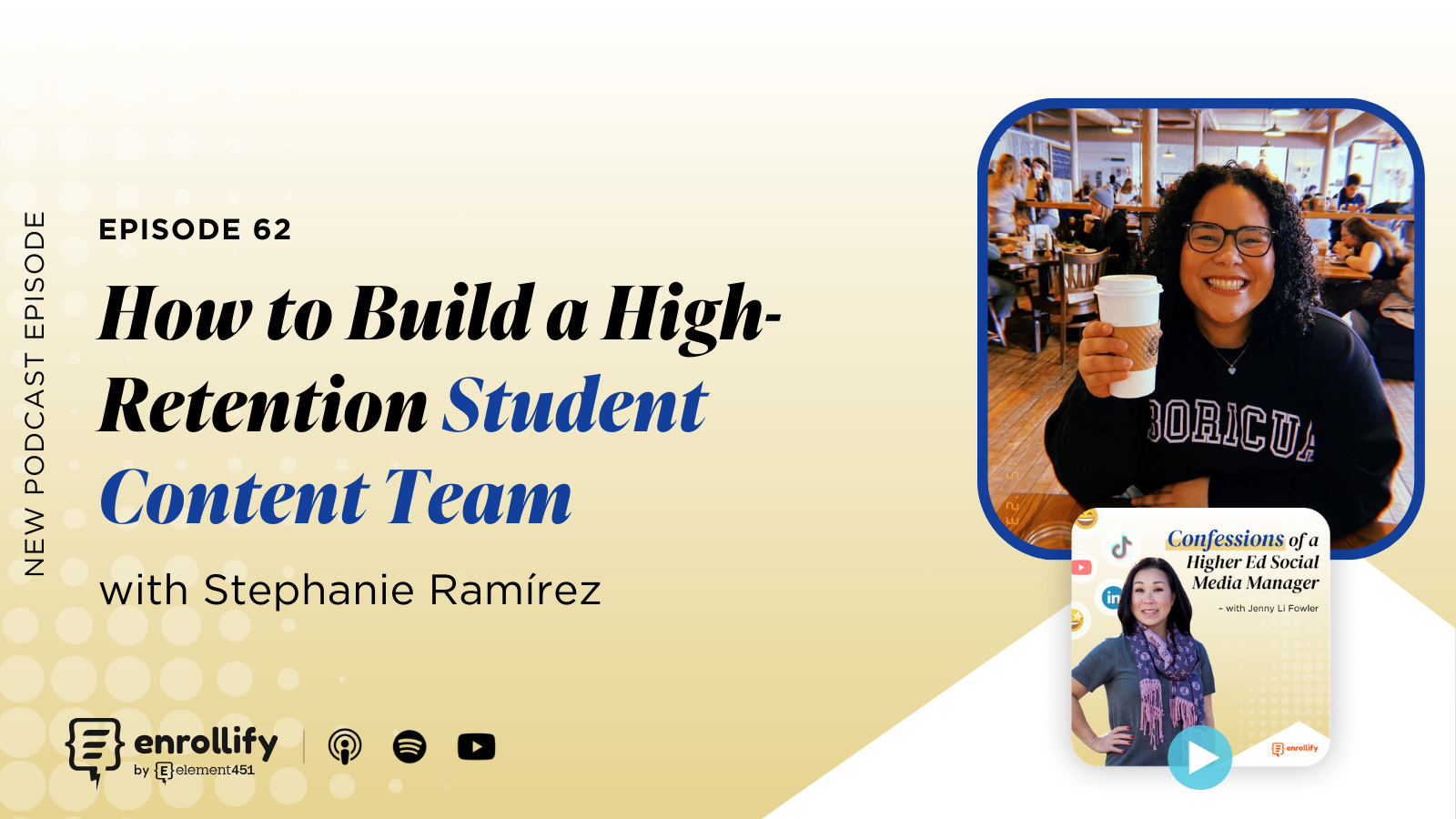
Jenny Li Fowler sits down with Stephanie Ramirez, Director of Social and New Media at Amherst College, to unpack how she built one of the most engaged student content teams in higher education. Stephanie shares how her team of student creators produces authentic social media content while gaining real professional experience along the way.
From weekly rituals and collaborative ideation to strategic training in brand voice and accessibility, Stephanie reveals how thoughtful mentorship can transform student workers into strategic storytellers. The conversation offers powerful lessons for enrollment marketers and social media managers looking to strengthen their higher education content marketing efforts through student voices.
Key Takeaways
- Build a student creator program with purpose. Successful student teams require intentional structure, mentorship, and clear learning outcomes—not just content production.
- Create a strong team culture. Weekly meetings, shared rituals, and relationship-building help student interns feel invested and accountable.
- Give students real strategic responsibility. The best student creators understand audience, brand voice, accessibility, and platform strategy—not just posting content.
- Structure matters for consistency. Dedicated office hours and fixed meeting times make it easier for students to stay engaged and prioritize their work.
- Student creators elevate higher education content marketing. Authentic student perspectives help institutions produce more relatable and effective social media content.
- Mentorship drives long-term impact. The most meaningful outcome isn’t just great content—it’s helping students understand how strategic communication works.
Episode Summary
How Should You Structure a Student Social Media Team?
Stephanie Ramirez oversees a team of 8–10 student content creators at Amherst College who work about four to six hours per week producing social media content. The program existed before she joined the institution, but she quickly realized it needed more structure to truly succeed. Initially, students worked independently and submitted assignments asynchronously, which made it difficult to build collaboration or accountability.
During the pandemic, Stephanie noticed that students were feeling disconnected and engagement was slipping. Instead of simply tightening deadlines, she redesigned the program to prioritize community and mentorship alongside production. Her goal was to create an experience that benefited students just as much as it benefited the institution’s social media presence.
Today, the program blends creative work with professional development. Students aren’t just content creators—they’re learning how social media strategy, brand storytelling, and institutional communication actually work behind the scenes.
Why Team Culture Matters in Student Content Programs
One of the most distinctive aspects of Stephanie’s program is the intentional culture she’s built within the team. Weekly meetings are a cornerstone of the experience, and surprisingly, they’re often the students’ favorite part of the job.
Each meeting begins with a quick “ratings” round where everyone shares how their week is going. Stephanie also celebrates birthdays, shares treats like boba or pizza, and makes time for genuine conversations about students’ lives outside work. These rituals might sound small, but they foster a sense of belonging that keeps students engaged and committed.
For many social media managers juggling enrollment marketing and campus storytelling, it’s tempting to treat student creators as freelance content producers. Stephanie’s approach flips that model—by building relationships first, she creates a team that is far more motivated to contribute ideas and deliver quality work.
How Do You Encourage Students to Generate Creative Social Media Ideas?
Student creativity is central to the team’s workflow. During meetings, Stephanie regularly asks the group to brainstorm ideas for upcoming campaigns—such as promoting a new student-centered dining commons.
Instead of filling the silence herself, she intentionally gives students time to think and respond. That pause often sparks creative conversations where one idea builds on another. It’s a simple facilitation technique, but it encourages students to take ownership of the ideation process.
The team also reviews social media content they find inspiring. By analyzing what works across platforms, students develop a deeper understanding of trends in higher education marketing and broader social media culture. Over time, they begin pitching ideas that reflect strategic thinking about audience, goals, and messaging.
What Should Student Social Media Interns Actually Learn?
Stephanie believes a successful student creator program teaches far more than content production. Her interns learn the full scope of professional social media work—from caption writing and accessibility best practices to campaign planning and brand voice management.
Students help draft captions, write alt text, research social media guidelines, and even assist with content strategy. By exposing them to the less glamorous but essential parts of the job, Stephanie helps them understand the complexity behind institutional social media.
This approach benefits both the students and the institution. Students gain real-world communications experience, while Amherst receives more thoughtful, strategic contributions to its higher education content marketing efforts.
What Does Success Look Like for Student Content Creators?
For Stephanie, success isn’t measured by the number of posts a student produces. Instead, it’s about how they think about social media by the time they leave the program.
When students begin discussing audience segmentation, platform goals, brand voice, and ethical considerations in their pitches, she knows they’ve truly grasped the profession. At that point, they’re no longer just student interns—they’re thinking like strategists.
Even if they never pursue careers in social media, Stephanie believes this perspective matters. In a world where nearly every profession interacts with digital platforms, understanding the strategy behind online communication is an invaluable skill.
Why Mentorship Matters More Than Metrics
Near the end of the episode, Stephanie shares a powerful reflection: the work social media managers do online will eventually fade—but the impact they have on people lasts much longer.
While she takes pride in Amherst’s social media presence, she believes the real legacy of the program is the experience students take with them after graduation. Years from now, they may not remember a specific post or campaign, but they will remember how they were supported, challenged, and mentored.
That perspective reframes the role of student creator programs entirely. At their best, they’re not just producing content—they’re shaping the next generation of communicators.
Connect With Our Host:
https://twitter.com/TheJennyLi
Enrollify is produced by Element451 — the next-generation AI student engagement platform helping institutions create meaningful and personalized interactions with students. Learn more at element451.com.





.svg)
.svg)
