






About the Episode
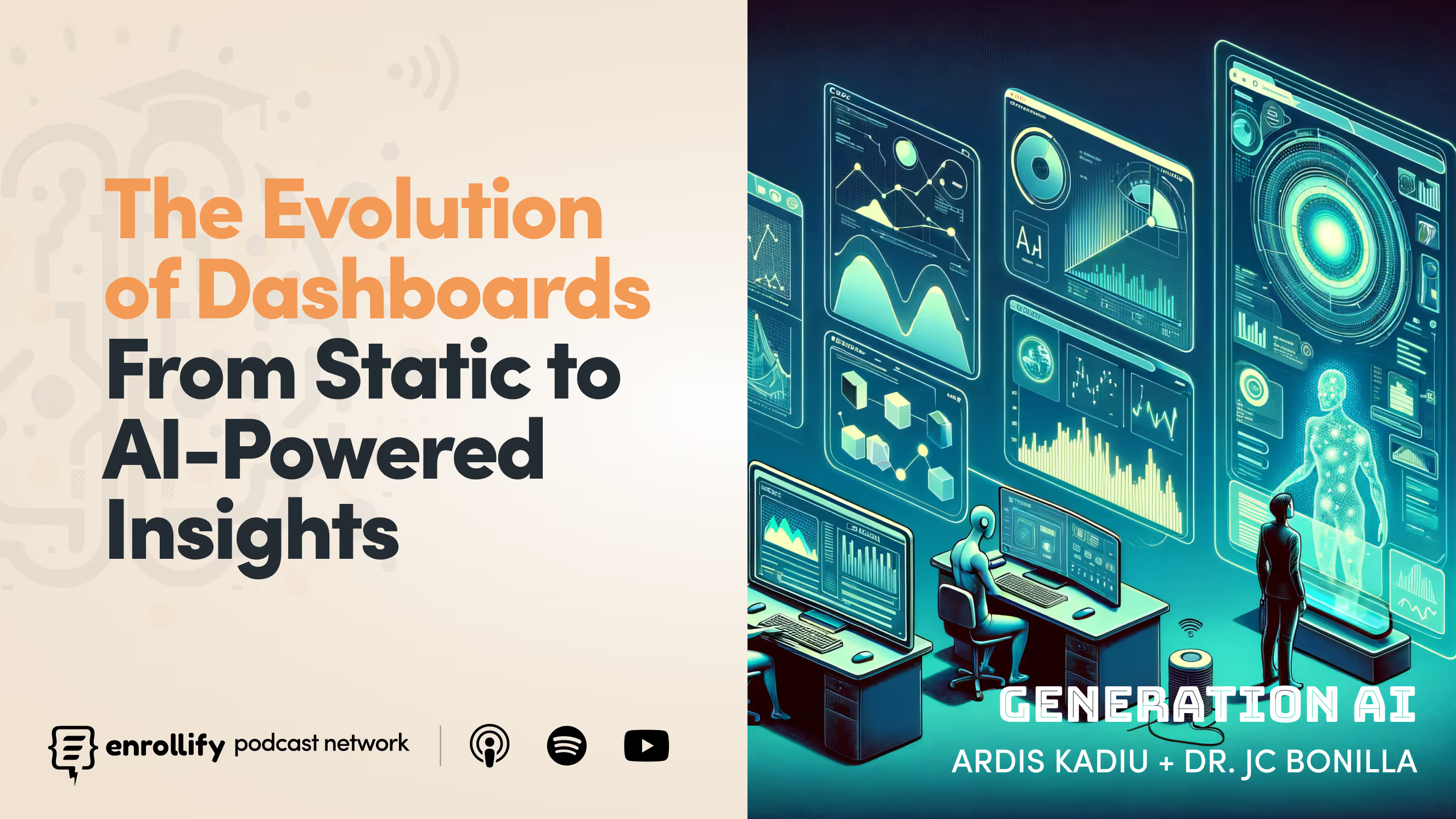
About this Episode: In this episode of Generation AI, hosts Ardis Kadiu and Dr. JC Bonilla dive into the evolution of dashboards and how AI is transforming the way higher education leaders interact with and derive insights from data. They explore the limitations of traditional dashboards and discuss how generative AI is empowering users to ask questions in natural language, receive personalized insights, and make data-driven decisions. The episode highlights the importance of data trust, the role of AI in anomaly detection, and the potential for AI-powered dashboards to provide predictive and proactive insights. Listeners will gain a deeper understanding of how AI is revolutionizing business intelligence in higher education and why it matters for leaders looking to navigate the future of data-driven decision-making.
Key Takeaways
- The Evolution of Dashboards
- Originating from decision support systems in the 1960s, dashboards have become integral for tracking key performance indicators (KPIs) in education.
- Modern dashboards marry robust back-end data sources with user-friendly visualizations.
- AI is transforming dashboards from static, retrospective tools to dynamic, predictive solutions.
- AI’s Role in Dashboard Transformation
- AI enables automated dashboard creation, adapting visualizations based on real-time queries and user intent.
- Predictive analytics provide foresight into student and institutional trends, moving beyond mere retrospective analysis.
- Enhanced personalization ensures that dashboards cater to individual cognitive preferences and professional roles.
- The End of Static Dashboards
- With conversational AI, users can query dashboards using natural language, eliminating the need for rigid templates.
- Semantic search capabilities bridge the gap between disparate data sources, ensuring consistency and accuracy in reporting.
- Proactive anomaly detection empowers institutions to act swiftly on both challenges and opportunities.
Episode Summary
The Historical Journey: Dashboards in Higher Ed
JC introduces the origins of dashboards, explaining how they evolved from decision support systems in the 1960s to business intelligence tools in the 1980s. In higher education, dashboards have historically been built around siloed data systems like student information systems (SIS) and CRM platforms. Ardis highlights how modern dashboards, such as those in Element451, combine these sources with visualization tools like Tableau and Power BI to deliver actionable insights.
The Limitations of Traditional Dashboards
While dashboards have become essential tools, they often suffer from adoption challenges due to complexity, static designs, and disconnected data sources. JC emphasizes that dashboards in higher education frequently fail to address the nuanced needs of users, such as admissions teams, provosts, or presidents, who require tailored insights rather than generic reports.
How AI is Redefining Dashboards
Generative AI and semantic search are ushering in a new era for dashboards. Ardis explains how AI can generate SQL or Python code to query data and create custom visualizations in real time. This eliminates the dependency on analysts and allows users to interact with data more intuitively. JC envisions dashboards that are self-updating, predictive, and capable of providing personalized insights based on user preferences and historical behaviors.
The Future: AI-Powered Personalization and Prediction
Personalization in AI-driven dashboards means more than just filtering data—it involves tailoring insights to individual roles and cognitive styles. JC paints a picture of dashboards that adapt to how users prefer to consume data, whether through charts, narratives, or hybrid approaches. Predictive capabilities allow institutions to anticipate enrollment trends, identify anomalies, and proactively address both opportunities and challenges.
Connect With Our Co-Hosts:
Ardis Kadiu
https://www.linkedin.com/in/ardis/
https://twitter.com/ardis
Dr. JC Bonilla
https://www.linkedin.com/in/jcbonilla/
https://twitter.com/jbonillx
About The Enrollify Podcast Network:
Generation AI is a part of the Enrollify Podcast Network. If you like this podcast, chances are you’ll like other Enrollify shows too! Some of our favorites include The EduData Podcast and Visionary Voices: The College President’s Playbook.
Enrollify is made possible by Element451 — the next-generation AI student engagement platform helping institutions create meaningful and personalized interactions with students. Learn more at element451.com.
Connect with Us at the Engage Summit:
Exciting news — Ardis will be at the 2024 Engage Summit in Raleigh, NC, on June 25 and 26, and we’d love to meet you there! Sessions will focus on cutting-edge AI applications that are reshaping student outreach, enhancing staff productivity, and offering deep insights into ROI.
Use the discount code Enrollify50 at checkout, and you can register for just $99! This early bird pricing lasts until March 31.
Learn more and register at engage.element451.com — we can’t wait to see you there!
Remember to follow us on your favorite podcast platform to not miss any episodes of "Generation AI." Reach out with any questions or topics you'd like us to cover in future episodes. We thrive on your feedback and are here to offer insights that resonate with you. Thank you for joining us on this AI journey!




.svg)
.svg)
