






About the Episode
About The Episode:
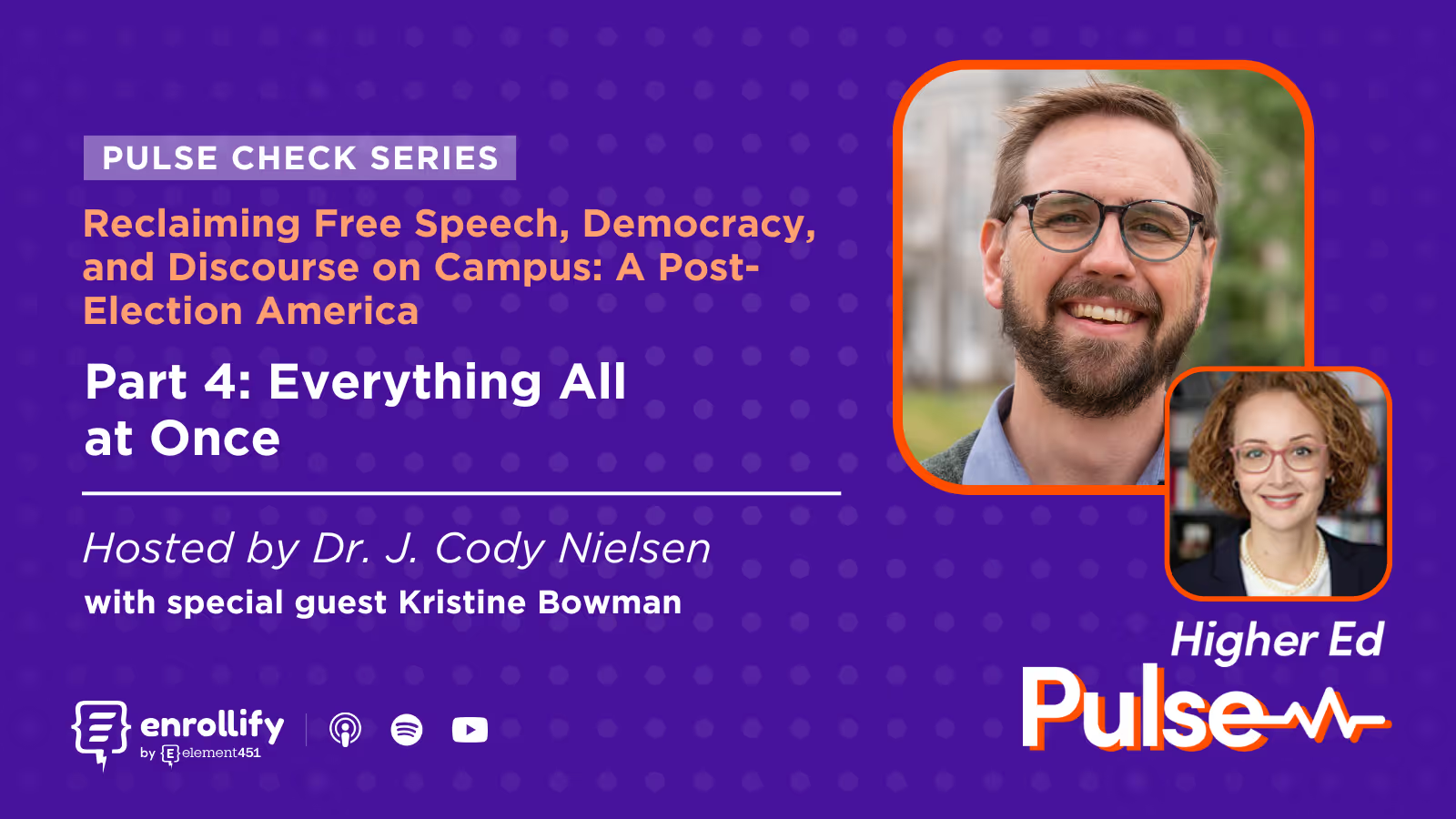
Welcome to Reclaiming Free Speech, Democracy, and Discourse on Campus a Post Election America. I’m Dr. J. Cody Nielsen, Host of After Further Consideration. No matter the outcome, the 2024 election will set the stage for the next decade of higher education. In this Pulse Check series I’ll interview policy makers and practitioners to discuss their outlook on higher education, the ways in which we might reestablish higher education’s public trust, and what a post 2024 election will look like on campus. From expression of speech to civil democracy and discourse, America’s higher education system is at a dramatic turning point and we’re here to break it down. Let’s dive into today’s episode.
Key Ideas:
- Many era’s have had really significant protests on campus
- Mechanisms for protests have been dominant at different times
- There are ways to reconsider free speech on campus through a “New Democratic Process”
- Free Speech and Equality must be equally considered amongst campus administrators.
What is the Current State of Free Speech on College Campuses?
Free speech on college campuses is at a crossroads, with increasing student protests reminiscent of movements from the Civil Rights Era to the Vietnam War. Kristine Bowman explains that today's protests often combine multiple tactics, from marches to sit-ins, reflecting a renewed fervor for activism. However, she notes that campus leaders face unprecedented challenges navigating these dynamics in a polarized political climate.
Bowman highlights the legal doctrines that guide free speech policies, such as the time, place, and manner framework, which allows institutions to regulate speech while maintaining their core functions. The evolving government speech doctrine also complicates matters, particularly in the context of academic freedom and institutional neutrality.
How Does Post-2024 Politics Impact Higher Education?
The 2024 election has ushered in a Republican-controlled presidency and Congress, raising significant questions about the future of higher education. Bowman discusses potential implications, including federal regulations tying research funding or financial aid to compliance with free speech policies. She reflects on the 2019 executive order under Trump's first administration, which linked federal funding to adherence to the First Amendment, and considers how similar strategies might evolve in the coming years.
Bowman contrasts two perspectives on institutional responses to free speech: the traditionalist view, which emphasizes neutrality and non-intervention, and the new democratic view, which advocates for proactive engagement to foster inclusive dialogue. She underscores the challenges universities may face in balancing these approaches under increased political scrutiny.
How Can Institutions Navigate Free Speech Challenges?
Universities must grapple with the tension between creating safe spaces for marginalized groups and encouraging brave spaces for open dialogue. Bowman emphasizes the importance of fostering environments where all students can engage productively, even when discussions are uncomfortable or divisive. She draws on her research, including her 2023 article in the Journal of Law and Politics, to argue for a "new democratic model" of free speech that prioritizes equitable access to knowledge creation.
For private colleges, constitutional values like free speech and equality remain integral, even if not legally mandated. Leaders like Wesleyan University President Michael Roth exemplify how private institutions can champion these principles, shaping societal norms and reinforcing higher education’s public trust.
What’s Next for Free Speech in Higher Education?
Looking ahead, Bowman predicts heightened tensions as universities navigate federal policies, legal challenges, and campus activism. She advises institutions to adopt proactive strategies that align with both legal principles and their mission to foster intellectual growth. This includes leveraging lessons from history, understanding the lived experiences of students, and engaging in thoughtful dialogue across ideological divides.
Enrollify is produced by Element451 — the next-generation AI student engagement platform helping institutions create meaningful and personalized interactions with students. Learn more at element451.com.
Attend the 2025 Engage Summit!
The Engage Summit is the premier conference for forward-thinking leaders and practitioners dedicated to exploring the transformative power of AI in education.
Explore the strategies and tools to step into the next generation of student engagement, supercharged by AI. You'll leave ready to deliver the most personalized digital engagement experience every step of the way.
👉🏻 Register now to secure your spot in Charlotte, NC, on June 24-25, 2025! Early bird registration ends February 1st.






.svg)
.svg)
