






About the Episode
About The Episode:
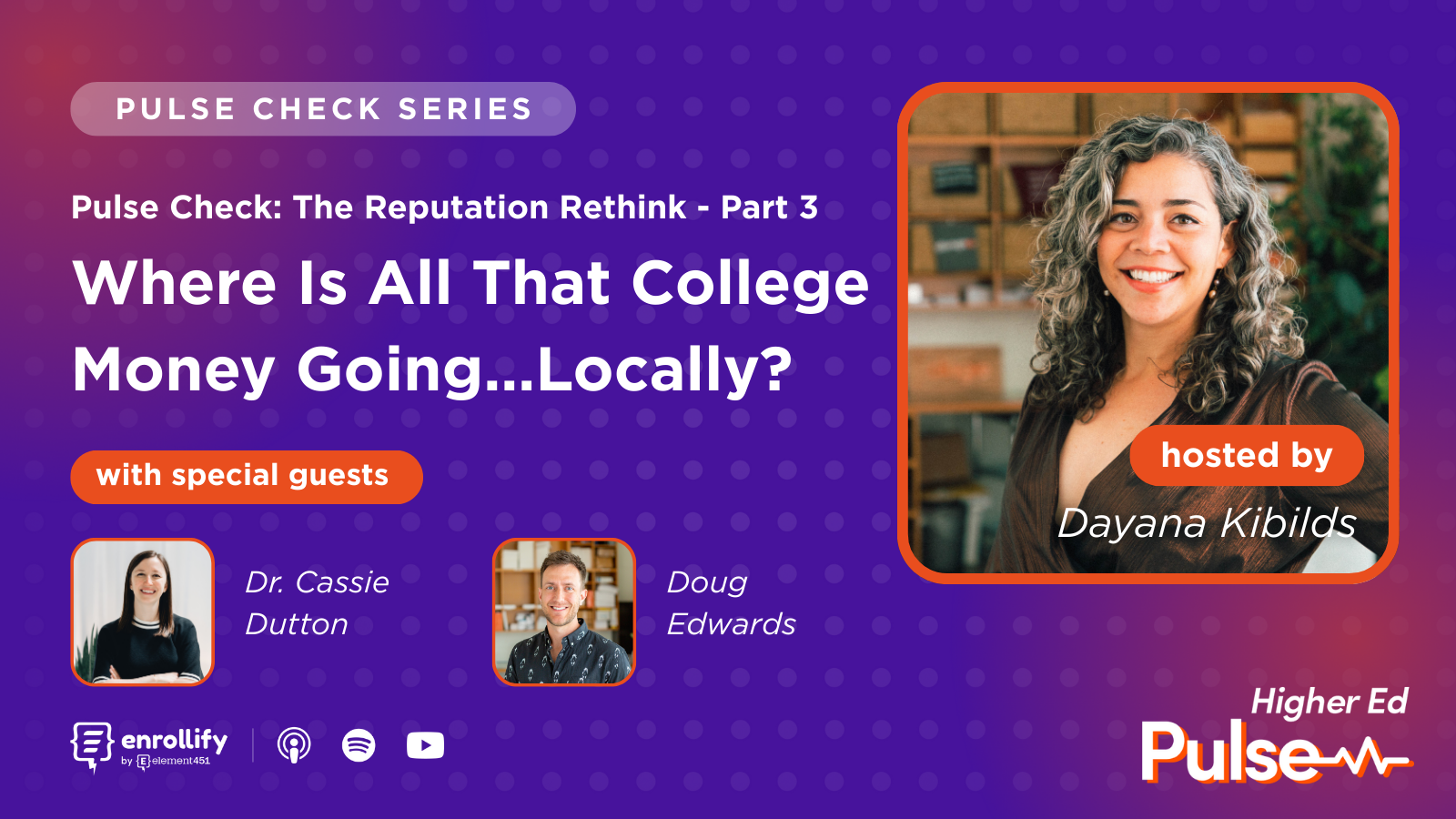
In this episode of Pulse Check: The Reputation Rethink, we turn to two areas where public skepticism about higher education becomes more pronounced: money and local community impact.
Ologie’s national study revealed that most people believe colleges and universities provide value to society, but when the conversation shifts to how institutions are funded and how they show up in their communities, confidence begins to waver.
Host Dayana Kibilds is joined by Doug Edwards, Chief Strategy Officer at Ologie, and Dr. Cassie Dutton, Research Director at Ologie, to unpack what the data tells us. Only 39% of respondents believe taxpayer dollars are being allocated to the areas they care most about. At the same time, only about half say they see meaningful benefits from their local colleges and universities.
Together, they explore where that skepticism comes from, what people actually want to see prioritized, and how institutions can respond in ways that feel clear, visible, and grounded in everyday life. This episode is about understanding the gap between value and visibility, and what it would take to close it.
Money and the Visibility Problem
Day sets up the episode by returning to the series’ core insight: the public believes higher education matters, but they do not always see the impact. She explains that today’s focus is on two areas where that gap turns into real skepticism: how institutions handle money and how they show up in their local communities.
What People Think About Taxpayer Dollars
Cassie shares the survey results on whether people believe their taxpayer dollars are going to the areas they care about most. Only 39% agree, with notable differences by political affiliation, geography, and income. The data points to specific groups where skepticism is strongest, including conservatives, rural residents, and higher-income respondents.
Why Funding Feels Confusing to the Public
Doug explains that most people do not understand how colleges and universities are funded, especially the differences between public and private institutions. He talks about how a small number of highly resourced universities shape perceptions for the entire sector and how misunderstandings about endowments and budget trade-offs create distrust.
Where the Public Wants College Money to Go
Cassie describes what people said when asked where funding should be prioritized. Two themes rise to the top: jobs and community impact. She explains what respondents mean by “jobs,” including career preparation, high-demand fields, and better support for skilled trades and vocational pathways. She also shares additional priorities people want to see, including scholarships, tuition reduction, teaching resources, and research.
Communicating Costs in a Way That Builds Trust
Doug outlines practical ways institutions can reduce confusion through clearer communication. He discusses pre-funnel financial literacy for parents and students, along with ongoing transparency for current students through emails, short videos, and simple breakdowns of how tuition and fees are used. He also connects this work to long-term alumni trust and giving.
How People Experience Colleges in Their Communities
Cassie introduces the community impact finding: only about half of respondents say they see benefits from their local colleges and universities. She shares how some participants feel institutions are pulling away from their communities and explains how that perception connects to broader reputation.
Big Stories, Small Stories, and Local Proof
Doug reflects on how higher education often highlights large-scale stories like major research funding and global reach. He argues that institutions need to balance those stories with local examples that people can recognize in everyday life, and he emphasizes that community members should be the ones telling those impact stories, not the institution.
What Local Engagement Can Look Like in Practice
Cassie shares the types of community involvement people want to see, including partnerships that lead to local jobs, internships and co-ops, admissions pathways for local students, and campus access that makes the institution feel like a community hub. She also discusses K–12 partnerships, youth access, and ways campuses can share space and resources.
Showing Up, Even When It’s Hard
Doug acknowledges that community engagement is difficult, especially for smaller or struggling institutions. He explains that people notice effort and presence, and he suggests that “striving” matters. Cassie reinforces that authenticity is the difference between real connection and box-checking.
From Local Trust to National Reputation
Doug expands on how land-grant missions and extension programs offer a powerful model for community connection. He imagines what could change if institutions made local work more visible at scale and shares examples of practical community-facing ideas that tie institutional expertise to everyday needs.
Examples of Institutions Doing This Well
Doug shares examples of universities and colleges known for strong community ties, including land-grant institutions, public systems, and community-engaged private and liberal arts colleges. He emphasizes that there is no single model and that any institution can strengthen local relationships in a way that fits its context. A few examples he names includes: University of Kentucky, West Virginia University, University of Florida, Oregon State University, Tufts University, Denison University, and more.
Closing Reflection and What’s Next
Day closes by reinforcing the episode’s main takeaway: the public is not asking institutions to be perfect. They want colleges and universities to be visible, understandable, and present in the places where daily life happens. She previews the next episode, which will focus on alumni, ROI, and supporting graduates beyond commencement.
Resources Mentioned in This Episode
The Reputation Rethink (Ologie Research Report)
Download the full report and explore the findings and recommendations.Day’s Blog about the Report
Read more commentary and thoughts from Day about the research findings from The Reputation Rethink.
Enrollify is produced by Element451 — the next-generation AI student engagement platform helping institutions create meaningful and personalized interactions with students. Learn more at element451.com.





.svg)
.svg)
