






About the Episode
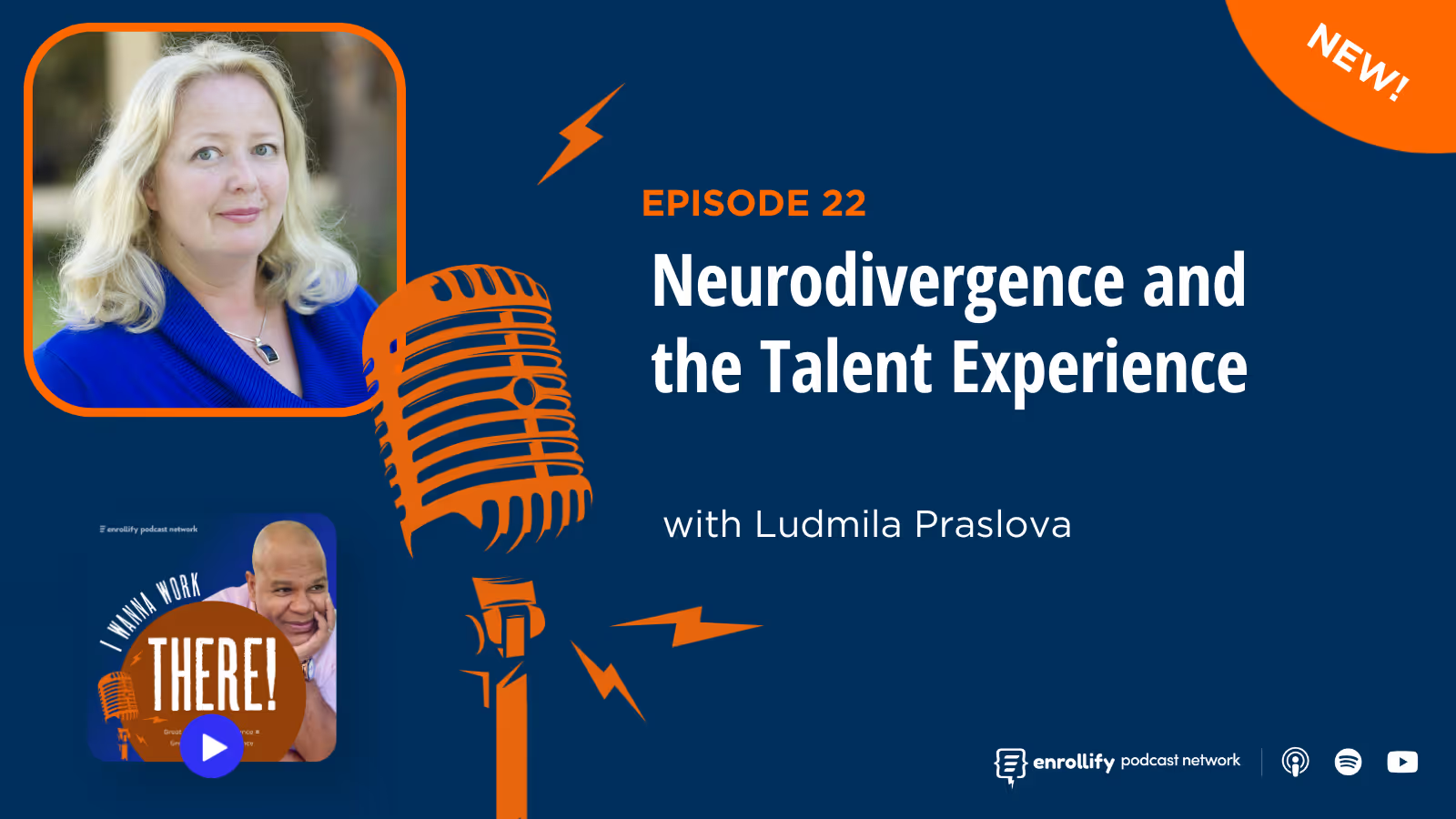
About the episode: It can be a lonely world in the workplace for those who have invisible or hidden disabilities, that is conditions that are mostly neurological in nature such as: ADHD, autism, epilepsy, anxiety disorders, mental illnesses, fibromyalgia, migraines, diabetes, sleep disorders, asthma, allergies, Asperger Syndrome, Crohn’s Disease, other forms of chronic pain, etc. The Fast Company commentary “Why employers need to change how they onboard neurodivergent workers” introduces us to an autistic college professor whose introduction to her then-new employer left much to be desired because a condition such as hers was not taken into consideration when planning an off-campus orientation. That professor, Ludmila Praslova, visited “I Wanna Work There!” to discuss her experiences and the world that she would like to see for neurodivergent employees.
Here are your takeaways for episode 22:
- You will walk a mile in Ludmila’s shoes, learning what it is like to be forced to fit into an employment structure that does not consider neurodiversity.
- You will learn how to engage with neurodivergent colleagues.
- You will find out how colleges and universities can work to ensure that neurodivergent employees enjoy a satisfactory work experience.
Episode Summary
How Does Neurodivergent Inclusion Impact Workplace Success?
Ludmila Praslova’s experiences highlight the importance of intersectional inclusion, where onboarding, training, and daily workflows must consider neurodivergence and financial accessibility. For instance, Ludmila recounts a challenging experience with an employer who required faculty to attend an onboarding retreat in a remote location, creating barriers due to her sensory sensitivity and lack of transportation. By sharing her personal journey, Ludmila emphasizes that many neurodivergent professionals face similar barriers, which can hinder their success and sense of belonging in academia. Creating an environment that accommodates diverse neurological and socio-economic backgrounds can ultimately lead to more engaged, productive, and loyal faculty and staff.
How Should Institutions Approach DEI Marketing Without Tokenizing?
Ludmila discusses a common pitfall in DEI marketing: tokenization, where diverse faculty or staff are highlighted as symbols of an institution’s inclusivity without genuine support or agency. Neurodivergent and disabled staff are especially vulnerable to this, as institutions sometimes overlook authentic engagement in favor of curated stories or staged photos. Ludmila recommends that universities be transparent with staff about their intentions and offer them the choice to participate meaningfully, enabling them to represent themselves authentically. For neurodivergent staff, this can mean sharing their stories in ways that feel true to their experiences without the “inspiration narrative” that can sometimes accompany disability representation.
What Steps Can Higher Education Take to Foster Inclusive Work Environments?
For universities, the first step in building an inclusive work environment for neurodivergent employees is to assess the current culture and ask their employees about barriers they face. Ludmila advises starting with anonymous feedback channels, where neurodivergent staff can voice their needs safely, without fear of repercussions. This information can highlight areas for immediate improvement, such as enhancing physical and sensory accessibility on campus or ensuring fair and transparent promotion practices. These changes signal a commitment to genuine inclusivity, helping to create a safe and supportive environment where neurodivergent staff can thrive.
About the Show: I Wanna Work There! takes a look at how colleges and universities can develop competitive, compelling employer brands. Join us for an honest and solutions-based look at the issues that surround institutions positioning themselves as employers of choice.
About The Enrollify Podcast Network: I Wanna Work There is a part of the Enrollify Podcast Network. If you like this podcast, chances are you’ll like other Enrollify shows too!
Some of our favorites include Confessions of a Higher Ed Social Media Manager and Talking Tactics.
Enrollify is made possible by Element451 — the next-generation AI student engagement platform helping institutions create meaningful and personalized interactions with students. Learn more at element451.com.
Connect with Us at the Engage Summit: Exciting news — many of your favorite Enrollify creators will be at the 2024 Engage Summit in Raleigh, NC, on June 25 and 26, and we’d love to meet you there! Sessions will focus on cutting-edge AI applications that are reshaping student outreach, enhancing staff productivity, and offering deep insights into ROI.
Use the discount code Enrollify50 at checkout.
Learn more and register at engage.element451.com — we can’t wait to see you there!




.svg)
.svg)
