



About the Episode
Got a story to tell? An innovative idea to share? Fill out our guest nomination form and let's chat!
About the Episode:
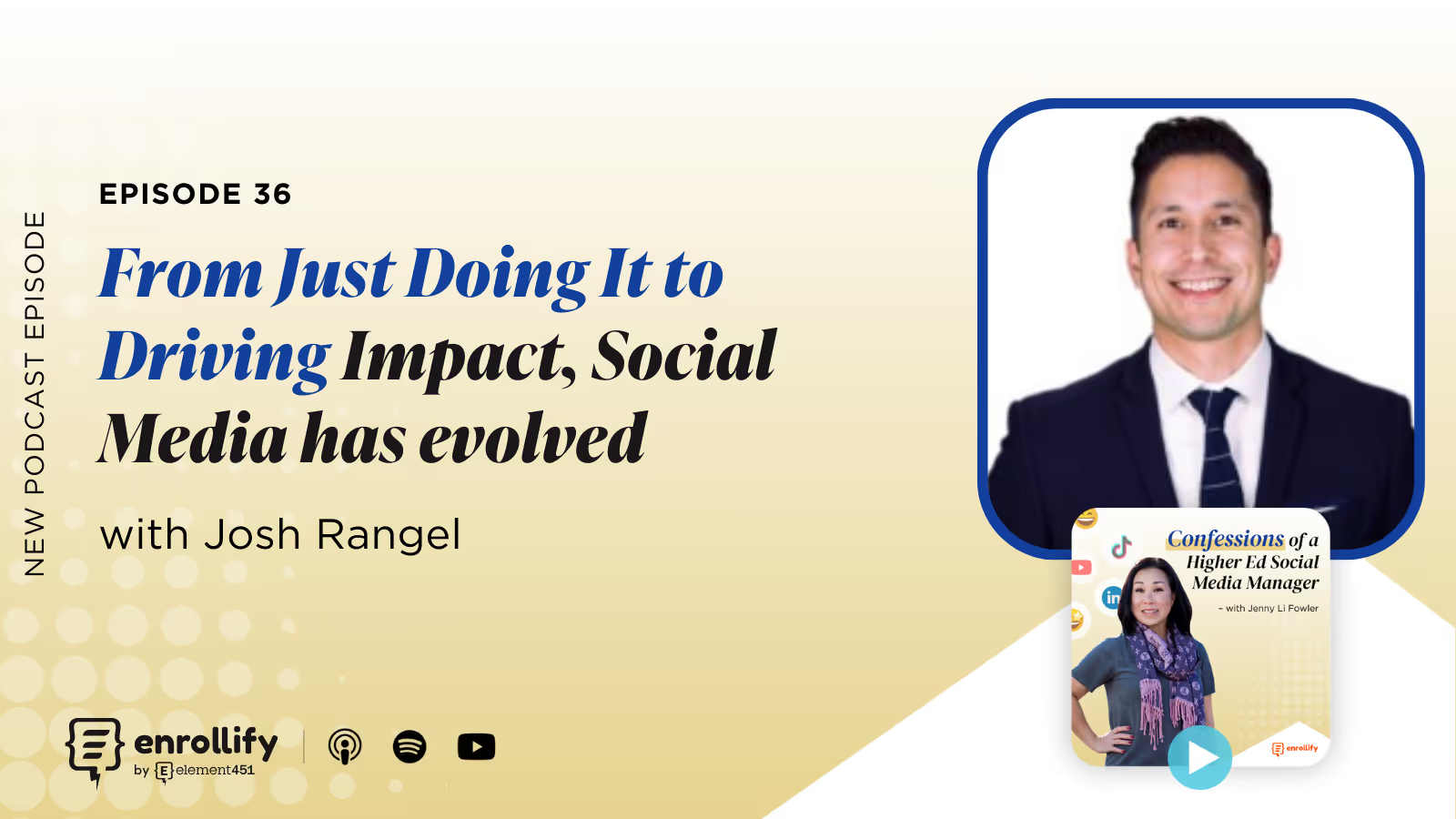
Jenny sits down with Josh Rangel, a seasoned social media expert, to unpack the evolution of social media marketing. From the early days of Twitter to today’s high-speed, high-volume content landscape, Josh shares insights on what’s changed, what’s stayed the same, and why organic social media still matters. He also offers advice for social media managers, emphasizing the importance of building a team, measuring success effectively, and—above all—having fun.
Key Takeaways
- The social media landscape has drastically changed – The speed, sophistication, and volume of content have increased, making social teams more strategic than ever.
- One-person social teams aren’t sustainable – To succeed in today’s environment, organizations need dedicated strategists, creatives, and analysts.
- Organic social media is a long game – It builds brand loyalty and awareness in a way that paid media alone cannot.
- Organic informs paid strategy – If content performs well organically, it’s a strong candidate for paid amplification.
- Social media should be fun – While results matter, social media teams should focus on creativity, engagement, and building relationships.
How Did Josh Rangel Get Started in Social Media?
Josh's career in social media started unexpectedly. While working in traditional PR in 2008, he was tasked with finding YouTube creators for a Klondike Bar campaign—before influencers were even a thing. From there, he created Klondike’s first Twitter account and expanded into managing social media for other Unilever ice cream brands. This early exposure to brand social media set the foundation for his career in the industry.
What Are the Biggest Changes in Social Media Marketing?
According to Josh, the biggest shift is the speed at which social teams must now operate. Trends emerge and fade within hours, and brands must react quickly or risk being left behind. Social media has also become more sophisticated, with advanced analytics, content management systems, and structured teams replacing the scrappy, experimental approach of the early days. Additionally, the impact of social media on business objectives is more measurable than ever, making it an essential part of a brand’s marketing strategy.
Why Can’t One Person Handle Social Media Alone?
Jenny and Josh discuss how, in the early days, social media roles were often assigned as an afterthought—“other duties as assigned.” Today, however, the demands are far too high for a single person to handle. Successful social teams require a mix of strategists, creatives, and data analysts to create impactful content, engage audiences, and measure results. Josh emphasizes that higher education institutions, in particular, need to move beyond the “team of one” approach to stay competitive.
Why Is Organic Social Media Still Important?
Despite the rise of paid advertising, Josh is a strong advocate for organic social media. He believes that organic content is key to earning attention, building relationships, and fostering brand loyalty. Unlike paid media, which guarantees reach but not engagement, organic social relies on relatability and authenticity. Over time, it helps brands stay top of mind with their audiences.
How Does Organic Social Inform Paid Strategy?
Josh highlights the importance of using organic content as a testing ground for paid media. If a post performs well organically, it’s likely to do even better with a paid boost. On the flip side, content created specifically for paid campaigns often feels too much like an ad and fails to engage audiences. By leveraging organic insights, brands can create more effective paid strategies.
How Can Social Media Managers Prove the Value of Organic Content?
One of the biggest challenges social media teams face is convincing leadership of organic social media’s value. Josh advises tailoring reporting to what executives care about—whether that’s sentiment analysis, engagement trends, or direct customer feedback. Sharing comments from real users and tracking long-term brand growth can help demonstrate the impact of organic efforts.
What’s Josh’s Biggest Social Media Confession?
Josh’s confession? Social media should be fun. While there’s pressure to meet KPIs and respond to trends, he encourages social media professionals to remember that they work in a creative field. A typo, a low-performing post, or a negative comment from “User987XYZ” isn’t the end of the world. Instead, social teams should focus on the bigger picture: engagement, storytelling, and brand-building.
About the Show: Confessions of a Higher Ed Social Media Manager covers the do's, don'ts, and dynamics of the complex and challenging social media ecosystem. We analyze the successes and failures of those in the higher education social space — what went right, what went wrong, and what are the lessons learned. We’ll share actionable steps so you can push past the pitfalls others have faced. No matter if you're on a team of 20 or a team of one, we've got you covered. Confessions of a Higher Ed Social Media Manager is hosted by Jenny Li Fowler and is a proud member of the Enrollify Podcast Network.
Connect With Our Host:
https://twitter.com/TheJennyLi
About The Enrollify Podcast Network:
Confessions of a Higher Ed Social Media Manager is a part of the Enrollify Podcast Network. If you like this podcast, chances are you’ll like other Enrollify shows, too!
Some of our favorites include Higher Ed Pulse and Confessions of a Higher Ed CMO.
Enrollify is produced by Element451 — the next-generation AI student engagement platform helping institutions create meaningful and personalized interactions with students. Learn more at element451.com.
Attend the 2025 Engage Summit!
The Engage Summit is the premier conference for forward-thinking leaders and practitioners dedicated to exploring the transformative power of AI in education.
Explore the strategies and tools to step into the next generation of student engagement, supercharged by AI. You'll leave ready to deliver the most personalized digital engagement experience every step of the way.
👉🏻 Register now to secure your spot in Charlotte, NC, on June 24-25, 2025!