






About the Episode
About the Episode:
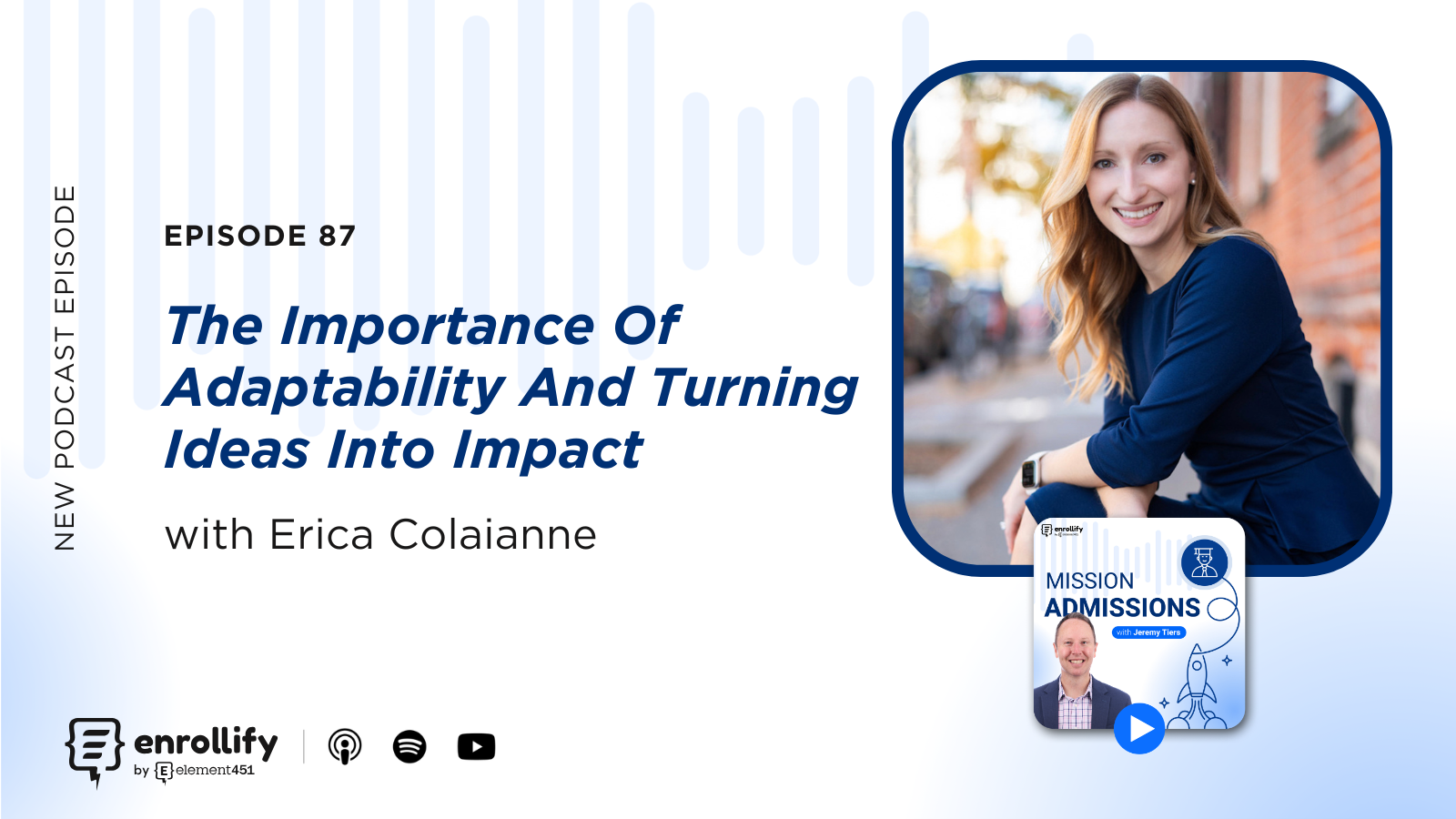
Jeremy Tiers sits down with Erica Colaianne, Director of Content Strategy and Audience Development at the University of Michigan, to explore what it really takes to turn ideas into action in enrollment marketing. The conversation dives into the challenges of breaking out of routine, fostering creativity within teams, and building systems that support execution—not just ideation. If you’ve ever struggled to move from inspiration to implementation, this episode delivers practical, people-first insights.
Key Takeaways
- Comfort with routine is the biggest barrier to innovation in higher education content marketing
- Adaptability is a critical skill for modern enrollment marketers and leaders
- Structured brainstorming (like recurring “idea exchanges”) drives consistent innovation
- Audience research and engagement are essential for effective marketing strategy for student recruitment
- Collaboration—not solo execution—leads to stronger, more actionable ideas
- Authentic, student-driven content outperforms overly polished institutional messaging
- Leaders must create safe environments where experimentation is encouraged
- Consistent ideation systems help teams avoid losing valuable content ideas
Episode Summary
Why Enrollment Marketing Teams Struggle to Execute New Ideas
One of the most relatable themes in this episode is the gap between having ideas and actually executing them. Erica Colaianne points out that the biggest barrier isn’t a lack of creativity—it’s comfort with routine. Teams fall into familiar workflows, and introducing something new can feel risky, especially when representing a university brand.
This challenge is particularly relevant in enrollment marketing, where the stakes feel high. Every piece of content influences prospective student decisions, which can make teams hesitant to experiment. But that hesitation often leads to stagnation, where institutions continue producing safe, predictable content that fails to stand out.
The takeaway? Innovation requires intentional disruption of routine. Without it, even the best ideas never make it past the brainstorming stage.
Building a Culture of Adaptability in Higher Education Content Marketing
Adaptability isn’t just a buzzword—it’s a necessity. Erica shares how her career evolved alongside the digital transformation of media, reinforcing the importance of staying flexible in a constantly changing landscape.
For teams focused on higher education content marketing, this means embracing uncertainty. You won’t always know if an idea will work—and that’s okay. Audience preferences shift constantly, and success often comes from testing, learning, and iterating.
Leaders play a critical role here. By encouraging open dialogue, inviting dissenting ideas, and normalizing experimentation, they create environments where teams feel empowered to try new approaches. This mindset shift is essential for staying competitive in today’s fast-moving digital ecosystem.
The Power of Structured Brainstorming for Content Strategy
One of the most actionable strategies shared in the episode is the “Idea Exchange”—a recurring, structured brainstorming session designed to capture and develop ideas.
Rather than relying on spontaneous inspiration, Erica’s team meets regularly to share content that inspired them, discuss trends, and explore new concepts. This system ensures that ideas aren’t lost in the day-to-day shuffle and creates a consistent pipeline of creative input.
For institutions looking to improve their marketing strategy for student recruitment, this approach is a game changer. It transforms ideation from a sporadic activity into a repeatable process, making innovation more sustainable and scalable.
Why Collaboration Drives Better Execution
Another standout insight is the importance of collaboration in moving ideas forward. At Michigan, ideas aren’t handed off to individuals to figure out alone—they’re developed collectively.
This team-based approach reduces friction in execution. Instead of one person feeling overwhelmed, the group works together to refine concepts, determine channels, and plan production. The result is stronger, more cohesive content that aligns with both audience needs and institutional goals.
This is especially important in higher ed, where many teams operate with limited resources. Even small teams can benefit from collaborative workflows, ensuring that ideas are fully विकसित before moving into production.
Authenticity as a Core Student Success Strategy
In a world increasingly influenced by AI-generated content, authenticity is becoming more valuable than ever. Erica emphasizes the importance of showcasing real student experiences—unscripted, unpolished, and genuinely reflective of campus life.
This aligns with broader student success strategies, where connection and relatability play a key role in engagement. Prospective students want to see themselves in your content, not just admire your institution from a distance.
By empowering students to share their own stories and perspectives, institutions can create more meaningful connections and build trust with their audiences. It’s a shift from broadcasting messages to facilitating conversations—and it’s one that resonates deeply with today’s learners.
Connect With Our Host:
Jeremy Tiers





.svg)
.svg)
