






About the Episode
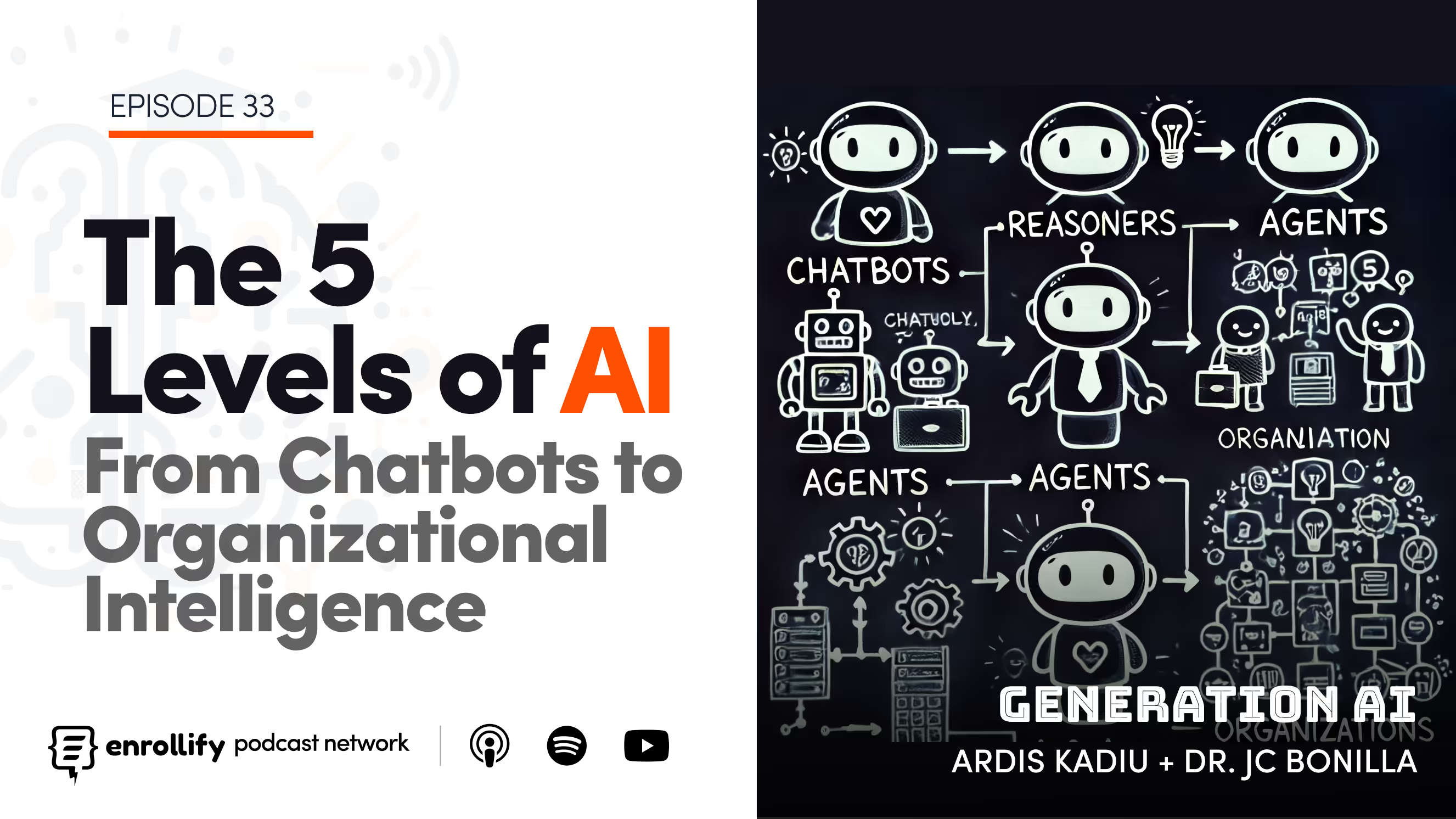
About the Episode: This episode of Generation AI explores the five levels of artificial intelligence capabilities as defined by OpenAI. Hosts Ardis Kadiu and Dr. JC Bonilla discuss each level, from current chatbot technology to future AI that could run entire organizations. They explain how these advancements might change work, innovation, and society.
Key Takeaways
- AI Capability Levels Defined: OpenAI has identified five stages of AI development—Chatbots, Reasoners, Agents, Innovators, and Organizations—with each representing a leap in problem-solving ability and autonomy.
- We’re at Level One: Current AI systems like chatbots enable conversational interfaces and basic problem-solving but rely on predefined training.
- AGI is the Goal: Artificial General Intelligence, or AGI, represents the ability for AI to autonomously solve entirely new problems—a milestone anticipated by 2029.
- Potential Impact on Higher Ed: From virtual assistants enhancing enrollment to agents solving complex problems, each stage of AI offers unique opportunities for transformation in education.
Episode Summary
Level One: Chatbots – Conversational AI in Action
AI at level one delivers conversational interfaces that mimic human interactions. This is the foundation of today’s AI, seen in tools like ChatGPT and CRM systems such as Element 451. These chatbots are capable of:
- Providing instant answers to student queries.
- Automating repetitive administrative tasks.
- Offering personalized communication at scale.
The takeaway? Chatbots represent a significant leap in efficiency, but they’re still limited to predefined training and cannot independently reason or solve new problems.
Level Two: Reasoners – The Next Frontier in Problem Solving
Reasoners go beyond simple conversations by breaking down complex problems and providing strategic solutions. This capability is particularly exciting for higher ed, where AI could:
- Analyze enrollment trends to identify gaps.
- Recommend personalized recruitment strategies.
- Assist in curriculum development by identifying student needs.
Although we are beginning to see glimpses of this in today’s AI, the full realization of reasoning systems is still a work in progress.
Level Three: Agents – Goal-Oriented AI
Agents operate autonomously, executing tasks and making decisions to achieve specific goals. Imagine an AI assistant in higher ed that could:
- Manage entire marketing campaigns, from ideation to execution.
- Handle student recruitment efforts, including outreach and follow-ups.
- Automate financial aid processes, ensuring accuracy and timeliness.
This level represents the bridge between human-like reasoning and real-world application, amplifying productivity across industries.
Level Four: Innovators – Pioneering New Solutions
AI as an innovator introduces novel ideas and solutions to problems previously unsolvable. For higher education, this could lead to:
- Breakthroughs in adaptive learning technologies.
- Advanced forecasting for institutional planning.
- Innovations in resource management to combat rising costs.
The transformative power of AI at this stage has the potential to redefine not just education but entire industries.
Level Five: Organizations – AI-Driven Enterprises
The pinnacle of AI development, level five envisions AI systems capable of running entire organizations. While this may sound like science fiction, the implications are profound:
- Universities managed with AI-optimized resource allocation.
- AI systems designing and implementing new educational models.
- Entire institutions functioning with minimal human oversight.
This stage represents a fundamental shift in how we think about organizational structures and value creation.
Connect With Our Co-Hosts:
Ardis Kadiu
https://www.linkedin.com/in/ardis/
https://twitter.com/ardis
Dr. JC Bonilla
https://www.linkedin.com/in/jcbonilla/
https://twitter.com/jbonillx
About The Enrollify Podcast Network:
Generation AI is a part of the Enrollify Podcast Network. If you like this podcast, chances are you’ll like other Enrollify shows too! Some of our favorites include The EduData Podcast and Visionary Voices: The College President’s Playbook.
Enrollify is made possible by Element451 — the next-generation AI student engagement platform helping institutions create meaningful and personalized interactions with students. Learn more at element451.com.




.svg)
.svg)
