






About the Episode
About the Episode:
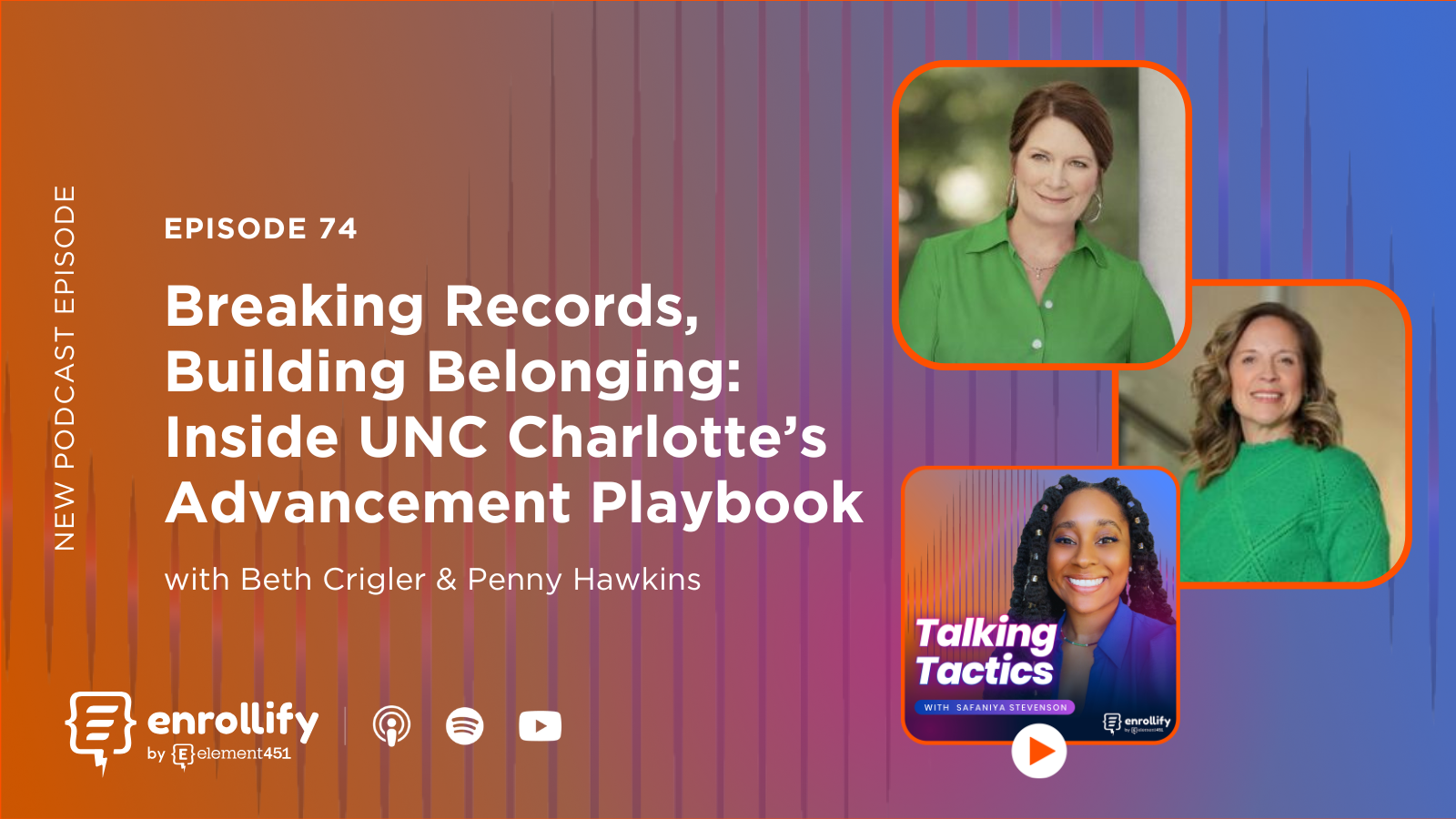
UNC Charlotte is rewriting what modern university advancement can look like—fast, collaborative, and deeply rooted in place. In this episode of Talking Tactics with Safaniya Stevenson, Beth Krigler and Penny Hawkins unpack how the “For the Love of Charlotte” campaign helped fuel a record-breaking surge in giving, including an extraordinary rise in non-alumni engagement and a fundraising trajectory that’s set to hit its $500M goal years ahead of schedule. From building a culture of “getting to yes” to breaking down silos across athletics, academics, and alumni relations, this conversation reveals how intentional alignment, shared language, and community-driven strategy can transform fundraising from transactional efforts into sustained momentum.
Key Takeaways
- Place-based storytelling can transform advancement campaigns. UNC Charlotte leaned into its identity as “Charlotte’s university” to create stronger emotional and community connections.
- Non-alumni donors are a major growth opportunity. 42% of campaign donors came from outside the alumni base.
- A donor-centric culture matters more than rigid structures. The team prioritized collaboration, flexibility, and responsiveness over traditional advancement silos.
- Shared language creates alignment without sacrificing authenticity. Staff across the university were trained to approach donor engagement consistently while maintaining personal connection.
- Integrated advancement and athletics fundraising can accelerate growth. UNC Charlotte’s decision to unify strategy across departments helped unlock new momentum.
- Campaign momentum compounds when volunteers become advocates. Highly engaged board members and campaign chairs became ambassadors and relationship builders for the institution.
- Strategic mini-campaigns sustain year-round engagement. Focused initiatives around scholarships and specific priorities kept energy high across the campaign lifecycle.
- Culture drives results. UNC Charlotte’s rise reflects intentional leadership, collaboration, and a willingness to challenge traditional higher education fundraising models.
Episode Summary
How UNC Charlotte Built a Fundraising Campaign Around Civic Identity
One of the most compelling themes from this episode is how UNC Charlotte tied its fundraising strategy directly to the identity of the city itself. The “For the Love of Charlotte” campaign wasn’t designed as a traditional institutional appeal. Instead, it positioned the university as a driving force behind the city’s growth, workforce development, and future success.
Beth Crigler explained that the campaign’s connection to Charlotte felt natural rather than risky. As the city continues to grow into one of the nation’s most dynamic metropolitan areas, UNC Charlotte saw an opportunity to reinforce its role as the region’s university. The campaign framed giving not just as support for students, but as an investment in Charlotte’s future.
That sense of place became a powerful differentiator. In an increasingly competitive philanthropic landscape, UNC Charlotte successfully aligned its advancement messaging with regional pride, economic growth, and community impact. It’s a strategy other institutions focused on enrollment marketing and higher education content marketing should pay close attention to.
Why UNC Charlotte Is Winning With Non-Alumni Donors
One of the standout data points from the episode was that 42% of campaign donors were non-alumni supporters. That’s a remarkable shift at a time when many institutions struggle to maintain alumni participation rates.
According to Crigler and Hawkins, part of this strategy was born out of necessity. UNC Charlotte is still a relatively young institution, and a large percentage of its alumni base graduated within the last 12 years. Rather than relying exclusively on traditional alumni giving models, the advancement team intentionally expanded its audience to include corporations, community leaders, families, and regional stakeholders.
This broader approach reflects a growing trend in higher education marketing strategy: institutions can no longer limit storytelling to alumni nostalgia alone. By emphasizing workforce development, economic mobility, and civic impact, UNC Charlotte created a compelling case for support that resonated far beyond graduates.
The lesson for advancement professionals is clear: donor pipelines grow faster when universities position themselves as community assets rather than isolated academic institutions.
The Shift From “One-Hit Wonder” Gifts to Sustainable Engagement
Throughout the episode, both leaders emphasized the importance of moving away from transactional fundraising. Instead of chasing isolated major gifts, the team focused on building a long-term culture of engagement and philanthropy.
That strategy required breaking down silos between advancement, alumni relations, communications, athletics, and university leadership. UNC Charlotte adopted a portfolio-based engagement model where multiple departments work collaboratively to cultivate relationships over time.
Hawkins highlighted the importance of shared language and consistent donor engagement training across the division. Rather than having every fundraiser define “cultivation” differently, the team aligned around a common framework while still allowing staff flexibility to build authentic relationships.
This balance between structure and personalization is especially relevant for institutions exploring student success strategies and long-term advancement planning. Consistency builds trust internally, while personalization builds trust externally.
How Leadership and Culture Accelerated Fundraising Growth
Culture emerged as one of the defining factors behind UNC Charlotte’s fundraising success. Both Crigler and Hawkins repeatedly returned to the importance of creating an environment where innovation, collaboration, and experimentation were encouraged.
One phrase stood out during the conversation: “The answer is never no.” That mentality shaped how the advancement team approached donor requests, internal collaboration, and strategic growth opportunities. Instead of defaulting to institutional bureaucracy, the team prioritized flexibility and responsiveness.
That cultural shift extended to university leadership as well. The chancellor, deans, athletic leadership, and boards all embraced philanthropy as a shared institutional priority rather than a responsibility isolated within advancement.
For higher education leaders navigating change, this episode reinforces a critical truth: successful fundraising isn’t just about campaigns or tactics. It’s about building organizational alignment around a shared vision.
The Numbers Behind UNC Charlotte’s Advancement Momentum
The results speak for themselves. UNC Charlotte launched its “For the Love of Charlotte” campaign with a $500 million goal scheduled through 2029. Yet the university expects to reach approximately $440 million by the end of this fiscal year and anticipates surpassing the full goal far ahead of schedule.
Equally impressive is how diversified the giving pipeline has become. Hawkins noted that 86% of gifts over $1 million came from unique donors, demonstrating that the university isn’t relying on a small handful of mega-donors to sustain momentum.
This growth also extends beyond principal gifts. Annual giving, donor participation, alumni engagement, and campaign activity are all trending upward simultaneously. That kind of balanced growth is rare in higher education advancement and reflects intentional strategy across every level of the donor pyramid.
For institutions studying performance indicators in education or exploring trends in higher education marketing, UNC Charlotte offers a compelling case study in what integrated advancement can achieve.
Why Integrated Advancement and Athletics Fundraising Matters
Another innovative move discussed during the episode was UNC Charlotte’s decision to integrate athletics fundraising into its broader advancement strategy. Hawkins recently stepped into a newly expanded leadership role overseeing both campaign operations and athletic philanthropy.
Rather than treating athletics as a separate fundraising ecosystem, the university is creating alignment across institutional priorities. This integrated approach allows donor relationships to develop more holistically while creating opportunities for collaboration between boards, volunteers, and university leaders.
Crigler noted that bringing in leaders from outside traditional higher education fundraising helped challenge assumptions and encourage fresh thinking. That willingness to rethink structures — rather than simply preserve legacy systems — became a recurring theme throughout the conversation.
For universities navigating enrollment challenges and changing donor expectations, this approach offers an important reminder: organizational design can directly impact fundraising performance.
Connect With Our Host:
Enrollify is produced by Element451 — the next-generation AI student engagement platform helping institutions create meaningful and personalized interactions with students. Learn more at element451.com.



.svg)
.svg)
