






About the Episode
About The Episode:
Episode Description:
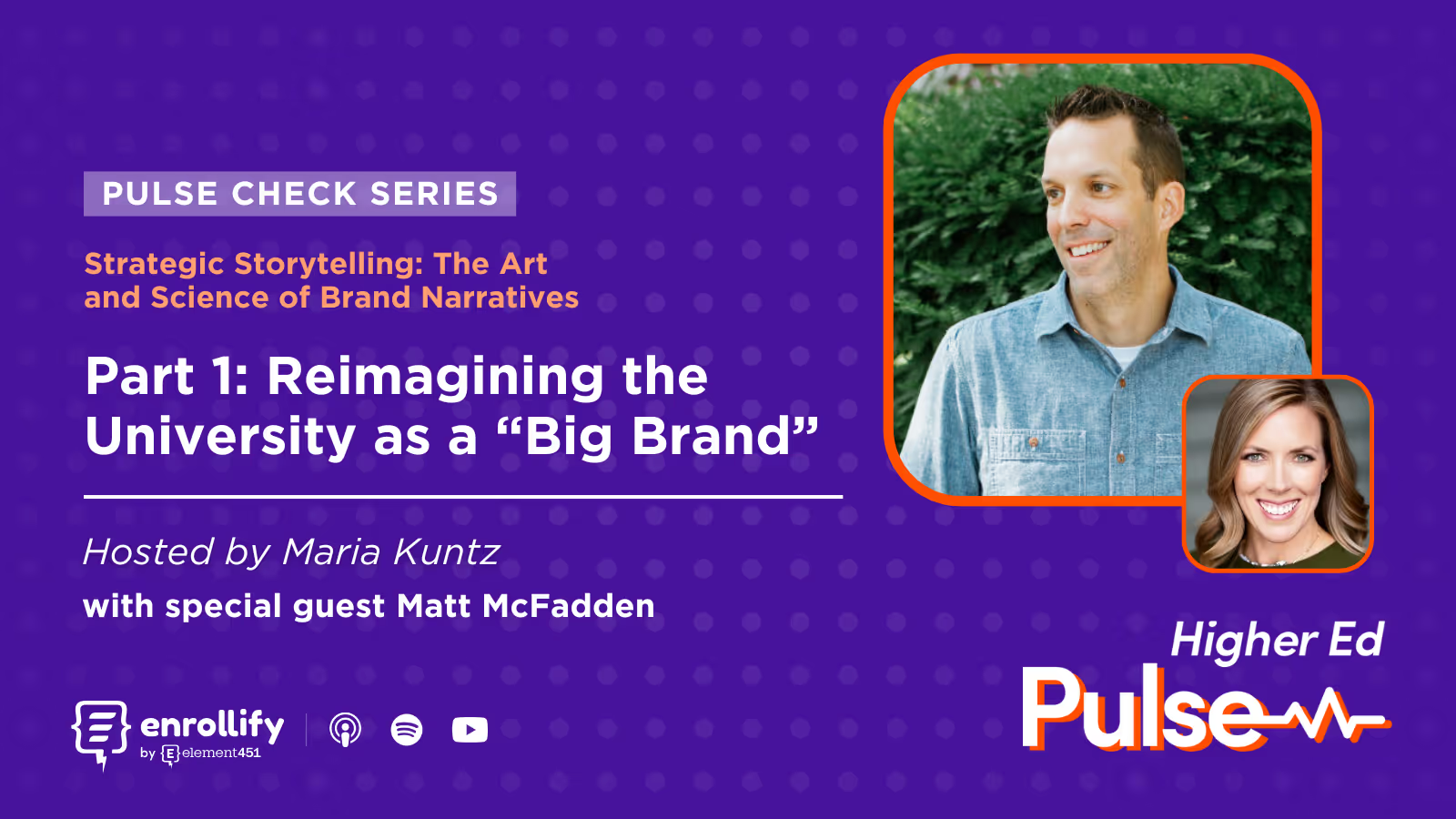
Host Maria Kuntz sits down with Matt McFadden, Senior Vice President at SimpsonScarborough, to explore the evolving role of brand storytelling in higher education. Matt shares insights from his extensive career helping universities transform their marketing strategies, emphasizing the critical connection between brand identity, storytelling, and enrollment. From flagship universities to smaller institutions, this episode dives deep into how colleges can craft value-driven narratives to connect with diverse audiences.
Key Takeaways
- Universities Are Big Brands: Whether it's a small liberal arts college or a flagship university, institutions play a major role in their communities and beyond, with economic, social, and academic impact rivaling that of large corporations.
- Invest in Brand Platforms: A strong brand narrative supported by a cohesive platform ensures storytelling is both intentional and scalable. This foundation allows institutions to connect meaningfully with stakeholders and audiences.
- Brand Awareness Complements Enrollment Marketing: Building top-of-funnel brand awareness helps pave the way for stronger enrollment results by creating emotional connections and positive perceptions.
- Leverage Lifestyle Brand Tactics: Borrow inspiration from brands like Nike and Airbnb by creating narratives tied to values, identity, and experiences that resonate with your audience.
- Customize Your Message: From prospective students to alumni, faculty, and local communities, effective storytelling requires segmenting your message to speak to each audience's unique needs.
- Smaller Institutions Can Innovate Too: With creative thinking and a focus on storytelling, even resource-constrained colleges can develop campaigns that drive meaningful results without massive budgets.
What does it mean for universities to think of themselves as brands?
Matt McFadden opens the episode by reflecting on how universities—both large and small—function as "big brands" with diverse revenue streams including tuition, research funding, philanthropy, and athletics. He acknowledges the historical resistance within higher ed to the idea of branding but notes that this is changing. The rise of Chief Marketing Officers (CMOs) within institutions highlights a growing recognition of marketing as a strategic driver, not just a support function.
Matt emphasizes the importance of treating universities like any other major brand, leveraging their storytelling power to create connections with audiences that extend far beyond the enrollment cycle. For example, from childhood memories of university sports teams to lifelong alumni engagement, universities can foster brand loyalty across a person's entire life.
What lessons can higher ed learn from lifestyle brands like Nike?
To illustrate the power of values-based branding, Matt shares his personal connection to Nike, pointing to their iconic 1987 "Revolution" ad. The campaign combined big-name athletes, everyday individuals, and The Beatles' song "Revolution" to tell a story of empowerment and aspiration. Decades later, Nike continues to connect emotionally with audiences through values-driven storytelling and targeted product marketing.
For universities, Matt suggests a similar two-tiered approach:
- Big Storytelling: Focus on broad, emotionally resonant narratives tied to institutional values, like community impact or innovation.
- Product-Level Messaging: Support enrollment efforts by targeting specific audiences with content and offerings that align with their needs and aspirations.
How can storytelling help overcome challenges like changing perceptions or low enrollment?
Matt shares examples of impactful campaigns his team has worked on:
- University of Colorado System:
The CU System faced challenges around public perception and regional disconnect. To address this, SimpsonScarborough created a campaign highlighting the system’s contribution to the state’s culture, economy, and innovation. Titled “What Do You Love About Colorado?”, the campaign invited public engagement while showcasing how the CU campuses contribute to what makes the state unique. A statewide roadshow and user-generated content built connections across Colorado’s diverse communities, creating a narrative of shared pride. - Boise State University:
Boise State struggled with a low in-state college-going rate, where its biggest competitor wasn’t another university—it was students choosing not to attend college at all. Using Boise State’s strong association with innovation and its recognizable blue football turf, the team developed an “Out of the Blue” campaign. The campaign featured Idaho students who overcame adversity to achieve success, creating relatable stories that inspired others to pursue higher education. The results? A 20% increase in first-time in-state student enrollment over three years. - Scripps College:
For this small women’s liberal arts college in California, SimpsonScarborough focused on showcasing the institution’s modern identity and unique student experiences. Drawing inspiration from lifestyle brands like Conde Nast and Airbnb, the team created a travel-inspired digital experience highlighting the themes of exploration and empowerment. The campaign demonstrated that even small colleges can make a big impact with strategic storytelling and creative execution.
What’s the future of higher education marketing and communications?
Matt predicts that the future of higher ed marketing will focus heavily on:
- Integration with Strategic Planning: Marketing efforts will align more closely with university-wide strategic goals, including philanthropy and enrollment.
- Growth in Graduate and Online Programs: As undergraduate enrollments decline in many states, institutions will invest more in marketing graduate and online programs.
- User-Centered Experiences: From websites to enrollment processes, universities must adapt to meet prospective students' expectations for intuitive, seamless digital interactions.
Enrollify is produced by Element451 — the next-generation AI student engagement platform helping institutions create meaningful and personalized interactions with students. Learn more at element451.com.
Attend the 2025 Engage Summit!
The Engage Summit is the premier conference for forward-thinking leaders and practitioners dedicated to exploring the transformative power of AI in education.
Explore the strategies and tools to step into the next generation of student engagement, supercharged by AI. You'll leave ready to deliver the most personalized digital engagement experience every step of the way.
👉🏻 Register now to secure your spot in Charlotte, NC, on June 24-25, 2025! Early bird registration ends February 1st.





.svg)
.svg)
