


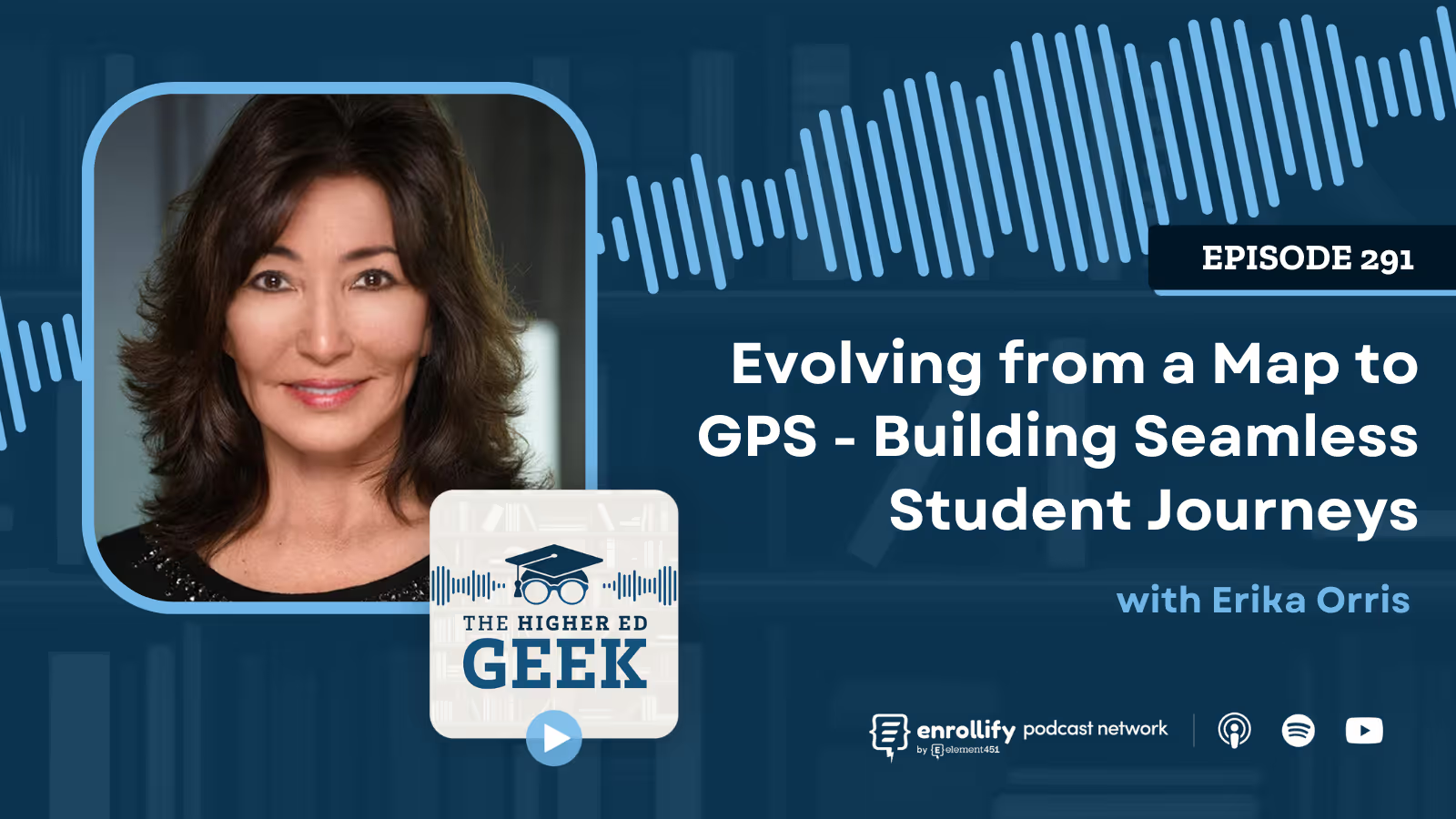




About the Episode
Got a story to tell? An innovative idea to share? Fill out our guest nomination form and let's chat!
About the Episode:
What does it actually look like to run a truly digital-first institution? In this episode, Dustin sits down with Erika Orris, Senior Vice President of Operations at American Public University System, to unpack how her team supports a fully online student body. From personalized program pathways to AI-powered outreach, Erika shares the tools, systems, and philosophies that make American Public University a model for adult learner success. If your institution is serious about student-centric innovation, this is a conversation you don’t want to miss.
Key Takeaways
- Creating operational efficiencies in a 100% digital-first university model
Erika shares how APUS has streamlined student support services by centralizing communication channels and leveraging digital platforms like PeopleGrove and TalkCampus. - AI tools are reshaping the student experience
APUS is piloting AI chatbots and text bots to proactively support prospective and current students, offering personalized interventions when students need them most. - Personalized program pathways guide student success
The institution has built individualized academic and co-curricular roadmaps, helping adult learners visualize their fastest path to graduation with support tailored to their needs. - Mental health and peer support are integral to retention
APUS offers 24/7 multilingual access to mental health resources and peer mentoring, integrated within their broader student services strategy. - Digital transformation is about solving real friction points
The conversation emphasizes starting with pain points and building from there—rather than chasing tech trends—when implementing AI and EdTech tools in higher education.
Episode Summary: What You'll Learn from Episode #291 of The Higher Ed Geek Podcast
What makes APUS a model digital-first institution?
Erika Orris explains that American Public University System is entirely online, which means every operational and support function—from admissions to advising to career services—is virtual. By focusing on operational efficiencies and digital communication tools, APUS helps students navigate the administrative side of higher ed with ease. Tools like PeopleGrove and TalkCampus are cornerstones of this digital support ecosystem, enabling a seamless experience that meets students where they are.
How does APUS support adult learners specifically?
As a primarily adult-serving institution, APUS designs its services with flexibility, relevance, and accessibility in mind. Personalized program pathways help students understand the quickest route to completing their degrees, taking into account transfer credits and military experience. The co-curricular layer guides students to resources like career platforms, mental health apps, and peer mentoring when they’re most likely to need them. Erika emphasizes the importance of just-in-time support and the role of adult learning principles (andragogy) in shaping their strategies.
How is AI being used to enhance student engagement?
AI is no longer a distant innovation—it's embedded in APUS's day-to-day operations. From text bots that check in with students, to AI-assisted outreach for prospective students who may hesitate to engage with human advisors, the institution is piloting several tools aimed at timely, personalized communication. These pilots are rooted in behavior-based triggers (e.g., not logging into the LMS, missed assignments) that help identify when intervention is most impactful.
What role does mental health support play in retention and student success?
Mental health is a major pillar of the APUS student experience. Erika shares that TalkCampus, available in 25 languages and 24/7, offers three tiers of mental health support. This allows faculty and staff to act as connectors, recommending the right support at the right time, rather than expecting students to remember every available resource. Faculty also have access to these services themselves, contributing to a healthier, more resilient academic community.
What’s next for APUS and the future of online learning?
While digital learning has been around for decades, Erika believes it hasn’t evolved nearly as much as it should. APUS is actively working to bring project-based learning and real-time engagement to the forefront. By partnering with IT and EdTech teams, they’re automating what was previously a manual process—building scalable personalized learning journeys. The goal: eliminate administrative friction so students can focus on what matters most—their education.
About the Show: The Higher Ed Geek Podcast explores the impact of edtech on the student experience by speaking with diverse leaders from institutions, companies, and nonprofit organizations. Each week we aim to provide an engaging, fun, and relevant dose of professional development that honors the wide range of work happening all across the higher ed ecosystem. Come geek out with us! The Higher Ed Geek Podcast is hosted by Dustin Ramsdell and is a proud member of the Enrollify Podcast Network.
Connect With Our Host:
Dustin Ramsdell
About The Enrollify Podcast Network:
The Higher Ed Geek is a part of the Enrollify Podcast Network. If you like this podcast, chances are you’ll like other Enrollify shows too!
Some of our favorites include Generation AI.
Enrollify is produced by Element451 — the next-generation AI student engagement platform helping institutions create meaningful and personalized interactions with students. Learn more at element451.com.





.svg)
.svg)
