






About the Episode
Got a story to tell? An innovative idea to share? Fill out our guest nomination form and let's chat!
About the Episode:
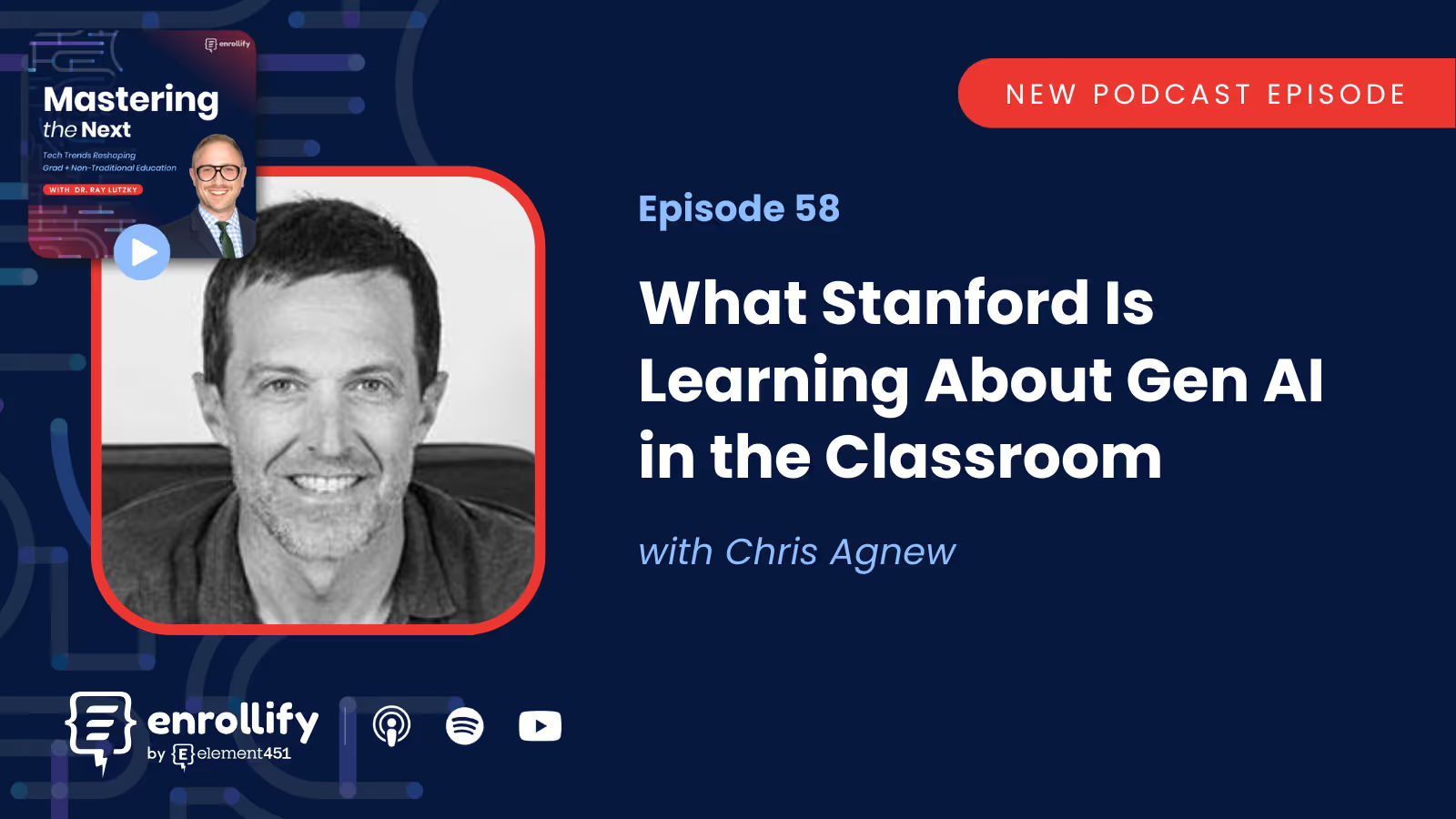
The notion of reimagining education alongside generative AI is no longer a simple sentiment but a necessity. Chris Agnew, Director of the Generative AI for Education Hub at Stanford Accelerator for Learning, joins Ray to outline three roles AI plays in higher education: efficiency, outcomes, and reimagining the classroom. Chris shares what his team has learned about AI’s ability to support educators and why most current tools miss the opportunity to deeply transform how students learn. He also addresses concerns around academic integrity and suggests how real change requires a reevaluation of long-held faculty practices.
Join us as we discuss:
- [1:42] The three buckets of AI applications in higher ed classrooms
- [6:15] Faculty wariness and resistance to change in the AI storm
- [13:55] Why durable skill-based education will become a focal point
Check out these resources we mentioned during the podcast:
- Stanford University’s Generative AI for Education Hub
To hear this interview and many more like it, subscribe on Apple Podcasts, Spotify, or our website, or search for “Mastering the Next” in your favorite podcast player.
How is AI transforming the learning experience in higher ed?
Chris Agnew points out that the AI revolution in education isn't just about integrating flashy new tools. It's about fundamentally rethinking how we structure learning itself. Generative AI, when used with intention, can tailor educational experiences to the individual, something previously only achievable at a small scale. This kind of personalization opens doors to students who might have previously been left behind, potentially reducing achievement gaps and improving outcomes across diverse student populations.
However, this evolution isn't turnkey. It demands a full-scale reimagining of course design, faculty roles, and the use of student data. AI brings not just opportunities, but new responsibilities—and institutions must be willing to step up. Chris emphasizes that the faculty's role must shift from sole content deliverers to facilitators of dynamic, AI-enhanced learning.
Ray and Chris underscore that we're at a crossroads: AI can amplify what’s working or exacerbate what’s broken. Institutions that take the lead in building ethical, inclusive, and forward-thinking AI strategies will shape the global conversation. It's no longer a question of if AI will influence higher ed—but how we ensure it does so responsibly.
Why is equity so critical in AI implementation in higher education?
One of the standout insights from this episode is the focus on equity as a cornerstone of AI deployment in education. Without guardrails, AI tools can reinforce biases and widen gaps rather than close them. Chris emphasizes that AI should never be a shortcut to automation at the expense of student dignity or support. Instead, it should be implemented with a mission-driven lens that centers inclusion, fairness, and access.
This means institutional leaders and tech vendors alike must be intentional about how AI is trained, tested, and integrated. Faculty need training and support to navigate this new frontier responsibly. From admissions chatbots to generative tools in classrooms, the potential is vast—but so is the risk if equity is not built into the process from day one.
Chris points to institutions like Stanford as examples of how AI can be woven into academic and administrative workflows in ways that enhance, rather than erode, the human experience. As other universities follow suit, equity needs to be more than a buzzword—it must be a guiding principle.
What role will faculty and institutional leadership play in shaping AI's impact?
AI’s success in higher education will be determined less by the tools themselves and more by how leaders choose to implement them. Chris makes it clear: this is a leadership issue, not just a tech upgrade. Faculty, administrators, and policymakers must be proactive in setting ethical frameworks and instructional models that align with their institution’s mission and values.
Institutions that adopt a “wait and see” approach may find themselves left behind. The leaders who lean into the challenge—equipping faculty, investing in infrastructure, and collaborating across departments—will be the ones who shape the future of education. It’s not just about piloting new tools, but about driving a culture shift that embraces innovation and preserves academic integrity.
As Ray and Chris discuss, this is an inflection point. The decisions being made now—on campus, in committees, in classrooms—will have ripple effects for decades to come. Universities that want to stay relevant must be willing to do the hard work of leading through ambiguity, testing theories, and learning from early adopters.
Connect With Our Host:
About The Enrollify Podcast Network: Mastering the Next is a part of the Enrollify Podcast Network. If you like this podcast, chances are you’ll like other Enrollify shows too!
Some of our favorites include The EduData Podcast and Generation AI.
Enrollify is produced by Element451 — the next-generation AI student engagement platform helping institutions create meaningful and personalized interactions with students. Learn more at element451.com.




.svg)
.svg)
