






About the Episode
Got a story to tell? An innovative idea to share? Fill out our guest nomination form and let's chat!
About the Episode:
Watch Hannah’s session from Engage Summit 2025
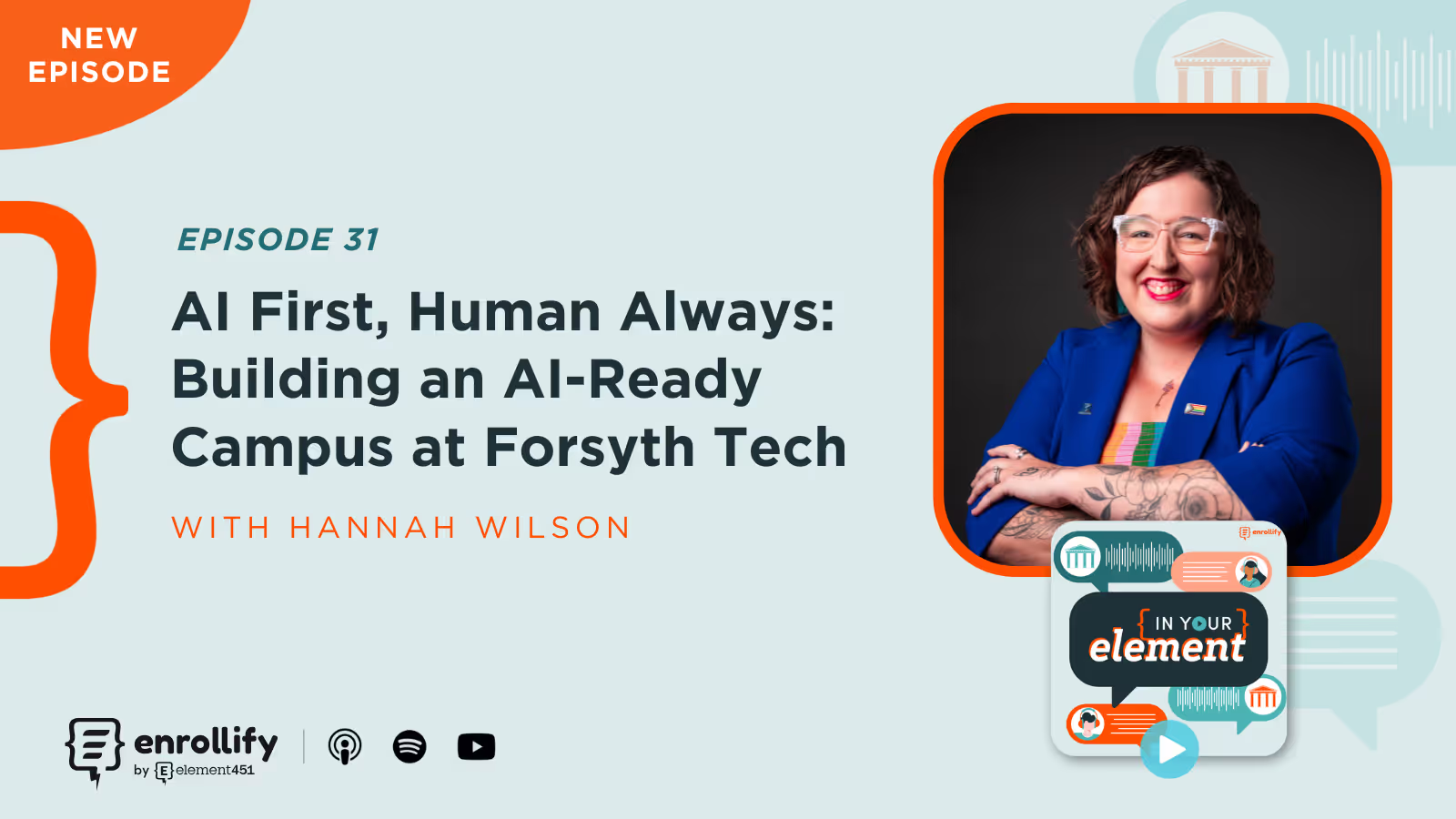
Daniella and Brendan sit down with Hannah Wilson, Knowledge Management and CRM Coordinator Project Manager at Forsyth Technical Community College. Known for her “AI-first, human-in-the-loop” approach, Hannah unpacks how her team is using Element451 to build a strategic, humanized, and data-driven knowledge base. If you’re trying to harness AI in higher education without sacrificing the student experience, this is a must-listen.
Key Takeaways
- AI-first doesn't mean human-less: Forsyth Tech takes a hybrid approach to student engagement, leveraging AI for scalability and humans for empathy and complex queries.
- Auditing is everything: A knowledge base is not “set it and forget it”—Hannah shares the importance of ongoing updates and tagging for seasonal, short-term, and policy-based content.
- Intentionally leaving gaps in AI knowledge is a strategy, not a flaw: Forsyth Tech ensures sensitive topics are handled by humans through seamless handoffs.
- AI personas make bots feel more human: From friendly, caring tones to gendered personalities, Forsyth Tech’s bots build trust by being relatable.
- Bad bots teach good lessons: “Trixie,” a purposefully faulty bot, illustrates the importance of structure, clarity, and curated data.
- Bolt Jobs = next-level efficiency: With over 350,000 minutes saved and 82% of queries handled by AI, Forsyth Tech uses data-driven agent automation to scale outreach and support.
- AI enhances—not replaces—student care teams: Call volume is down, accuracy is up, and staff are freed up to serve students in more meaningful ways.
Episode Summary: FAQ-Style Breakdown
What does a Knowledge Management and CRM Coordinator Project Manager do in higher ed?
At Forsyth Tech, Hannah Wilson owns the strategy and execution behind their knowledge base, which powers AI chatbots built in Element451. Her role involves curating, auditing, and organizing knowledge sources to ensure that AI agents provide accurate, timely, and useful information to students. But she’s not alone—her student care team helps flag issues and gaps, which she can quickly fix, creating a feedback loop between AI and human support.
What does it mean to be “AI-first but human-in-the-loop”?
This approach means allowing AI to handle the majority of student inquiries (currently 82% at Forsyth Tech) while strategically inserting human intervention when necessary. For example, when a student has a sensitive financial aid question, or the system can't find the answer, a handoff is triggered to a human staff member. This ensures students get both speed and empathy—two crucial pillars of effective student success strategies.
What are best practices for managing an AI knowledge base?
Hannah emphasizes three core principles: clear, curated, and concise. She recommends tagging sources with metadata like “short-term,” “seasonal,” or “policy” for easier auditing, along with timestamps for the last update. Forsyth Tech audits their full knowledge base every semester and monitors real-time conversations to identify and fix gaps before they become systemic problems.
Why would you intentionally leave gaps in your knowledge base?
Some questions deserve human attention. By omitting certain data—like FAFSA status updates or student-specific application questions—Forsyth Tech ensures students are transferred to a person when needed. This isn’t a shortcoming; it’s a strategy to provide the best possible student experience without over-automating sensitive interactions.
What’s the deal with bot personalities?
Forsyth Tech doesn’t just build bots—they build personas. Their agents are designed with specific tones and use cases. For example, "Cares" is warm and compassionate, answering questions about food, gas, and textbook assistance. Every bot has a defined voice, and internal notes guide handoffs. This personal touch builds trust and improves the user experience.
Who is Trixie the “bad bot”?
Trixie was created as a teaching tool—an agent filled with incomplete, incorrect information to show what happens when AI isn’t properly maintained. She was funny, chaotic, and intentionally flawed, but she made a point: your AI is only as good as your knowledge base. Forsyth Tech used Trixie to illustrate the risks of poor implementation and the value of intentional design.
How is Forsyth Tech using Bolt Jobs to improve outreach?
Bolt Jobs allow Forsyth Tech to launch goal-oriented AI campaigns—think nudges for course entry assignments, tuition payment reminders, and application prompts. These campaigns use behavioral data (like preferred contact methods and times) to determine how and when to reach each student. This means fewer missed messages and more completed actions, all with less staff effort.
What impact has AI made at Forsyth Tech?
The numbers speak volumes:
- 350,000+ minutes saved year-over-year
- 82% of student queries handled by AI agents
- 25–30% reduction in call volume
- Fewer handoffs thanks to improved knowledge curation
These performance indicators underscore how AI in higher education can improve both efficiency and student outcomes when paired with intentional design and strategic human input.
Connect With Our Co-Hosts:
About The Enrollify Podcast Network: In Your Element is a part of the Enrollify Podcast Network. If you like this podcast, chances are you’ll like other Enrollify shows too!
Some of our favorites include Visionary Voices: The College President’s Playbook and Higher Ed Pulse.
Enrollify is produced by Element451 — the next-generation AI student engagement platform helping institutions create meaningful and personalized interactions with students. Learn more at element451.com.




.svg)
.svg)
