






About the Episode
The Future of Student Search Pulse Check Series is sponsored by Carnegie.
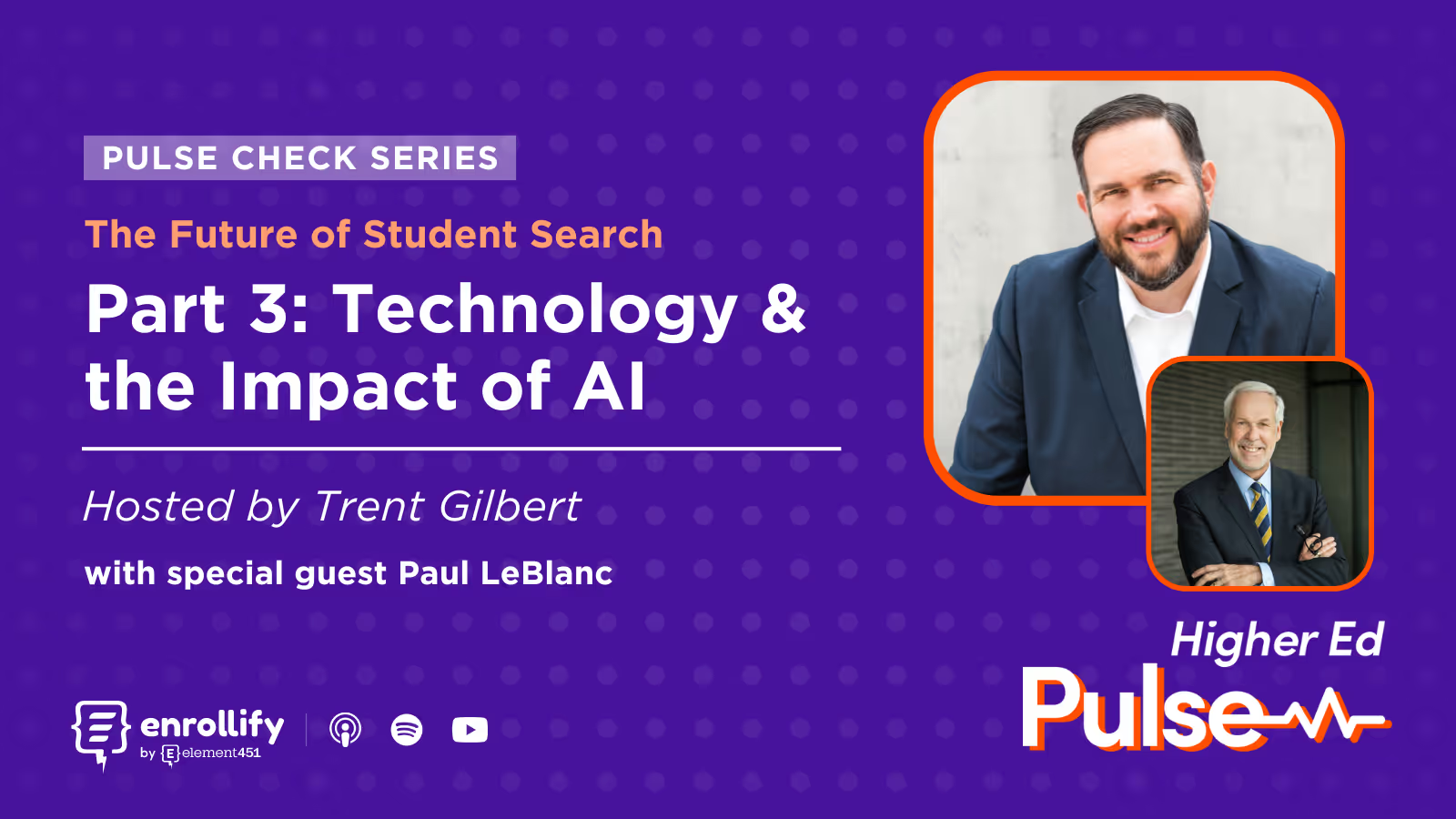
When talking about the future of Student Search, you can’t go a day without talking about the impact of technology and AI. In this episode, Trent Gilbert, VP of Student Search Solutions at Carnegie, and Paul LeBlanc, Former President of Southern New Hampshire University, discuss how technology can be used to amplify and improve human connections and the impact of AI on the workforce. They discuss the ethical considerations of AI and the importance of using it in ways that align with human values.
Key takeaways include:
- The use of technology to amplify and improve human relationships, rather than replace them.
- How AI has the potential to radically change the workforce.
- Ethical considerations that are crucial in the development and use of AI.
- How AI is changing the landscape of Student Search.
Episode Summary
Learning from the Past to Shape the Future
Paul LeBlanc opens the conversation by reflecting on Southern New Hampshire University's transformation into a leader in online education. He stresses that although technology was a significant factor, it was always in service of creating better human connections. According to Paul, the most successful innovations in education come from centering technology around the needs of students, allowing educators to focus on forming meaningful relationships.
As AI becomes more prevalent, Paul believes higher education institutions must ask how technology can support human relationships and improve student experiences. This human-centered approach should guide the adoption of technology in higher education.
AI: A Tool to Free Time for Human Connections
AI is a powerful tool that can handle transactional tasks, such as calculating financial aid or processing applications. However, when it comes to important, emotionally charged decisions—like whether a student should continue their education or how to pay for it—human interaction is essential. Paul encourages institutions to let AI handle routine tasks so that staff can focus on the complex, emotional needs of students.
Paul highlights the difference between transactional work (easily handled by AI) and wisdom work, which requires human judgment. He stresses that AI should free admissions officers and educators to spend more time building relationships with students.
Preparing Students for an AI-Driven Workforce
Paul emphasizes the urgency for higher education to prepare students for an AI-dominated workforce. A recent poll showed that 75% of recent graduates felt unprepared for the AI-driven job market, while employers echoed similar concerns about graduates lacking AI skills. Colleges and universities must urgently adapt their curricula to provide students with the AI tools and knowledge they need to thrive in the future.
He also points out that AI will transform many industries, with millions of jobs being redefined or displaced. Institutions must ensure they are equipping students with skills for the future, especially in roles where human judgment and empathy are crucial.
Ethical Implications of AI in Higher Education
As AI becomes more integrated into higher education, ethical concerns arise. Paul mentions the importance of regulating AI use, especially when it comes to issues like privacy, judgment, and decision-making in admissions. While AI can handle tasks like analyzing GPAs and transcripts, it cannot understand the context of a student's life—such as personal hardships or socioeconomic challenges—that could significantly impact their academic performance.
Paul stresses the importance of higher education institutions taking an active role in shaping AI, rather than letting commercial interests dictate how AI is implemented. By doing so, universities can ensure AI serves students' best interests and supports educational goals.
AI's Role in Alleviating Loneliness and Building Human Connections
One of the more unexpected benefits of AI is its potential to help combat the growing epidemic of loneliness. Paul discusses how AI tutors, for example, can provide non-judgmental assistance to students who might feel embarrassed to ask for help. AI may never fully replicate human relationships, but it can play a supportive role in helping people feel connected.
In the future, Paul envisions AI evolving to recognize human emotions and seamlessly hand off interactions to humans when necessary, such as during stressful or emotional situations. This hybrid model of human-AI collaboration could redefine how students interact with institutions, blending efficiency with empathy.
As AI continues to reshape the landscape of higher education, this episode serves as a reminder that the focus must remain on the students. Institutions should ask tough ethical questions and use technology to deepen relationships, not replace them.
Links:
- “Applying AI to Rebuild Middle Class Jobs,” by David Autor on nber.org
- Technological revolutions and techno-economic paradigms by Carlota Perez on jstor.com
- Paul’s Book Broken: How Our Social Systems are Failing Us and How We Can Fix Them
Enrollify is produced by Element451 — the next-generation AI student engagement platform helping institutions create meaningful and personalized interactions with students. Learn more at element451.com.
Element451 is hosting the AI Engage Summit on Oct 29 and 30. Register now for this free, virtual event.The future of higher ed is being redefined by the transformative power of AI. The AI Engage Summit brings together higher ed leaders, innovators, and many of your favorite Enrollify creators to explore AI’s impact on student engagement, enrollment marketing, and institutional success.
Experience firsthand how AI is improving content personalization at scale, impacting strategic decision-making, and intuitively automating the mundane tasks that consume our time. The schedule is packed with real examples and case studies, so you leave knowing how to harness AI to drive meaningful change at your institution.
Whether you’re looking to enhance student outcomes, optimize enrollment marketing, or simply stay ahead of the curve, the AI Engage Summit is your gateway to the next level of higher education innovation. Registration is free, save your spot today.




.svg)
.svg)
