






About the Episode
About The Episode:
Resources provided by Melissa:
- WittKieffer Open Searches in Marketing, Communications, & Strategy
- WittKieffer Interim Talent Network
- WittKieffer Insights
- WittKieffer Executive Searches on LinkedIn
Resources provided by Shanna:
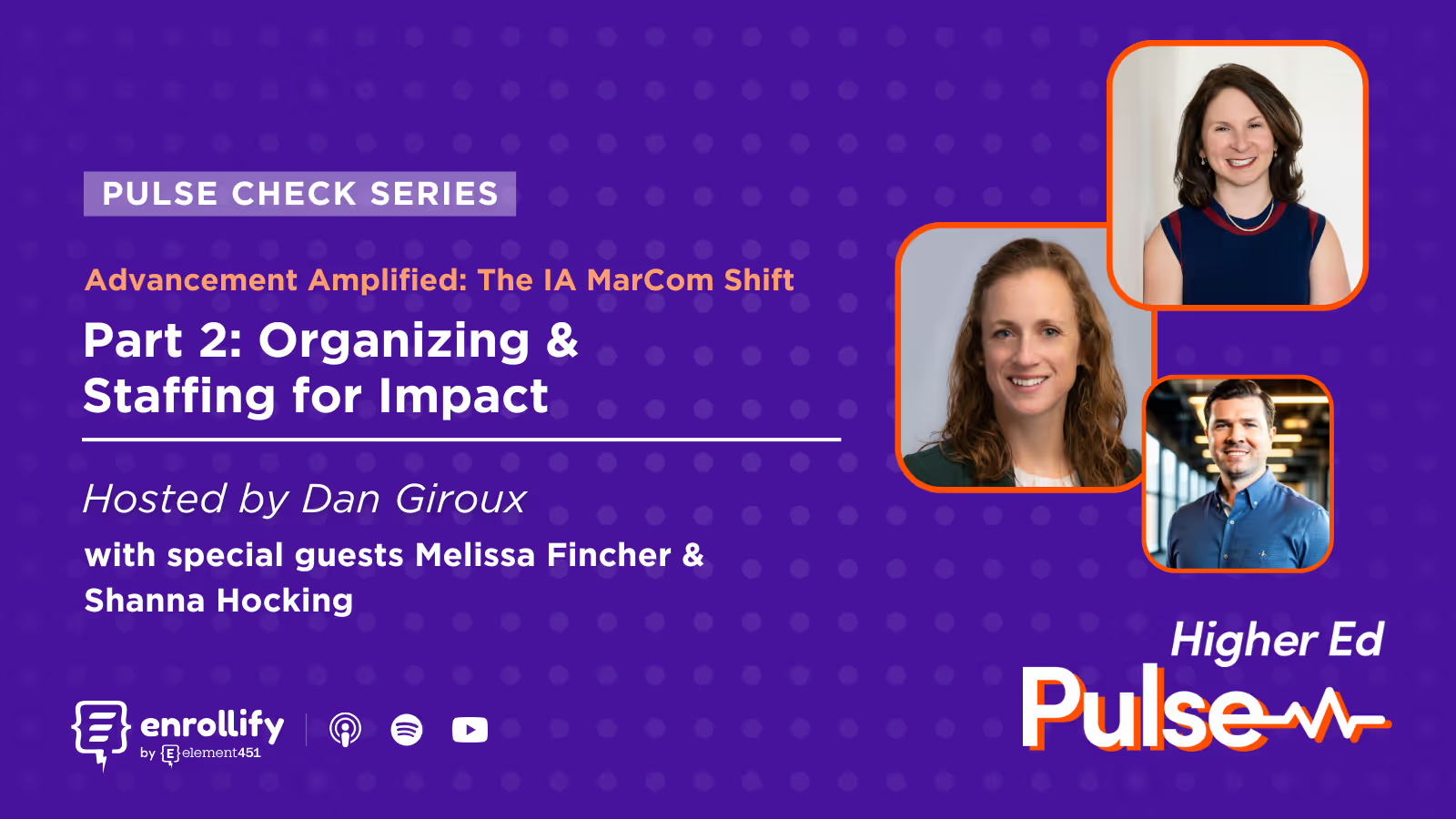
Dan Giroux sits down with Melissa Fincher and Shanna Hocking for a compelling look at how advancement marketing and communications teams can adapt to today's climate of fiscal uncertainty, evolving talent needs, and constant change. This episode dives deep into how higher ed leaders can rethink team structures, integrate AI responsibly, and develop talent that drives long-term value. Whether you're leading an advancement team or building one, this is a must-listen conversation for navigating the next era of higher education marketing.
Key Takeaways
- Fiscal uncertainty is reshaping talent strategy in advancement: Leaders must balance short-term needs with long-term organizational growth.
- Specialization and hybrid skill sets are on the rise: Advancement MarCom teams are seeking professionals with expertise in digital content, engagement strategy, and AI fluency.
- Organizational structure needs to reflect strategic intent: Dotted-line models and stronger cross-functional collaboration between central and advancement marketing teams lead to better outcomes.
- People-first leadership is key in the age of disruption: Investing in professional development, consistent hybrid policies, and staff well-being boosts retention and team morale.
- AI should augment, not replace: Artificial intelligence presents major efficiency opportunities — but human connection and storytelling remain irreplaceable.
- Fractional talent and external partnerships offer agility: When FTE hiring is frozen, creative staffing models like fractional roles and consultants can fill capability gaps quickly.
Episode Summary
What are the biggest talent challenges facing advancement leaders today?
The current higher ed climate is one of acute fiscal pressure and uncertain budgets. Both Melissa Fincher and Shanna Hocking pointed out that many advancement leaders are struggling to match hiring with shifting organizational needs. This includes balancing FTE investments with interim and fractional talent, managing morale through inconsistent hybrid work models, and focusing on talent development amid rising operational demands. The takeaway? Strategy is no longer a luxury — it’s essential. Leaders must prioritize the long game when it comes to talent planning, even amid short-term budget crunches.
Another core issue is competing priorities. Leaders want to retain and develop staff, but often deprioritize this due to immediate pressures. Shanna emphasized the need for frameworks — like post-it mapping and the Eisenhower Matrix — to help teams distinguish between what’s truly urgent and what’s simply loud. Prioritizing people and professional growth isn’t just good HR; it’s smart strategy.
How is advancement MarCom evolving structurally?
There’s no one-size-fits-all organizational model — but Melissa and Shanna agree that the healthiest teams share common DNA: trust, clear prioritization, and dotted-line collaboration between central and advancement marketing. Melissa noted that institutions falter when marketing structures swing too far toward complete centralization or total decentralization. Hybrid models with mutual respect and clearly aligned goals often produce the most success.
Advancement MarCom leaders need a seat at the table and a voice in strategic planning. Respect for the storytelling function, as well as an understanding of each team’s unique audience and goals, is crucial. Ultimately, success hinges on shared mission and clear communication — not just org charts.
How can leaders navigate hiring freezes and evolving team needs?
With hiring freezes becoming more common, many institutions are turning to external consultants, fractional talent, and interim roles. Melissa stressed the importance of “right-timing” your staffing solution: not every challenge requires a full-time hire. By first identifying the scope, timeline, and desired impact, institutions can tailor a staffing strategy that fits both the moment and the mission.
Both guests also underscored the importance of onboarding and long-term support. Shanna referenced her Bold Blueprint research, which found that over 70% of female advancement executives lacked structured onboarding or professional development in their first year. Leaders can’t afford to treat onboarding as an afterthought — it’s essential for retention and cultural alignment.
What’s the role of AI in advancement marketing today?
AI in higher education is here to stay — but the approach matters. Melissa cautioned against viewing AI as a headcount replacement. Instead, it should be seen as a tool to help staff do higher-value work. From writing stewardship letters to aiding research, AI can supercharge productivity — but only when guided by humans who understand context and mission.
Shanna added that AI can free up leaders to do the most meaningful parts of their job — like coaching teams and building relationships. Some VPs are already baking AI experimentation into their department goals, asking staff to test and report back on tools and outcomes. While the concept of “digital staffing” is emerging, both guests agreed that authentic connection and human storytelling are still at the heart of advancement.
How do advancement teams thrive in a culture of continuous change?
The key? Embrace learning. Shanna encouraged leaders to develop a growth mindset across all levels of the organization — not just at the top. Whether it’s resilience training, investing in middle managers, or conducting “stay conversations” with staff, teams that commit to understanding each other and surfacing real feedback are better equipped to adapt.
Melissa emphasized the need for culture-building. Flexibility, fun, and a sense of agency over work-life balance all contribute to team engagement and retention. If leaders don’t cultivate a place where people want to be, all the strategy in the world won’t matter.
Ultimately, adapting to disruption is about mindset, not magic. Institutions that see change as an opportunity, not a threat, will be the ones that lead the next evolution of advancement marketing.
Enrollify is produced by Element451 — the next-generation AI student engagement platform helping institutions create meaningful and personalized interactions with students. Learn more at element451.com.





.svg)
.svg)
