






About the Episode
Got a story to tell? An innovative idea to share? Fill out our guest nomination form and let's chat!
About the Episode:
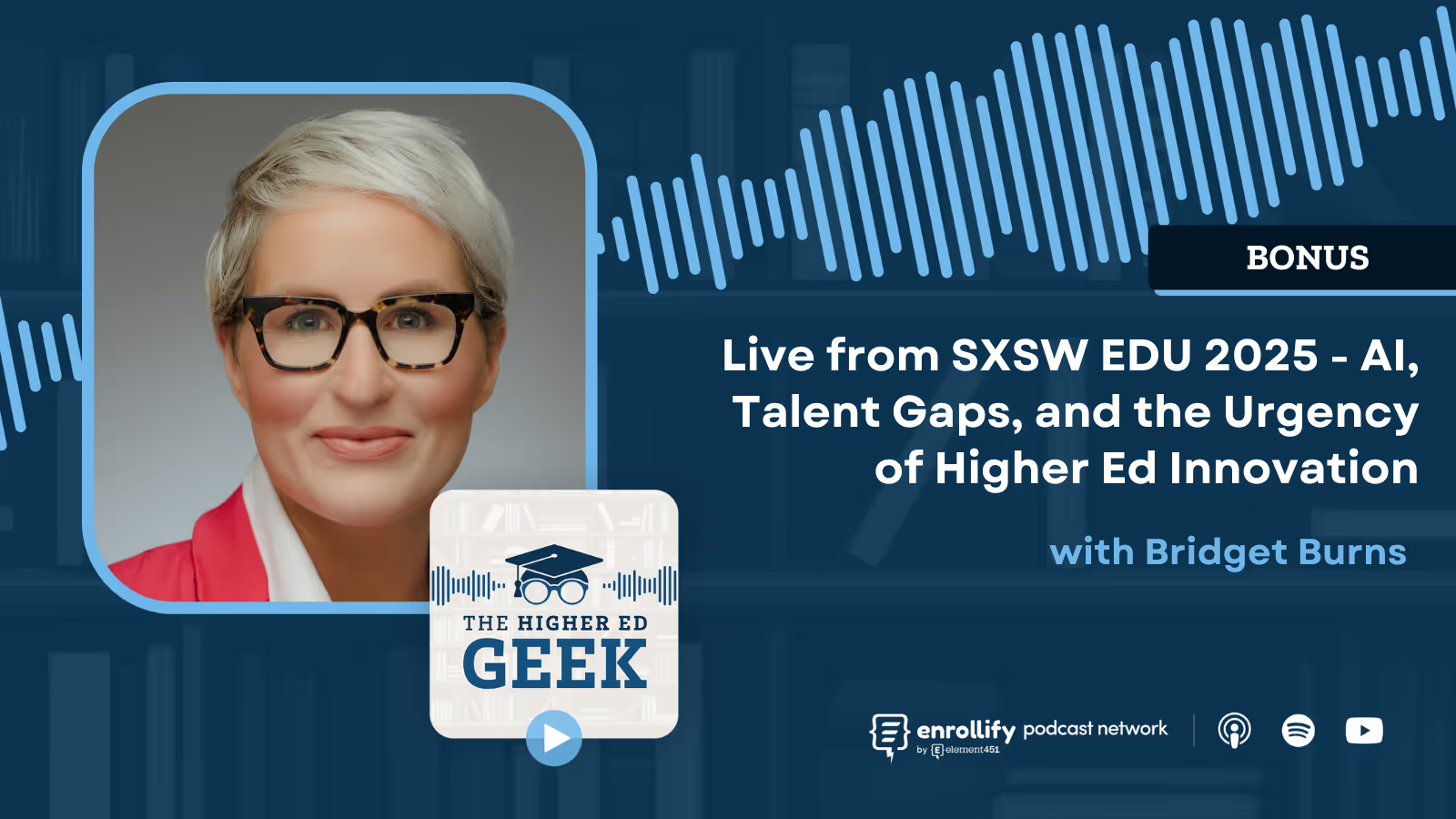
Dr. Bridget Burns, CEO of the University Innovation Alliance, joins Dustin for a candid conversation about the urgent need for higher ed to take a proactive role in shaping the future workforce. From talent shortages to AI’s impact on job readiness, Bridget shares why hope isn’t a strategy—and what institutions must do to stay ahead. She challenges universities to work together, rethink traditional learning models, and create real-world solutions that benefit students and society.
Key Takeaways
- Higher education needs a strategy for workforce alignment. Right now, the approach to filling critical roles in industries like healthcare, education, and engineering is based more on hope than on planning. Universities must take an active role in addressing workforce shortages.
- Collaboration is key to solving systemic challenges. K-12, higher ed, and workforce development must work together to bridge skills gaps and create sustainable career pipelines. No single sector can fix this alone.
- AI presents opportunities, not just threats. While AI is reshaping jobs, it also has the potential to enhance learning, streamline administrative tasks, and improve student outcomes—if leveraged correctly.
- The future of education requires innovation. From rethinking the teaching workforce to creating cross-sector solutions, higher ed leaders must be bold in experimenting with new models that address today’s challenges.
- Higher ed professionals should step outside their bubble. Attending conferences like SXSW EDU, which bring together voices from K-12, nonprofit, and corporate sectors, helps higher ed leaders gain fresh perspectives on shared challenges.
What is the University Innovation Alliance, and what problem is it solving?
Dr. Bridget Burns leads the University Innovation Alliance (UIA), a coalition of the most innovative universities in the country working together to improve student outcomes. Instead of competing, these institutions collaborate to test, refine, and share data-driven interventions that help more students succeed. UIA functions as a "national laboratory for student success innovation," aiming to change higher ed institutions while also influencing the broader sector through open knowledge-sharing.
Why is a strategy for talent development so critical right now?
Dr. Burns highlights a major issue: the U.S. lacks a cohesive plan to ensure there are enough skilled workers in key fields by 2050. Instead, higher ed institutions are operating on a "hope-based" model, assuming that enough students will pursue in-demand careers like teaching, healthcare, and engineering. She argues that universities should take a more proactive role by aligning academic programs with state and industry needs, using demographic data, workforce projections, and policy planning to close skills gaps before they become crises.
How can universities address workforce shortages in key industries?
Rather than just raising awareness about labor shortages, higher ed needs to create clearer, more accessible pathways into high-demand fields. This might include:
- Expanding alternative credentialing and stackable certificates to allow students to enter the workforce faster.
- Creating sprint-like innovation teams that bring together education, industry, and policy leaders to quickly develop solutions.
- Rethinking traditional degree requirements so students can begin contributing to critical fields sooner, such as allowing apprenticeships or assistant roles in teaching and healthcare.
How can AI be leveraged effectively in higher education?
Dr. Burns acknowledges that AI is already transforming the way professionals work and worries that over-reliance on AI could diminish critical thinking skills. However, she also sees AI as a tool to enhance efficiency, creativity, and instructional design. She suggests that higher ed institutions should:
- Train students to use AI in a way that enhances creativity rather than replaces critical skills.
- Encourage faculty to use AI for lesson planning, course design, and personalized student support.
- Foster cross-disciplinary discussions about how AI will reshape various fields, from law to engineering to education.
Why should higher ed professionals attend conferences like SXSW EDU?
One of Dr. Burns' key messages is that higher ed professionals need to break out of their echo chamber. SXSW EDU, though heavily attended by K-12 professionals, offers an opportunity to engage with educators, policymakers, and industry leaders who are tackling the same challenges. Higher ed cannot afford to operate in isolation—collaborating with K-12 and workforce partners is essential for creating meaningful, long-term solutions for students.
About the Show: The Higher Ed Geek Podcast explores the impact of edtech on the student experience by speaking with diverse leaders from institutions, companies, and nonprofit organizations. Each week we aim to provide an engaging, fun, and relevant dose of professional development that honors the wide range of work happening all across the higher ed ecosystem. Come geek out with us! The Higher Ed Geek Podcast is hosted by Dustin Ramsdell and is a proud member of the Enrollify Podcast Network.
Connect With Our Host:
Dustin Ramsdell
About The Enrollify Podcast Network:
The Higher Ed Geek is a part of the Enrollify Podcast Network. If you like this podcast, chances are you’ll like other Enrollify shows too!
Some of our favorites include Generation AI and I Wanna Work There.
Enrollify is produced by Element451 — the next-generation AI student engagement platform helping institutions create meaningful and personalized interactions with students. Learn more at element451.com.
Attend the 2025 Engage Summit!
The Engage Summit is the premier conference for forward-thinking leaders and practitioners dedicated to exploring the transformative power of AI in education.
Explore the strategies and tools to step into the next generation of student engagement, supercharged by AI. You'll leave ready to deliver the most personalized digital engagement experience every step of the way.
👉🏻 Register now to secure your spot in Charlotte, NC, on June 24-25, 2025!



.svg)
.svg)
