


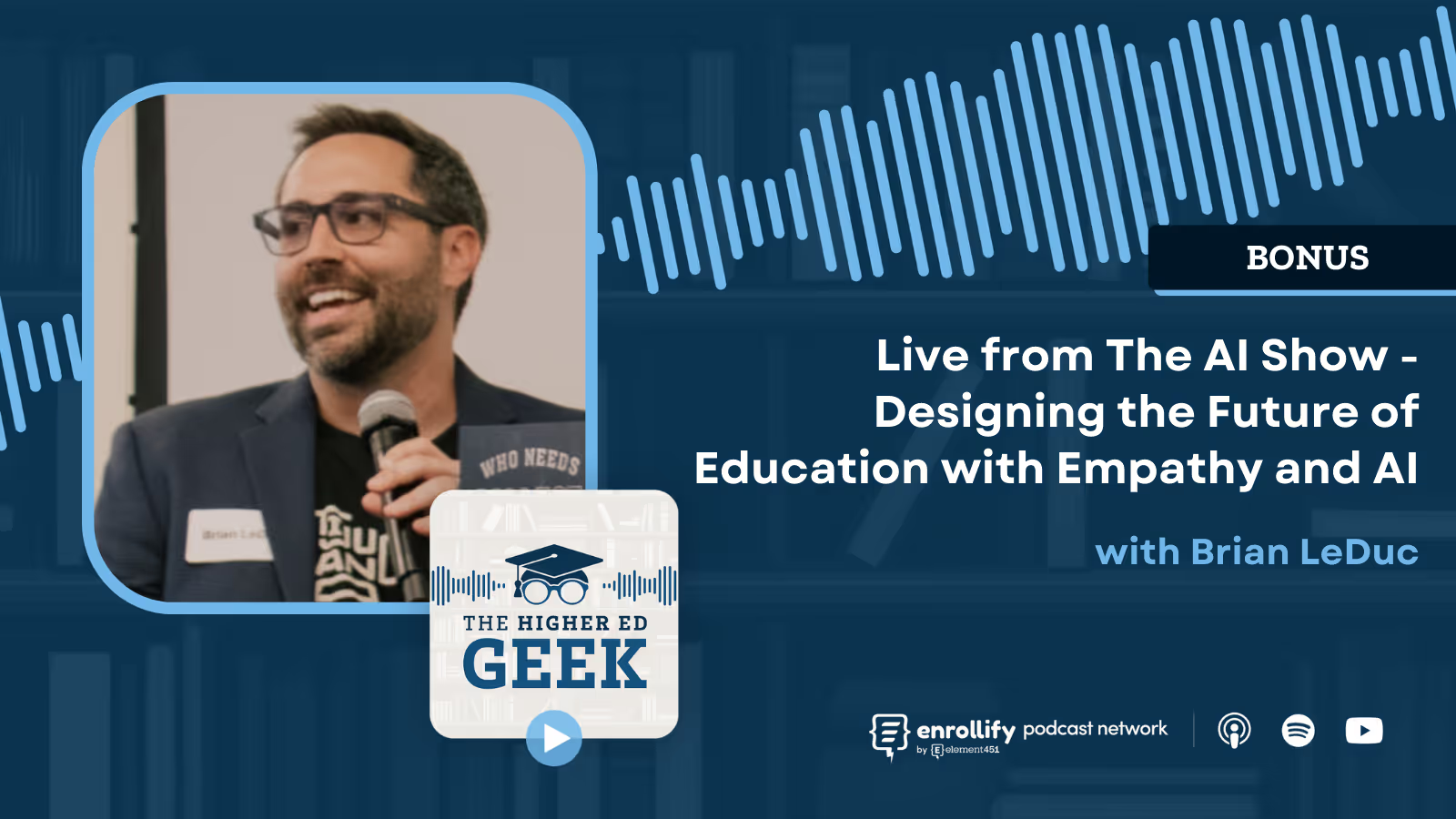




About the Episode
Got a story to tell? An innovative idea to share? Fill out our guest nomination form and let's chat!
About the Episode:
In this energizing live episode, Dustin chats with Brian LeDuc—consultant, design strategist, and founder of Learning, Designed—about what it really takes to make higher ed more human-centered in an AI-drenched era. From the UC San Diego Design Lab to his own EDUxDesign Fellowship, Brian shares tangible ways schools can move beyond best practices and toward meaningful, student-first innovation.
Spoiler: It’s not about jumping on every AI tool. It’s about understanding the real problems you're solving—and who you're solving them for.
Key Takeaways
- Design thinking in higher education can help institutions navigate ambiguity, turbulence, and systemic inertia with empathy and clarity.
- Universities must resist the temptation to adopt AI tools blindly and instead focus on solving specific, context-aware problems.
- Design thinking empowers stakeholders—especially students, employers, and communities—to co-create meaningful solutions.
- Tools like AI-enhanced qualitative research and content creation are becoming essential companions for modern design practices.
- Human-centered leadership remains critical in uncertain times—empathy, resilience, and purposeful action should drive institutional change.
What is design thinking and why is it crucial for higher ed?
Brian LeDuc defines design thinking as a problem-solving approach rooted in empathy, collaboration, and iteration. In higher education, this method becomes a lifeline for navigating complexity. Institutions often carry the burden of outdated systems, some originating from over a century ago. Design thinking allows higher ed leaders to engage students, communities, and employers in meaningful ways—asking what they actually need, not just assuming based on "best practices."
Brian emphasizes that higher ed should move away from imitation and instead embrace contextual problem-solving. Instead of copying another university’s strategy, institutions should examine their own unique challenges and co-design solutions with the people most impacted. This mindset helps shift focus from survival to significance in a fast-changing education landscape.
How is AI influencing the design and delivery of education?
AI is undeniably reshaping higher education, but as Brian points out, institutions often chase AI adoption before truly understanding the problem they want to solve. He cautions against this "shiny object syndrome," where tools are implemented under the guise of innovation but lack strategic alignment.
Instead, he suggests using AI as a passenger—a tool that augments the creative and analytical process, rather than drives it. For example, AI can assist with analyzing large volumes of qualitative feedback or help visualize abstract concepts in early design stages. These applications allow educators and designers to spend more time on high-impact decision-making rather than being bogged down in data processing.
What does successful, student-centered change look like?
Brian’s work with the UC San Diego Design Lab and other institutions illustrates how design can empower institutions to become more responsive and relevant. He’s currently leading projects that bring together community stakeholders, youth, and educators to reimagine everything from parks to career development programs.
One of his most exciting ventures is a new beta cohort program—EDUX Design—a fellowship that enables campus teams to apply design thinking principles to real challenges in their institutions. The program encourages collaborative problem-solving in a supportive, cohort-based environment. According to Brian, this approach is much more impactful than theoretical workshops because participants are working on actual problems that matter to their institutions.
How can higher ed leaders lead more effectively in uncertain times?
Brian leaves listeners with a powerful call to remain human-centered. In times of uncertainty, it's easy to become reactive or risk-averse. But the leaders who make a lasting impact are those who ground their actions in empathy, stay connected to their communities, and take bold steps toward purposeful change.
He believes that the challenges facing higher education—from enrollment pressures to technological disruption—are also opportunities to do things differently. And it starts with listening, designing collaboratively, and staying deeply rooted in the human experience of learning.
About the Show: The Higher Ed Geek Podcast explores the impact of edtech on the student experience by speaking with diverse leaders from institutions, companies, and nonprofit organizations. Each week we aim to provide an engaging, fun, and relevant dose of professional development that honors the wide range of work happening all across the higher ed ecosystem. Come geek out with us! The Higher Ed Geek Podcast is hosted by Dustin Ramsdell and is a proud member of the Enrollify Podcast Network.
Connect With Our Host:
Dustin Ramsdell
About The Enrollify Podcast Network:
The Higher Ed Geek is a part of the Enrollify Podcast Network. If you like this podcast, chances are you’ll like other Enrollify shows too!
Some of our favorites include Generation AI and I Wanna Work There.
Enrollify is produced by Element451 — the next-generation AI student engagement platform helping institutions create meaningful and personalized interactions with students. Learn more at element451.com.
Attend the 2025 Engage Summit!
The Engage Summit is the premier conference for forward-thinking leaders and practitioners dedicated to exploring the transformative power of AI in education.
Explore the strategies and tools to step into the next generation of student engagement, supercharged by AI. You'll leave ready to deliver the most personalized digital engagement experience every step of the way.
👉🏻 Register now to secure your spot in Charlotte, NC, on June 24-25, 2025!





.svg)
.svg)
