






About the Episode
Got a story to tell? An innovative idea to share? Fill out our guest nomination form and let's chat!
About the Episode:
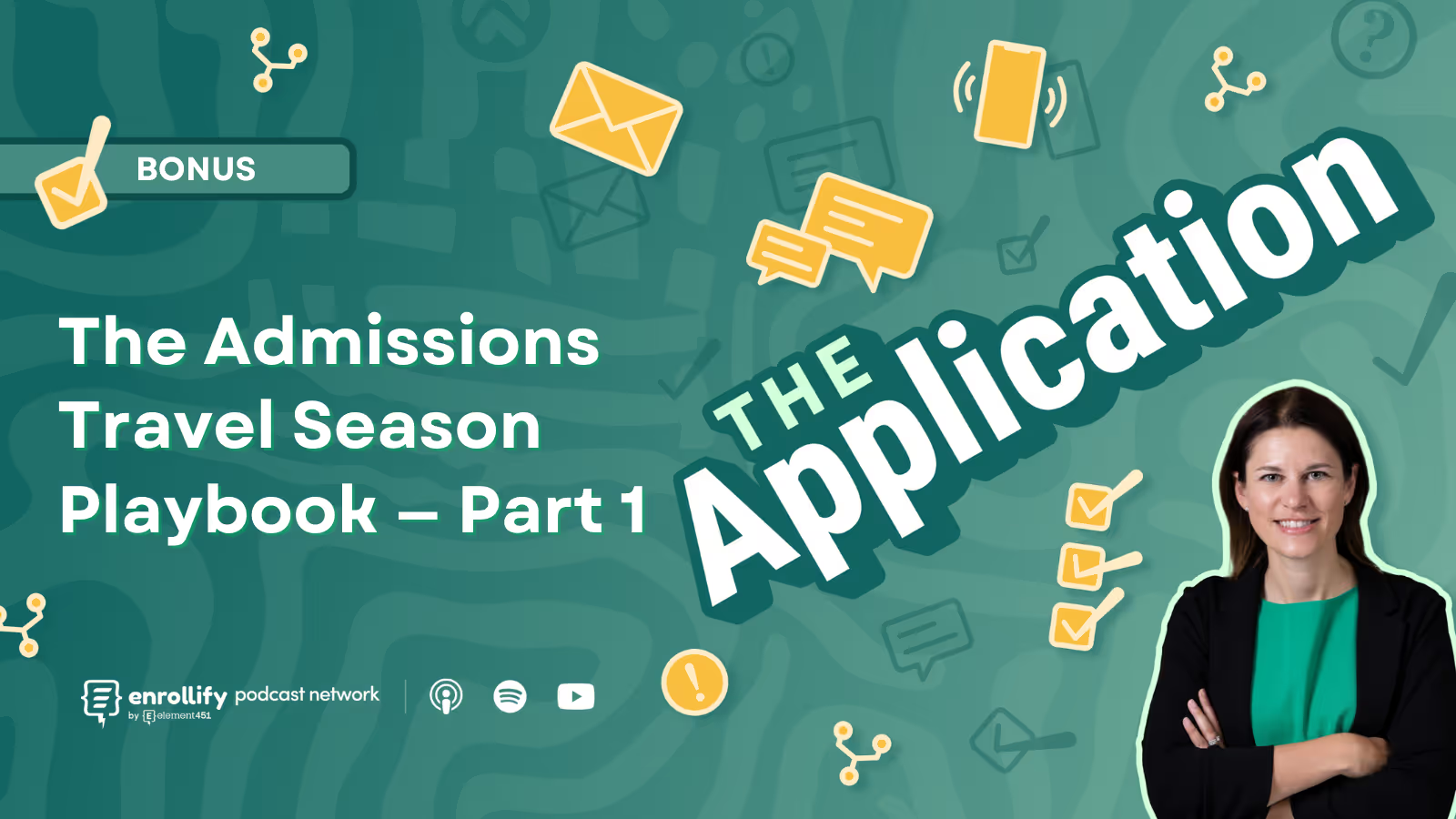
In this episode of The Admissions Travel Season Playbook, host Allison Turcio dives into how admissions counselors can make their high school visits more personal, engaging, and effective — without reinventing the wheel. With a focus on AI in higher education, Allison shares four actionable strategies for using tools like ChatGPT to tailor presentations to different student audiences. Whether you're visiting a STEM-focused school or a service-driven community, these tips will help you show up with relevance and impact.
Perfect for enrollment marketers and admissions pros looking to stay sharp this fall travel season.
Key Takeaways
- Localize your opener to capture attention and make an immediate connection with students
- Tailor your talking points using AI prompts that spotlight the programs students care about most
- Build a tiered FAQ slide to answer common questions and introduce new, relevant ones students should be asking
- Rewrite for inclusivity by creating presentations that resonate with first-gen, ELL, or underrepresented students
- Use AI as a creative partner, not a copy-paste machine — always edit for tone, accuracy, and authenticity
Episode Summary
How can AI help admissions counselors during travel season?
Travel season can feel like a whirlwind — back-to-back high school visits, similar presentations, different student dynamics. In this episode, Allison emphasizes how AI can function as your behind-the-scenes partner to personalize and enhance your student interactions. With just a few targeted prompts in ChatGPT, counselors can adapt their presentations for each school visit, making the experience more engaging without increasing workload.
Allison makes it clear: You don’t need to build 27 new slide decks to show up differently. Instead, she offers simple, repeatable strategies that can be executed in minutes.
What’s the first thing I should personalize in my presentation?
Start with your opener. According to Allison, your opening line is your “make or break” moment. Using tools like Naviance and past visit notes, you can craft a prompt for ChatGPT to generate a school-specific hook. For example, if you’re headed to a health-care focused high school, your intro might spotlight nursing or PT programs. This small change creates a huge difference in attention and engagement.
Instead of a generic “Thanks for having me,” you're saying something that makes students sit up and say, “Oh — they get us.”
How do I customize my pitch without rewriting everything?
Strategy two involves tweaking your talking points to fit student interests. Maybe the school you’re visiting has a strong STEM pipeline or a thriving art scene. Allison suggests feeding that context into ChatGPT to rewrite your core pitch with an emphasis on relevant programs.
You’re not changing your message — you’re reframing it. And by showing students how your institution connects to their aspirations, you’re turning curiosity into real consideration.
Can I use AI to answer student questions better?
Yes — and this is where the tiered FAQ slide comes in. Allison encourages reps to identify the top five questions students typically ask — then add two more that they should be asking. Use AI to create friendly, student-facing answers and incorporate them into your slide deck or notes.
This approach shows students you know what matters to them, while also introducing new ideas and pathways they may not have thought to explore yet.
How can I ensure my presentation is inclusive and accessible?
Your audience isn’t one-size-fits-all. Some schools have large populations of first-generation students, ELL learners, or students unfamiliar with higher ed lingo. That’s why Allison’s fourth strategy recommends using ChatGPT to rewrite your presentation in plain, welcoming language — no jargon, just support and clarity.
This isn’t about dumbing things down. It’s about meeting students where they are and making sure your message actually resonates.
How long should this personalization process take?
According to Allison, it’s easier and faster than you think. Pick one school visit and try one strategy — localize the opener, adjust your talking points, or add a mini FAQ. Time yourself. It’ll likely take 5–10 minutes max. But the payoff? A visit that feels more human, more relevant, and far more memorable for both you and the students.
Connect With Our Host:
Allison Turcio
https://www.linkedin.com/in/allisonturcio/
https://twitter.com/allisonturcio
About The Enrollify Podcast Network: The Application with Allison Turcio is a part of the Enrollify Podcast Network. If you like this podcast, chances are you’ll like other Enrollify shows, too!
Some of our favorites include Mission Admissions.
Enrollify is made possible by Element451 — the next-generation AI student engagement platform helping institutions create meaningful and personalized interactions with students. Learn more at element451.com.





.svg)
.svg)
