






About the Episode
About The Episode:
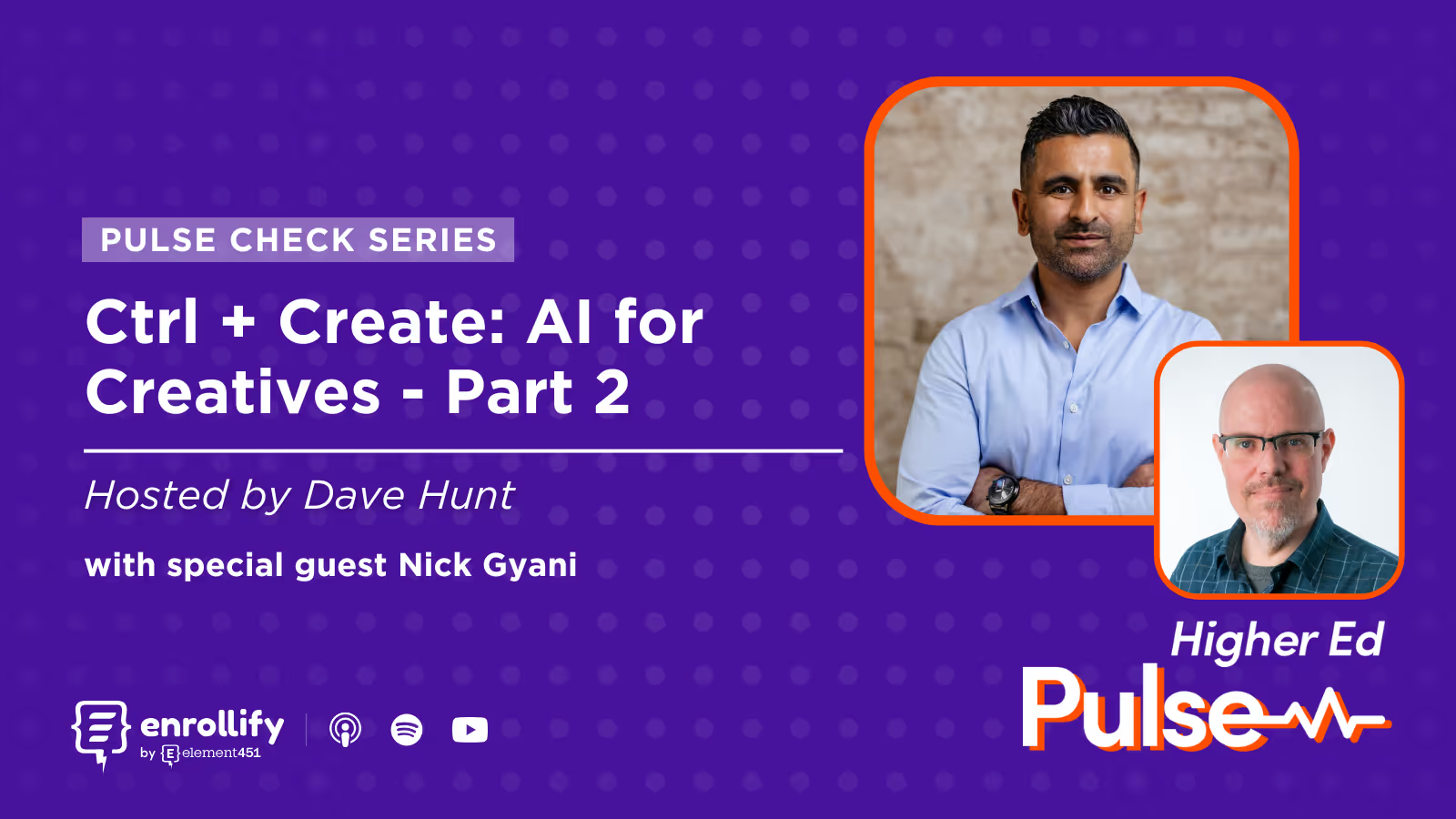
Dave Hunt sits down with Nick Gyani, Head of Higher Ed Sales at Canva, to explore how Canva is empowering campus marketers and creative teams through AI-driven tools and collaborative design workflows. Nick shares how Canva is not just simplifying visual communication but transforming the way higher ed institutions work—giving time back to creative pros and empowering non-designers to stay on brand. This is a must-listen for anyone curious about AI in higher education and what the future of design and content creation looks like on campus.
Key Takeaways
- AI in Higher Education is accelerating Canva’s mission to democratize design by making visual communication more accessible and time-efficient.
- Canva’s Enterprise Tools empower both professional designers and non-designers to create on-brand content at scale, enhancing collaboration across departments.
- Micro AI Features, like AutoSort in whiteboards and Magic Write, are saving hours of time and reducing friction in creative workflows.
- Brand Governance in higher ed is strengthened through features like brand kits, approval workflows, and permissions, keeping assets consistent without stifling creativity.
- Campus Creative Teams are evolving—embracing AI tools to shift from task execution to strategic and conceptual work.
- Future AI Trends include predictive content planning, real-time brand compliance checks, and one-click asset adaptation across multiple formats.
Episode Summary: FAQs Answered in “How Canva is Empowering Campus Marketers with AI and Brand Governance” on Control + Create
How is Canva winning over skeptical creative professionals?
Nick Gyani acknowledges the initial skepticism that many design pros feel towards Canva, especially those used to traditional tools and workflows. However, the "aha" moment often comes not from the features themselves but from how Canva empowers others in the organization. When non-designers can quickly produce quality, on-brand content, it frees up designers to focus on higher-impact, strategic work. That shift in time and focus is what turns many skeptics into believers.
What role does AI play in advancing Canva's mission?
Generative AI isn’t changing Canva’s mission—it’s accelerating it. Canva has always been about democratizing design, and AI features are helping eliminate more barriers to entry. From auto-sorting Post-its to generating content suggestions, AI is making it easier for more people to communicate visually and effectively. Nick emphasizes that this supports both Canva’s goal of being one of the most valuable companies in the world and doing the most good globally.
How is Canva balancing big feature launches with small workflow wins?
While big updates like Visual Suite 2.0 generate headlines, Canva also focuses heavily on micro-moments that deliver immediate impact. Nick shares how features like AutoSort in whiteboards are built with input from real users and can save hours in fast-paced environments like higher ed. These seemingly small tools, when combined, create a massive cumulative effect across teams and workflows.
What challenges does Visual Suite 2.0 solve for higher ed?
In higher ed, the mandate to “do more with less” is more pressing than ever. Canva’s Visual Suite 2.0 centralizes tools like docs, sheets, whiteboards, presentations, and even code into a single platform. This helps institutions reduce their tech stack, streamline procurement, and ensure consistency in branding. With all design tools speaking the same language, cross-functional collaboration becomes much easier.
How are universities using Canva to improve brand governance?
Canva’s enterprise features were built in response to the organic adoption of the platform in workplaces—especially universities. Brand kits include institutional colors, fonts, logos, and even voice tone. Combined with permission settings and locked templates, these tools ensure that creative freedom doesn’t come at the cost of brand integrity. Administrators can even control which AI features are enabled, giving them granular oversight of how content is created.
How are creative teams evolving with AI?
At first, many creative teams are hesitant about integrating AI into their workflows. But once they activate features like Magic Write or AutoSort, adoption skyrockets. The result? More time for strategic thinking and campaign ideation, less time spent on repetitive tasks. Nick also points out that AI often helps teams generate a broader range of creative ideas at the beginning of a project—leading to more unique and effective campaigns.
What future AI capabilities are on Canva’s wishlist?
Nick envisions a future where AI can provide real-time brand compliance feedback as users design—suggesting better font choices, color corrections, or more appropriate imagery. He also sees a day where a single design asset can be instantly adapted across multiple formats and platforms. These advancements could give marketing teams even more time back and amplify their impact without extra effort.
Will creative work always need a human touch?
Absolutely. Nick emphasizes that while AI can boost efficiency and even ideation, it can’t replicate emotional intelligence or personal values. Especially during sensitive or high-stakes moments, human communication and intuition are irreplaceable. The future, he believes, will be a hybrid—AI will handle the grunt work, but people will bring the soul.
Enrollify is produced by Element451 — the next-generation AI student engagement platform helping institutions create meaningful and personalized interactions with students. Learn more at element451.com.




.svg)
.svg)
