






About the Episode
About the Episode:
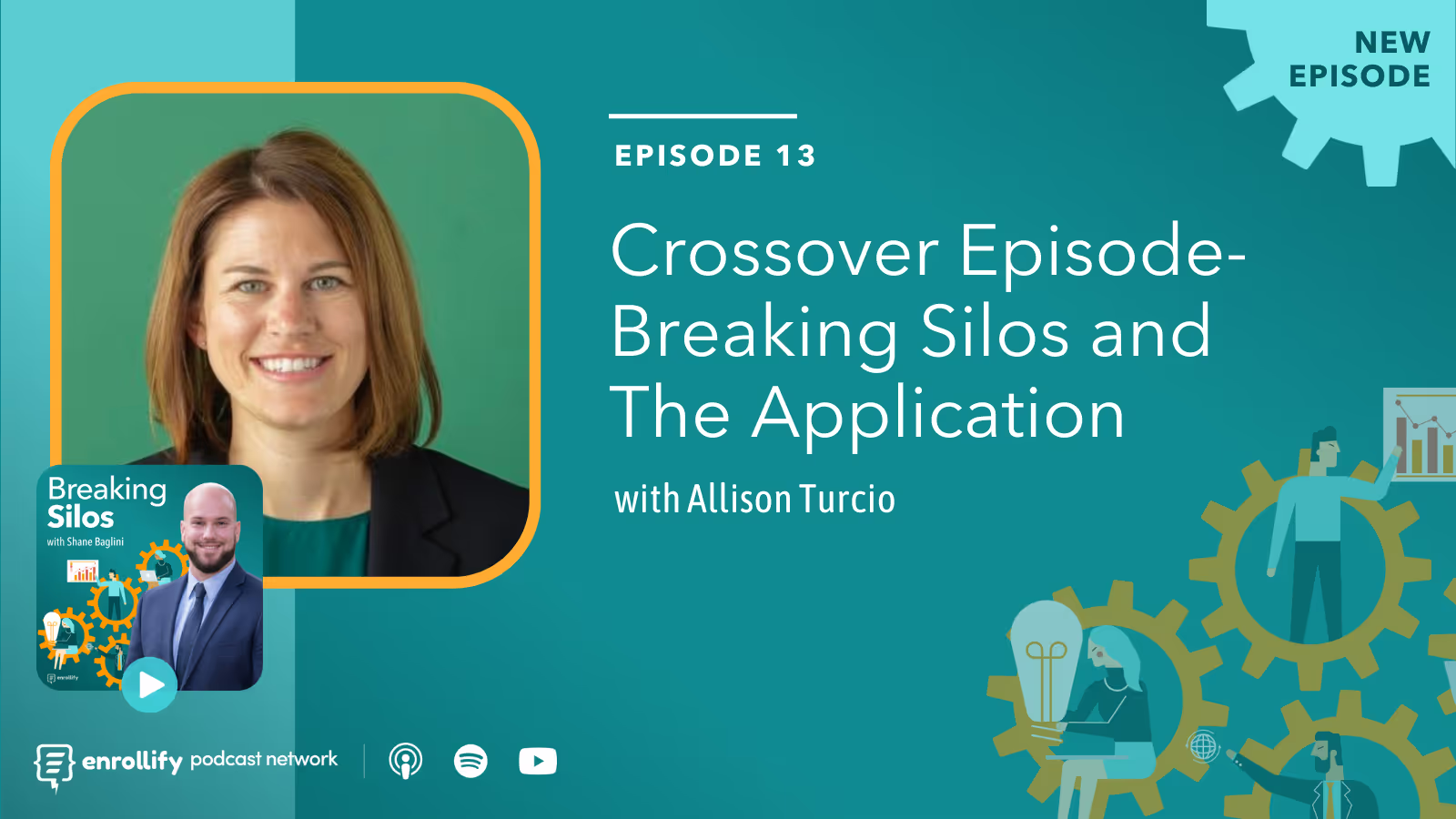
In this special crossover episode, Allison Turcio, host of the Application with Allison Turcio, and Shane Baglini, host of Breaking Silos, are taking a deep dive into their popular session from Element451’s 2024 Engage Summer titled “There’s a GPT for That.” Shane and Allison take turns as interviewer and interviewee, and talk about the many ways marketers can us AI to expand capacity, increase efficiency and revolutionize the way they market programs, create content, analyze data and much more.
Catch new episodes of The Application every other Tuesday, and new episodes of Breaking Silos every other Wednesday!
Key Takeaways
- AI Amplifies Human Creativity: Tools like ChatGPT can assist marketers by structuring content, ideating strategies, and interpreting complex data while maintaining the institution’s unique voice.
- Preparation Is Key: Successful use of AI starts with strong foundational materials such as style guides, brand messaging frameworks, and program-specific insights.
- Personalization at Scale: AI enables scalable efforts like writing personalized faculty letters or program-specific outreach, helping institutions connect meaningfully with prospective students.
- AI Doesn’t Replace Expertise: AI tools are time savers and ideation partners, but human oversight is essential to ensure accuracy, tone, and institutional alignment.
The Challenge of “Something from Nothing”
Shane and Alison discuss one of the most common challenges in higher ed marketing: creating content for new academic programs. Without students, testimonials, or course histories to draw from, marketers often have little more than program proposals and institutional style guides to work with.
AI tools like ChatGPT offer a way to overcome this hurdle. By feeding AI models with structured input—such as program proposals, style guides, and example pages—marketers can quickly produce draft content that aligns with institutional voice and format. This approach allows more time for critical human refinement and storytelling.
AI in Action: Building New Program Pages
Shane shares his process for using ChatGPT to create web pages for new graduate programs at Muhlenberg College. His steps include:
- Gathering Inputs: Uploading a style guide, brand messaging framework, and sample pages to establish clear guidelines for the AI.
- Using Templates: Feeding ChatGPT a consistent structure to ensure the final output aligns with user expectations and web usability.
- Refining Output: Treating the AI-generated content as a draft for human review, ensuring accuracy, accessibility, and alignment with institutional values.
Personalized Faculty Outreach
Alison highlights how Siena College used AI to create personalized letters from faculty to accepted students. With more than 20 departments participating, the initiative required synthesizing data from forms, web pages, and student testimonials.
Key steps included:
- Collecting qualitative data from faculty and students about what makes their programs unique.
- Using ChatGPT to identify recurring themes and structure letters that balanced institutional branding with program-specific details.
- Reviewing and editing AI-generated drafts to ensure authenticity and connection with students.
AI Best Practices
Both hosts emphasize the importance of AI as a complement, not a replacement, for human expertise. They suggest these best practices:
- Be Specific: Provide AI with clear instructions, accurate data, and institutional context to produce relevant and actionable outputs.
- Proofread Diligently: Always review AI-generated content for accuracy, accessibility, and tone.
- Experiment and Share: Encourage teams to explore new use cases and share successes to foster innovation.
Expanding AI’s Role
Shane and Alison explore how their teams use AI in other ways, including:
- Acting as a "subject matter expert" to ideate content strategies.
- Creating student life personas for targeted social media campaigns.
- Analyzing complex data sets quickly and efficiently.
Both agree that the future of AI in higher ed marketing lies in creative experimentation and responsible implementation, always ensuring human oversight.
About the Show: We hear it every day across campuses: “We need to be working more collaboratively.” The higher education industry is notoriously siloed, with colleagues struggling to connect, duplicating services or having disjointed messaging.
Breaking Silos aims to showcase the remarkable work of marketing professionals and their non-marketing colleagues from different departments across campus, who come together to achieve common goals, implement new initiatives, enhance the student experience, and foster better collaboration among teams.
Each episode features a marketer and their non-marketing colleague to talk about their partnership. This unique format will inspire marketers to try new things and connect with colleagues in new ways, while also allowing non-marketing professionals an inside look at some of the most collaborative projects in higher education marketing.
Connect With Our Host:
Shane Baglini
https://www.linkedin.com/in/shanebaglini/
About The Enrollify Podcast Network: Breaking Silos is a part of the Enrollify Podcast Network. If you like this podcast, chances are you’ll like other Enrollify shows too!
Some of our favorites include Visionary Voices: The College President’s Playbook and The Application with Allison Turcio.
Enrollify is produced by Element451 — the next-generation AI student engagement platform helping institutions create meaningful and personalized interactions with students. Learn more at element451.com.




.svg)
.svg)
