






About the Episode
Got a story to tell? An innovative idea to share? Fill out our guest nomination form and let's chat!
About The Episode:
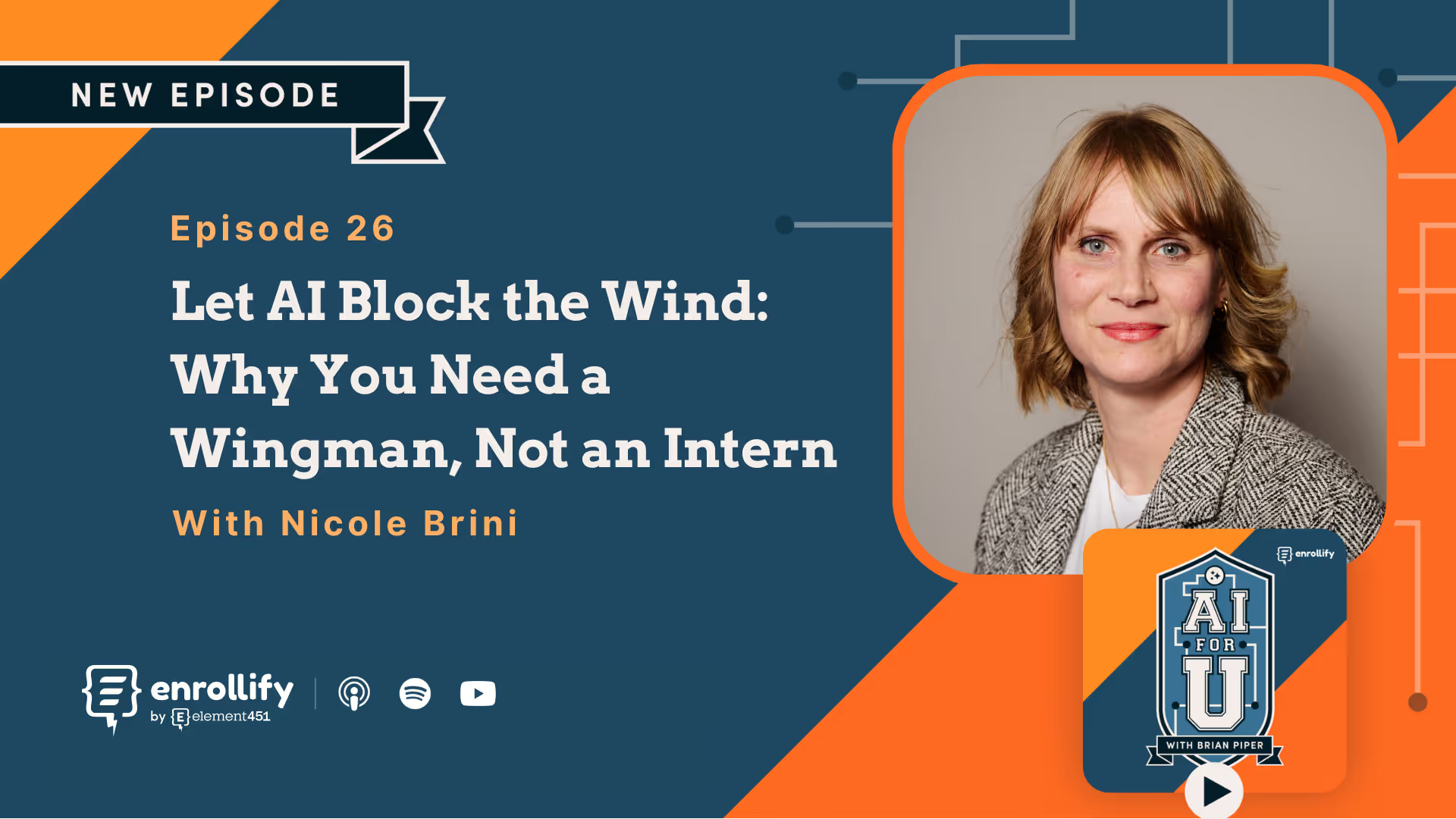
In this episode, Brian sits down with Nicole Brini, Head Manager of International Reputation at Università Cattolica del Sacro Cuore, to talk about what it really takes to integrate AI into higher education. Nicole explains how a seemingly simple chatbot project uncovered deeper problems with data, communications, and processes, sparking a larger transformation of their student experience, website, and organizational mindset. She also shares why universities often struggle with change, how generative AI is raising student expectations, and what higher education can learn from road cycling (yes, really!).
Join us as we discuss:
- [2:20] Why higher ed resists change and how to overcome it
- [10:36Treating your favorite AI application like a “wingman” instead of just another tool
- [23:03] Tips for starting with AI when leadership isn’t driving the charge
Check out these resources we mentioned during the podcast:
To hear this interview and many more like it, subscribe on Apple Podcasts, Spotify, or our website, or search for AI for U with Brian Piper in your favorite podcast player.
How can generative AI improve the international student experience in higher education?
Nicole Brini shares how Università Cattolica tackled this challenge head-on by starting with a student-facing chatbot. Initially, the tool was meant to offload repetitive admissions inquiries, especially from international students in different time zones. But as her team analyzed data from ChatGPT and Element451, they uncovered deep inconsistencies across their website content. This discovery prompted a much larger effort: rewriting their admissions and program pages with clearer, more natural language tailored to real student questions.
What is generative engine optimization, and how can it support your enrollment marketing strategy?
Generative engine optimization (GEO) emerged as a key strategy in Nicole's project. With 60% of Google searches ending in zero-click behavior, optimizing for conversational, AI-assisted search is becoming crucial. By prioritizing clarity, structured formatting, and natural phrasing, Nicole’s team created content that’s not just student-friendly but also aligned with emerging AI search tools. It’s a powerful new layer to traditional SEO strategies, especially important for higher education institutions looking to meet students where they are.
Why is AI adoption so challenging in higher education?
Nicole points out that higher ed's complexity—split between administrative and academic operations—makes change difficult. Add in slow institutional cultures and poor change management practices, and you've got a recipe for resistance. But Nicole argues this can be overcome with grassroots momentum. She encourages starting small: use AI to tackle repetitive tasks, run deep content audits, and identify pain points in student engagement. Once colleagues see results, it’s easier to build broader support.
What role should AI play in the student journey beyond admissions?
While much of the conversation around AI in higher ed focuses on recruitment, Nicole advocates for extending AI into career services and employability. She sees an opportunity for AI to help students discover internships, job placements, and soft skill development—areas that are often underserved despite their long-term impact. With tools like custom GPTs and generative research, institutions can do more to support the full student lifecycle.
How can staff drive AI innovation from the ground up?
Nicole’s department didn’t wait for institutional mandates—they launched their own lunch-and-learns and brainstormed use cases collaboratively. One particularly innovative approach involved creating a synthetic focus group based on real student feedback, enabling ongoing insights into the student experience. Her team also built internal GPTs to assist with onboarding new staff, offering a scalable, searchable knowledge base that complements traditional training.
What’s next for AI in higher education, and what should we be cautious about?
While Nicole is optimistic about AI’s ability to accelerate workflows and unlock creativity, she emphasizes the need for critical oversight. As we edge closer to artificial general intelligence (AGI), institutions must maintain a strong ethical framework and retain human expertise to ensure trust isn’t compromised. Her advice? Be proactive. Change is happening fast, and those who delay may find themselves struggling to catch up.
Episode prompt:
You are an expert in higher education content strategy, SEO for the zero-click search era, and natural language rewriting.
Review the attached CSV files exported from Google Analytics 4 (GA4) and Google Search Console (GSC), containing engagement, traffic, and query data for the university website, [provide URL].
Your task is to perform deep research and analysis, and deliver a strategy to optimize the program and admissions content for the realities of modern search, where nearly 60% of queries end in zero-clicks, and users increasingly consult AI tools for answers.
Follow these steps meticulously:
Step 1 — Analyze & Prioritize
- From GA4 & GSC data, identify the most critical program and admissions pages based on traffic, engagement, and queries.
- List the top 10–20 pages to prioritize for optimization.
Step 2 — Gap Analysis
- Using the GSC query data, compare what students are asking for (queries) with the existing content of the top pages.
- Identify gaps where student questions are not directly or clearly answered on the page.
- Create a table with:
| Student Question | Existing Content Answer (if any) | Gap Description |
Step 3 — Rewrite for Students & AI
- For each of the top pages, rewrite key sections of content:
- Use natural, conversational language students actually use, avoiding institutional jargon.
- Structure content clearly: with meaningful H2/H3 headings, bulleted lists where useful, and concise, direct answers to common questions.
- Optimize for featured snippets, AI scraping, and human readability.
Step 4 — Recommend New Content
- If gaps cannot be addressed by revising existing pages, recommend entirely new page topics to fill unmet needs.
- Provide suggested page titles & descriptions for these.
Step 5 — Metadata & Schema
- For each optimized or recommended page, suggest:
- Meta title (under 60 characters, compelling and keyword-aligned)
- Meta description (under 160 characters, clear and enticing)
- Appropriate structured data/schema (e.g., FAQ Page, How-To, Article)
Output:
- Table of top prioritized pages.
- Gap analysis table as defined above.
- Rewritten content snippets for each prioritized page (student-centered and AI-friendly).
- List of recommended new pages with titles and brief descriptions.
- Suggested meta titles and descriptions, and schema markup types for each page.
The goal: Make our content discoverable, accessible, and effective, whether consumed directly by students, displayed in featured snippets, indexed by AI models, or surfaced in zero-click results.
Be explicit, precise, and actionable. Perform deep research, beyond simple keyword matching — consider search intent, competitive content, and conversational tone.
Connect With Our Host:
Brian Piper
https://www.linkedin.com/in/brianwpiper/
About The Enrollify Podcast Network:
AI for U is a part of the Enrollify Podcast Network. If you like this podcast, chances are you’ll like other Enrollify shows too!
Some of our favorites include Generation AI and Mastering the Next.
Enrollify is produced by Element451 — the next-generation AI student engagement platform helping institutions create meaningful and personalized interactions with students. Learn more at element451.com.



.svg)
.svg)
