






About the Episode
Got a story to tell? An innovative idea to share? Fill out our guest nomination form and let's chat!
About The Episode:
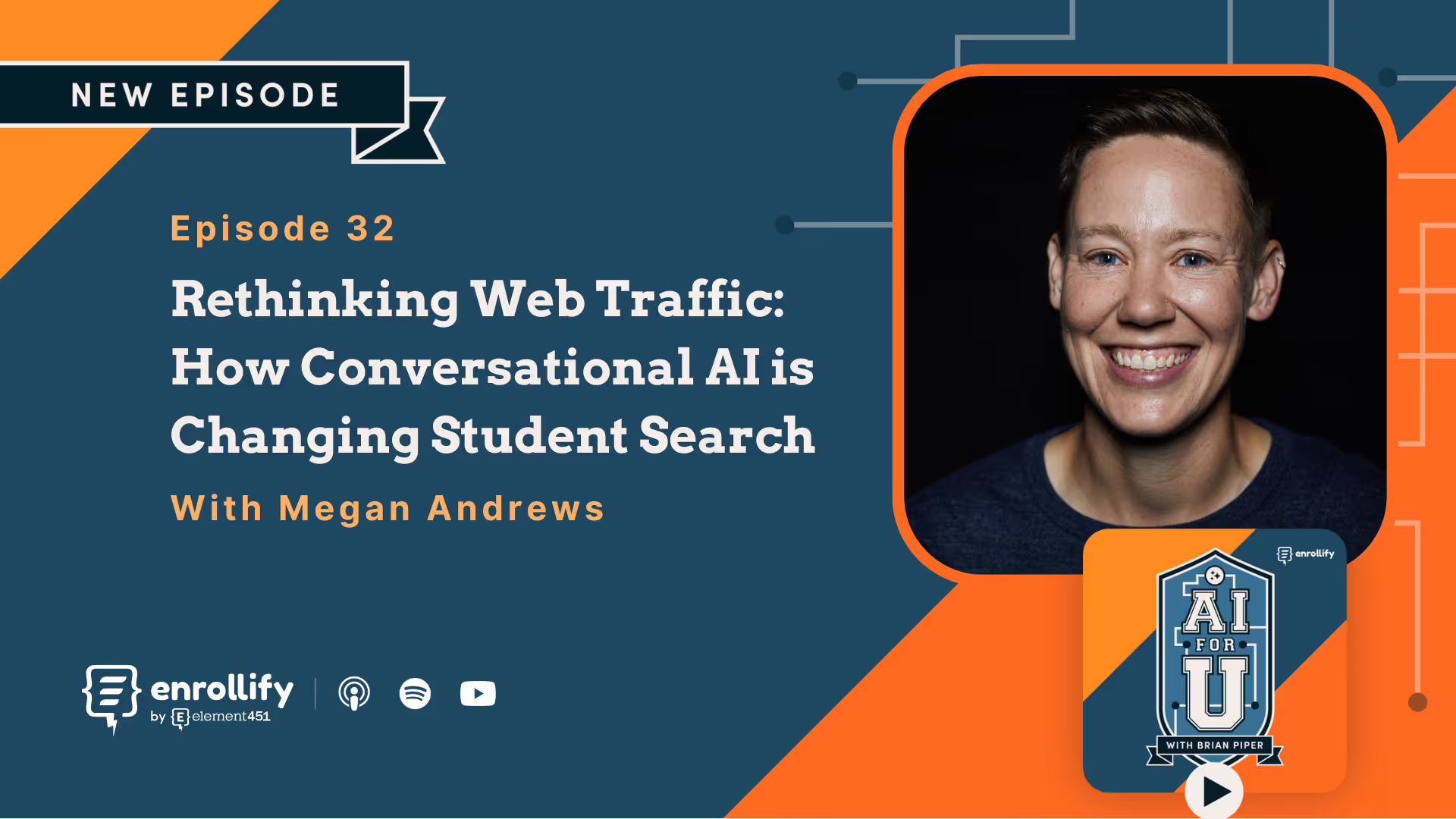
Worried about falling website traffic? You’re not the only one. In this episode, Megan Andrews, Digital Strategy Consultant at Squiz, joins us to talk about why fewer clicks do not necessarily mean less engagement, and how conversational AI is changing how students find and interact with information online. She also shares why it’s time to stop obsessing over visitor counts and start measuring real value, how AI-powered search can reveal what students are really thinking, and why there’s no better time to experiment than right now.
Join us as we discuss:
- [2:45] What a dip in organic website traffic really means
- [10:01] The real challenge: starting before it is perfect
- [16:34] Why higher education’s culture of sharing is a superpower
To hear this interview and many more like it, subscribe on Apple Podcasts, Spotify, or our website, or search for AI for U with Brian Piper in your favorite podcast player.
Episode Summary: What You’ll Learn in Episode 32 of AI for U
What is Conversational Search and Why Does It Matter for Higher Ed?
Brian and Megan kick off the conversation by breaking down what makes conversational search fundamentally different from traditional, keyword-based search systems. Instead of typing in rigid terms like “tuition” or “application deadlines,” prospective students are now asking real, human questions like “Why is this school so expensive?” This shift opens up a deeper level of engagement and allows institutions to better understand the why behind user behavior. Megan emphasizes that while web traffic may be declining in some areas due to off-platform discovery, the quality and strategic value of on-site search behavior is increasing dramatically.
How Can Conversational Search Data Improve Your Content Strategy?
One of the episode’s most insightful segments revolves around how AI search tools don’t just serve up links—they synthesize fragmented information from across your site into a single response. This means inconsistencies in your content (like outdated program details or conflicting tuition information) can no longer hide. Megan offers an entertaining example of a university chatbot recommending a bar as a quiet study space—clearly highlighting how AI exposes flaws in your site’s content structure. The takeaway? Conducting a conversational content audit isn’t just smart—it’s critical for content quality, governance, and student trust.
Why Is Sentiment Analysis a Game-Changer for Student Experience?
AI search opens a door into sentiment analysis that keyword data could never offer. When students express emotion—frustration, curiosity, excitement—through natural language, institutions can start listening at scale. Megan and Brian discuss how these data points can help shape everything from marketing strategy to curriculum development and student support services. For instance, recurring questions like “Is this degree really worth it?” could signal larger perception issues that need to be addressed in your messaging or student outcomes content.
What Role Does Language Mapping Play in Search Optimization?
Another fascinating topic tackled in this episode is the disconnect between how institutions describe themselves and how students search for them. Megan calls this “language mapping” and underscores its role in aligning internal brand language with external student vernacular. She encourages enrollment and marketing professionals to see conversational queries as mini focus groups—real-world, unsolicited feedback that’s far more authentic than formal surveys. When institutions listen to how their audience actually talks, they gain the insight needed to refine voice, tone, and messaging across platforms.
How Should Higher Ed Teams Get Started with AI Integration?
Not every campus is AI-ready—and that’s okay. Megan suggests starting small, whether that’s through conversational site audits or exploring chatbot enhancements. What matters most is creating space for internal education, collaborative exploration, and bold experimentation. Brian reminds listeners that integrating AI is not a tech project—it’s a change management process that requires buy-in from IT, marketing, legal, and leadership alike. Want to see results? Start asking questions, having cross-functional conversations, and setting clear goals for what your AI tools are meant to solve.
What’s Next: Agent-to-Agent Search and the AI Layer of the Internet
Looking ahead, Megan introduces a forward-thinking concept: agent-to-agent communication. As AI agents like ChatGPT begin interacting with other AI-powered tools, your university's “digital agent” needs to be ready. Imagine an OpenAI system asking your university's AI agent about financial aid, degree programs, or admissions deadlines. If your data isn’t structured and curated properly, your institution could get misrepresented. The institutions that win in this new era of AI discovery will be the ones that start investing now in building structured, accurate, and trusted information ecosystems.
Episode prompt:
Replace the items in brackets [] with the specifics for your institution. You may need to focus this prompt down to look for one strategy for one audience depending on the results you get.
You are an expert in higher education marketing and AI search discoverability.
Your task is to analyze how [institution name], [institution URL], appears in AI-generated search results.
Based on the following, generate a list of conversational searches that audiences might run to learn about the school that could be used to test the visibility in ChatGPT around strategic priorities for their target audience.
Strategic Priorities: [insert institution’s strategic priorities here or link to URL]
Mission Statement: [insert institution’s mission statement here or link to URL]
Primary Audiences: [insert institution’s key audiences for reaching strategic priorities]
Examples:
“Is [institution name] a good school for [priority program/field]?”
“What is [institution name] known for?”
“Best colleges for business in [state].”
“Student experience at [institution name].”
“How much does it cost to attend [institution name]?”
Run these conversational searches in ChatGPT.
For each, capture whether the institution appears in the AI-generated results.
Provide a narrative summary that answers:
Where and how does the institution appear across AI platforms?
What information (facts, claims, rankings, or highlights) do the AI results display?
What links, if any, are included (official site, third-party rankings, Wikipedia, etc.)?
How well does this representation align with the institution’s strategic priorities, mission, and key audiences?
What gaps or risks are present in the current AI search presence? (e.g., outdated info, missing strengths, unfavorable comparisons)
Output a single narrative summary, connecting the institution’s visibility back to its mission and strategic goals, and highlighting areas where content or visibility could be improved.
Connect With Our Host:
Brian Piper
https://www.linkedin.com/in/brianwpiper/
About The Enrollify Podcast Network:
AI for U is a part of the Enrollify Podcast Network. If you like this podcast, chances are you’ll like other Enrollify shows too!
Some of our favorites include Generation AI and Mastering the Next.
Enrollify is produced by Element451 — the next-generation AI student engagement platform helping institutions create meaningful and personalized interactions with students. Learn more at element451.com.




.svg)
.svg)
