






About the Episode
Got a story to tell? An innovative idea to share? Fill out our guest nomination form and let's chat!
About The Episode:
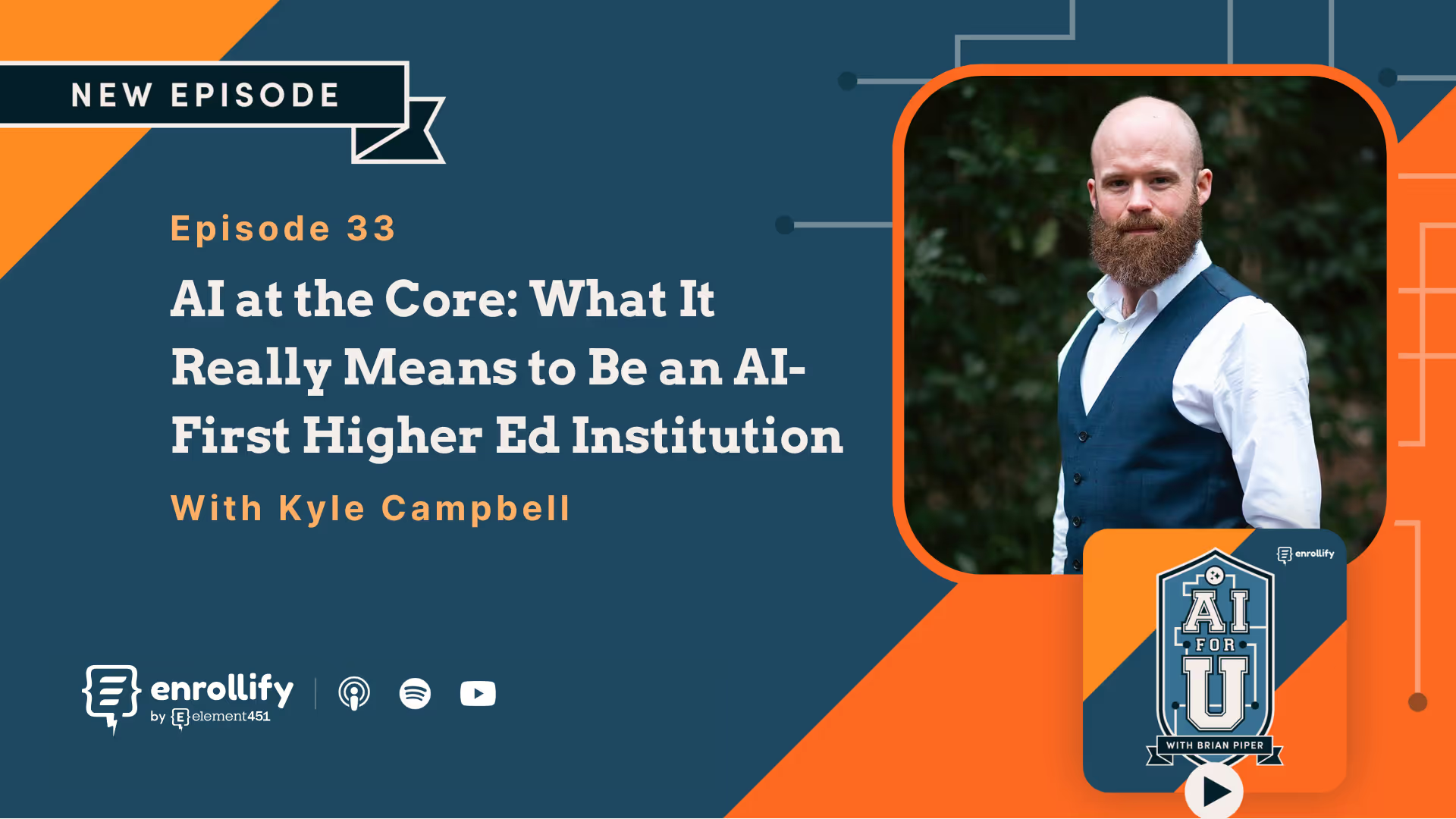
What does it really mean to be an AI-first institution? In this episode, Kyle Campbell, Founder and Managing Director of Education Marketer, joins Brian to break down how higher education can move beyond surface-level innovation. Kyle shares how to make AI part of the system, not just a shortcut. He also explains why leaders need the most AI education and how technology can make university messaging sound more human. This conversation pushes past buzzwords and shows what real transformation looks like.
Join us as we discuss:
- [2:32] Why content is no longer a differentiator in higher ed marketing
- [1-:25] How to avoid the “better trap” by creating new systems instead of faster old ones
- [17:38] The end of the knowledge worker and the rise of creative catalysts
Check out these resources we mentioned during the podcast:
To hear this interview and many more like it, subscribe on Apple Podcasts, Spotify, or our website, or search for AI for U with Brian Piper in your favorite podcast player.
Episode Summary: Strategic Content Alignment with AI – What You Need to Know
How can AI help universities analyze content strategy and identify gaps?
Kyle explains how AI tools like GPT can quickly analyze large volumes of content (e.g., social posts, blogs, videos) and compare them to a university's strategic priorities and brand values. This helps identify where current content is missing the mark. For instance, a university aiming to influence regional policy discovered—via AI analysis—that only 12% of its content actually spoke to that goal, even though its LinkedIn audience included relevant stakeholders. Without AI, this would’ve taken weeks to assess.
By combining AI analysis with strategic documents and audience personas, institutions can assess how well their content reflects what they want to be known for—and adjust accordingly. This process not only saves time but surfaces blind spots traditional audits often miss.
Why is it a mistake to use AI as just an assistant?
Most higher ed institutions treat AI as a "co-pilot" rather than the driver, which limits its full potential. Kyle makes a compelling case for flipping this model—starting with AI instead of bolting it on after strategies are already set. When AI is integrated from the beginning, institutions can completely rethink how problems are solved.
For example, rather than spending months on a website redesign to reduce page count, AI can help institutions dynamically personalize content delivery based on user intent. This mindset shift—from incrementally better to fundamentally different—represents a major unlock for higher ed marketers.
How can AI help refine your institutional messaging?
One of the most powerful applications Kyle shares is using AI to analyze student interviews and extract the language students actually use to describe their aspirations and problems. This helps marketers avoid the all-too-common trap of polished but generic messaging that fails to resonate.
In Kyle's work, AI helped inform how to position a new practical humanities degree by surfacing recurring themes and vocabulary from student conversations. This ensures that the resulting messaging speaks directly to what students care about—in their own words—rather than marketing speak.
What challenges are holding higher ed institutions back from using AI effectively?
Kyle identifies two major blockers: (1) outdated education systems that treat AI as a niche IT topic instead of a core learning tool, and (2) institutional leadership lacking firsthand experience with AI. Many leaders are making strategic decisions about AI integration without ever using the tools themselves, leading to superficial implementations.
Additionally, higher ed is structured around long-standing workflows and departmental silos that don’t adapt easily to rapid change. To overcome this, Kyle recommends staff start using AI for personal productivity and experimentation—building confidence and familiarity from the ground up.
Where is AI headed next, and how should institutions prepare?
Looking ahead, Kyle anticipates AI becoming 16x more intelligent in the next two years. With that exponential growth, knowledge work as we know it is being redefined. Content creation will be increasingly commoditized, meaning institutions must double down on trust, perspective, and new knowledge creation to stand out.
This includes fostering internal thought leaders who can authentically represent the brand and equipping students not just with knowledge, but with the ability to apply it creatively. Institutions that focus on building audiences and empowering creators—rather than simply disseminating information—will have a clear advantage.
Episode prompt:
You are a content strategy expert.
I'm going to analyze my content performance data against our strategic priorities to identify gaps and misalignments. Conduct a comprehensive audit that reveals where we're missing opportunities.
Content Data to Analyze: [PASTE YOUR EXPORTED CONTENT DATA - social posts, blog titles, email subjects, etc.]
- Platform: [SPECIFY: LinkedIn, Twitter/X, Instagram, Blog, etc.]
- Time period: [DATE RANGE]
- Engagement metrics: [INCLUDE IF AVAILABLE]
Institutional Context:
- Institution type: [PUBLIC/PRIVATE, SIZE, RESEARCH LEVEL]
- Strategic priorities: [LIST YOUR TOP 3-5 INSTITUTIONAL GOALS]
- Brand values: [CORE VALUES YOUR INSTITUTION PROMOTES]
- Target audiences: [PRIMARY AUDIENCE SEGMENTS]
- Desired reputation: [WHAT YOU WANT TO BE KNOWN FOR]
Analysis Requested:
- Content Categorization
- Categorize all content by theme/topic
- Calculate the percentage of content in each category
- Identify dominant themes vs. neglected areas
- Strategic Alignment Assessment
- Map content categories to our strategic priorities
- Calculate what % of content supports each priority and how much content doesn't support any current strategic priorities
- Identify priorities with minimal content support
- Audience-Content Match
- Analyze if content themes match audience interests
- Identify content getting engagement from the wrong audiences
- Spot missed opportunities with existing followers
- Gap Identification
- List strategic priorities with <20% content support
- Identify audiences we're not effectively reaching
- Highlight brand values not reflected in content
- Actionable Recommendations
- Suggest specific content topics to increase
- Recommend content to reduce or eliminate
- Propose content calendar adjustments
Output Format: Provide results in a clear report format with:
- Executive summary of key findings
- Data visualized as percentages
- Top 3 critical gaps to address immediately
- 90-day action plan for alignment
Focus on patterns and insights I might miss in manual review, but flag any categorizations that seem questionable for human verification.
Connect With Our Host:
Brian Piper
https://www.linkedin.com/in/brianwpiper/
About The Enrollify Podcast Network:
AI for U is a part of the Enrollify Podcast Network. If you like this podcast, chances are you’ll like other Enrollify shows too!
Some of our favorites include Generation AI and Mastering the Next.
Enrollify is produced by Element451 — the next-generation AI student engagement platform helping institutions create meaningful and personalized interactions with students. Learn more at element451.com.






.svg)
.svg)
