






About the Episode
Got a story to tell? An innovative idea to share? Fill out our guest nomination form and let's chat!
About The Episode:
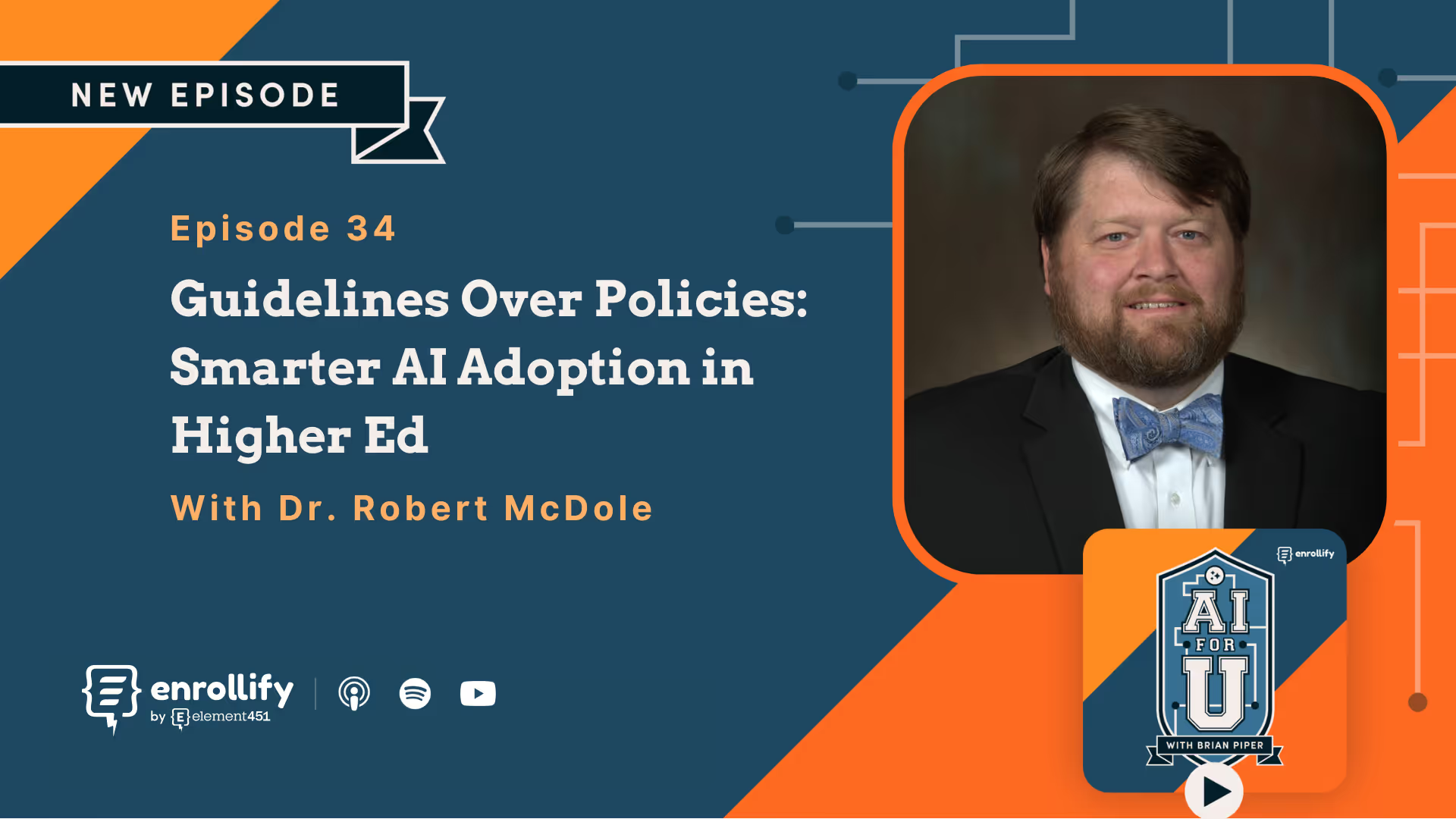
In this episode, Brian talks with Rob McDole, Director for the Center of Teaching and Learning at Cedarville University, about how AI is transforming the way higher education teaches and learns. The conversation explores how AI supports recall-based learning, helping students move beyond cramming for tests to actually retaining and understanding what they study. They also discuss why institutions need to move past fear and start engaging directly with AI, how guidelines work better than rigid policies in fast-moving environments, and why responsible experimentation is the key to smarter adoption.
Join us as we discuss:
- [5:58] Overcoming hesitation and building responsible AI frameworks
- [11:17] The wake-up call: “If you’re not using it, your students are”
- [16:20] AI and learning science: recall, retention, and real understanding
Check out these resources we mentioned during the podcast:
To hear this interview and many more like it, subscribe on Apple Podcasts, Spotify, or our website, or search for AI for U with Brian Piper in your favorite podcast player.
Episode Summary
What does AI adoption look like at a faith-based university like Cedarville?
Dr. McDole shares how he’s used AI since late 2022, employing tools like ChatGPT EDU, Anthropic’s Claude, and even open-source models through Hugging Face. From first-pass grading in his business ethics course to summarizing emails and automating calendar management, AI has become a critical component of his workflow. Cedarville has campus-wide access to ChatGPT EDU, and adoption is widespread across students, faculty, and administrators. Dr. McDole emphasizes that while AI streamlines efficiency, it always requires human oversight, especially in grading and strategic decision-making.
Why are some higher ed institutions still hesitant to adopt AI tools?
Resistance to change is deeply rooted in higher education, and at faith-based institutions, concerns often center on whether AI aligns with theological commitments. Dr. McDole explains that Cedarville views itself under the authority of scripture, and that raises questions around relationality and human dignity. For Cedarville, integrating AI must never erode human connection or compromise spiritual and educational values. The key, he says, is having theologically informed conversations about AI—not just for risk mitigation, but as a way to demonstrate stewardship and love for others.
What does responsible AI integration actually look like?
One of the standout insights from this episode is Cedarville’s decision to develop guidelines instead of rigid AI policies. Guidelines offer the flexibility to adapt to the breakneck speed of AI development, giving users room to explore, experiment, and learn. These parameters also assure users—especially faculty and staff—that they’re encouraged to try new tools without fear of overstepping boundaries. Dr. McDole reinforces that education around AI is just as important as access. Without training and awareness, institutions risk misuse—or worse, underuse.
How should institutions approach skepticism around AI?
Dr. McDole encourages even the most skeptical educators to try AI tools before writing them off. “You need to know what you're saying no to,” he says. The goal isn’t blind adoption but informed engagement. Educators who understand how these tools work are better equipped to advise students and make principled decisions. He also cautions against anthropomorphizing AI—reminding listeners that these tools are machines, not humans. While kindness is a virtue, it’s important not to assign emotional or moral weight to technology.
How is AI transforming teaching and learning?
As Director of the Center for Teaching and Learning, Dr. McDole is particularly interested in how AI can enhance learning outcomes. He highlights a key principle from Dr. Barbara Oakley’s work: spaced recall is essential for effective learning. With AI, students can create custom study tools that help them review and retain course material more efficiently. Instead of relying on multiple-choice quizzes, AI-powered tools prompt students to recall and apply concepts in dynamic ways. This shift allows educators to spend more time on meaningful “gold time”—in-person discussions, mentorship, and relational engagement—while AI handles the rote mechanics.
What’s next for AI in higher education?
Looking ahead, Dr. McDole sees identity verification as a major upcoming challenge, especially as AI becomes more convincing in impersonation and deception. He also predicts a surge in agent-based models and command-line interfaces that allow AI to automate local tasks directly on users' devices. Codex CLI, for example, is already enabling him to write and run scripts to connect platforms that previously lacked APIs. In a future shaped by intelligent automation and robotics, Dr. McDole believes higher ed must double down on teaching students how to use these tools ethically, critically, and creatively.
Connect With Our Host:
Brian Piper
https://www.linkedin.com/in/brianwpiper/
About The Enrollify Podcast Network:
AI for U is a part of the Enrollify Podcast Network. If you like this podcast, chances are you’ll like other Enrollify shows too!
Some of our favorites include Generation AI and Mastering the Next.
Enrollify is produced by Element451 — the next-generation AI student engagement platform helping institutions create meaningful and personalized interactions with students. Learn more at element451.com.






.svg)
.svg)
