






About the Episode
The AI Engage Summit is a free, virtual experience built to help higher ed leaders actually do something with AI. Over two afternoons, you’ll hear from peers, see practical demos, and walk away with ideas you can use immediately — no travel required, no cost to attend. If you’re ready to move AI from “interesting” to “impactful,” this is the place to be. Register now, don't miss out.
About The Episode:
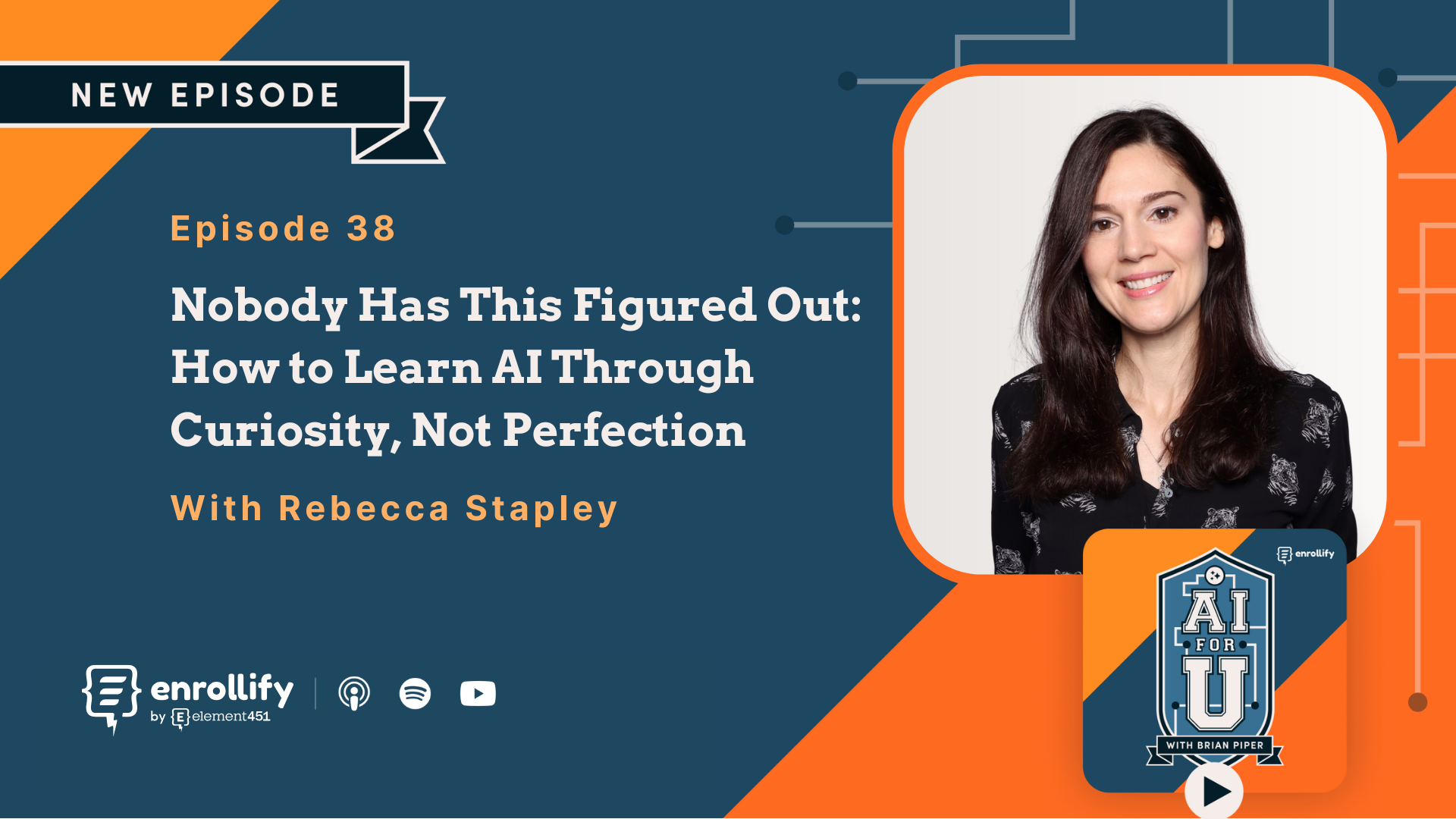
Higher ed is stepping into a new era, and Rebecca Stapley is right in the middle of it. The Director of Marketing and Communications at the Rochester Institute of Technology joins Brian to reveal how AI is helping her cut through email chaos, understand new audiences, and create more space for meaningful work. She also talks frankly about feeling hesitant at first, realizing AI literacy was becoming essential, and discovering that experimentation is the key to unlocking its real value.
Join us as we discuss:
- [6:20] AI as a practice: the yoga analogy, and learning through experience
- [11:43] The higher ed marketer’s perspective: fundamentals that won’t change
- [18:58] The responsibility of higher ed to remain transparent and trustworthy
To hear this interview and many more like it, subscribe on Apple Podcasts, Spotify, or our website, or search for AI for U with Brian Piper in your favorite podcast player.
Episode Summary
How can AI help cut through the chaos of long email threads?
In higher ed, few things are as maddening as vague, disjointed email chains filled with "thoughts?" or "interesting" and no clear direction. Rebecca uses AI tools to bring clarity to these digital conversations. By pasting threads into LLMs and prompting them to extract action items, responsibilities, deadlines, and where more clarity is needed, she turns ambiguity into actionable strategy. This use of AI not only saves time but also ensures nothing falls through the cracks—a common risk in fast-paced, multi-stakeholder environments.
What sparked Rebecca’s AI journey, and what finally got her to dive in?
Although initially hesitant, Rebecca embraced AI in early 2023, realizing that fluency in AI wasn’t optional—it was becoming a core competency for higher ed professionals. She stopped waiting for perfect answers and jumped into practice. Her yoga analogy captures it well: you can’t just study the poses, you have to do them. By making AI part of her daily routine, she began to discover practical, repeatable workflows that saved her time and elevated her creative output.
What are the most valuable AI use cases in Rebecca’s marketing workflows?
Rebecca's top use cases fall into three buckets: 1) email clarity, 2) audience alignment, and 3) brand voice consistency. She leverages AI to summarize unclear internal communications, tailor content for niche audiences like healthcare execs, and gut-check her copy against RIT’s copy playbooks. AI also supports her newsletter production—especially when paired with resources like Mailed It by Ashley Budd and Dave Kibble—where it helps punch up copy, generate subject lines, and optimize delivery for specific audience segments.
How is RIT fostering responsible, strategic AI integration?
RIT’s leadership has taken a proactive and empowering stance on AI adoption. With data-protected tools like Google Gemini and Microsoft Copilot, and clear usage guidelines in place, staff are encouraged to explore AI safely and creatively. The marketing team even hosted a lightning round during a recent retreat, giving everyone a platform to share how they’re using AI in their work. This kind of openness fuels experimentation and learning, while still aligning with institutional best practices and brand integrity.
What advice does Rebecca have for institutions just getting started with AI?
Her message is simple but powerful: just start. Whether it’s using AI to plan a gluten-free dinner or brainstorming newsletter subject lines, any small use case helps build literacy and confidence. Rebecca encourages institutions to foster open conversations about AI—even if the path forward isn’t clear. Waiting for a perfect plan may leave institutions behind. Instead, prioritize experimentation, reflection, and incremental learning. Use what you learn in your personal life to build professional competence.
How is AI reshaping content strategy and SEO in higher ed?
Rebecca points out that AI-generated overviews—those summaries that pop up in search results—are already impacting how prospective students engage with institutional websites. This underscores the importance of SEO-aligned, audience-first content that clearly answers the user’s questions. Her takeaway? The fundamentals of marketing still apply: understand your audience, communicate your unique value, and structure your content accordingly. AI is not a replacement for strategy—it’s a tool that amplifies it.
What concerns does Rebecca have about AI’s long-term implications?
As a marketer and humanist, Rebecca isn’t blind to AI’s risks. From environmental costs to the rise of deepfakes and misinformation, she stresses the importance of staying critically engaged with these tools. She encourages marketers to remain transparent, especially in how they use AI in content production, and to always prioritize trust, clarity, and ethics in communication.
What does the future of AI in higher ed marketing look like?
Rebecca sees more integration, personalization, and sophistication ahead. As AI becomes embedded in everything from Zoom to CRMs, institutions will need to be strategic about which tools they invest in and how they train their teams. She believes institutions that document workflows, stay true to brand identity, and encourage open experimentation will be best positioned for long-term success.
Connect With Our Host:
Brian Piper
https://www.linkedin.com/in/brianwpiper/
Enrollify is produced by Element451 — the next-generation AI student engagement platform helping institutions create meaningful and personalized interactions with students. Learn more at element451.com.




.svg)
.svg)
