






About the Episode
Got a story to tell? An innovative idea to share? Fill out our guest nomination form and let's chat!
About the Episode:
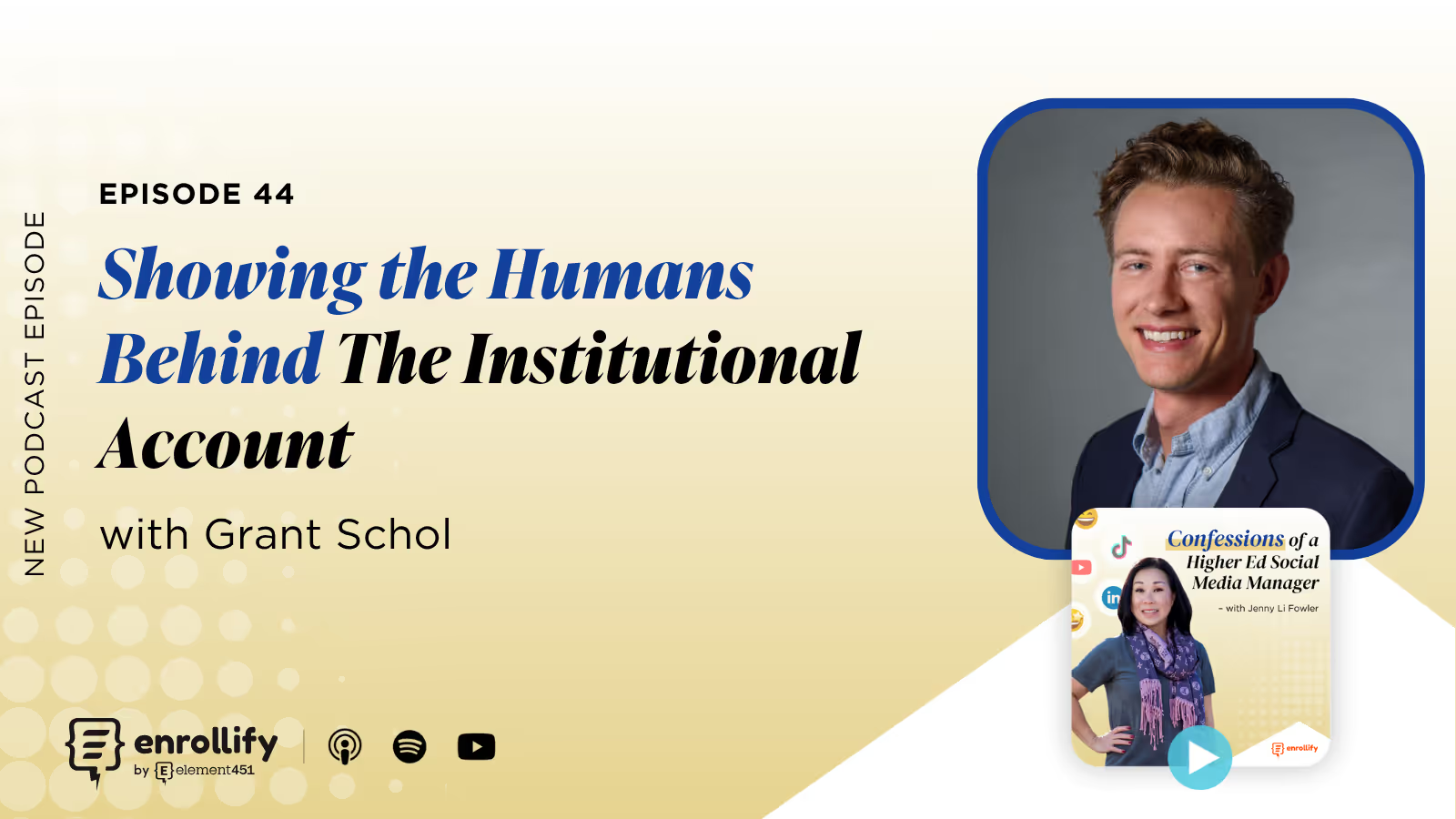
Jenny Li Fowler sits down with Grant Schol, Associate Director of Communication and Project Management for the Fulbright College of Arts and Sciences at the University of Arkansas. Together, they unpack the evolving meaning of authenticity in higher ed social media and why it’s not as simple as just “being real.” Grant shares strategies for humanizing institutional accounts, empowering student voices, and creating content that speaks directly to your campus community. This conversation dives deep into community building, student-first messaging, and how to balance fun with institutional integrity—all through the lens of a social media manager’s lived experience.
Key Takeaways
- Authenticity isn’t a formula—it's a feeling: For higher ed institutions, authenticity is less about rawness and more about relevance and resonance with your community.
- Humanizing brand accounts builds trust: Putting a face (or name) to your posts helps audiences see the people behind the brand—and makes engagement more personal.
- Student creators make your content more relatable: Empowering student interns to create content creates peer-to-peer credibility and stronger campus engagement.
- Hyper-specific content = Higher engagement: Lean into inside jokes, campus quirks, and cultural nuances to make your audience feel like they’re part of an exclusive community.
- Be bold enough to experiment: Even seasoned social media managers need to try new formats. Don’t be afraid to learn on the fly—especially with short-form video.
- Balance institutional polish with personality: You can honor your college’s legacy while keeping things fresh, fun, and current—especially during cultural moments.
How do you define authenticity for a college or university brand?
Authenticity in higher ed isn’t as simple as “just be real.” As Grant points out, when you’re managing a brand that represents thousands of people—from students and faculty to alumni and the local community—there’s no one-size-fits-all voice. The key is aligning your message with your audience's expectations and values while showing that real people are behind the posts. And yes, legal teams matter—but there’s still room to make statements feel genuine.
How can schools show there's a real person behind their accounts?
Grant breaks this down brilliantly: sign your DMs with your name. It’s a small touch that makes a big impact. By doing this, the audience begins to recognize that a person—not a bot—is behind the messages. Encouraging student interns to do the same amplifies that human touch and creates a sense of digital rapport, making future engagements warmer and more respectful.
Why is student-created content so powerful in higher ed marketing?
Students know what students like. That’s why Grant hires interns who are willing to be on camera and comfortable creating relatable content. They aren’t just helping out—they’re co-owners of the brand narrative. When students contribute, the content resonates better with peers and shows that your institution values current voices.
What does “hyper-specific content” mean, and why does it work?
Hyper-specific content speaks directly to your core community. Think inside jokes, niche academic references, or even campus traditions that outsiders might not get—but insiders totally love. Grant recalls a wildly successful post referencing a notoriously hard math class and another that parodied pop culture trends like Taylor Swift’s Eras Tour. These posts work because they foster an “ingroup” identity—making your students feel like they truly belong.
How can social media managers balance fun with institutional tone?
It’s all about respecting the brand while pushing boundaries in a smart way. Grant encourages experimentation with new formats like short-form video, creating a vibe that’s dynamic and personal without crossing the line into unprofessionalism. As he says, “It’s just a post.” If something flops, move on—but if it lands, it could build real community.
Why is it important for interns to be treated as equals on the social team?
Giving students ownership of their work doesn’t just build great portfolios—it makes your content stronger. Grant avoids labeling his interns as “interns” publicly and instead treats them like full team members. That sense of pride and equality translates into more passionate, invested work that other students naturally connect with.
How does “ingroup vs. outgroup” theory relate to campus social media?
Drawing from his graduate research, Grant introduces the idea of Ingroup/Outgroup dynamics in content strategy. The idea is simple but powerful: when people see a piece of content that feels uniquely relevant or familiar, it strengthens their desire to be part of that group. For prospective students, this could be the deciding factor in where they apply.
About the Show: Confessions of a Higher Ed Social Media Manager covers the do's, don'ts, and dynamics of the complex and challenging social media ecosystem. We analyze the successes and failures of those in the higher education social space — what went right, what went wrong, and what are the lessons learned. We’ll share actionable steps so you can push past the pitfalls others have faced. No matter if you're on a team of 20 or a team of one, we've got you covered. Confessions of a Higher Ed Social Media Manager is hosted by Jenny Li Fowler and is a proud member of the Enrollify Podcast Network.
Connect With Our Host:
https://twitter.com/TheJennyLi
About The Enrollify Podcast Network:
Confessions of a Higher Ed Social Media Manager is a part of the Enrollify Podcast Network. If you like this podcast, chances are you’ll like other Enrollify shows, too!
Some of our favorites include Higher Ed Pulse and Confessions of a Higher Ed CMO.
Enrollify is produced by Element451 — the next-generation AI student engagement platform helping institutions create meaningful and personalized interactions with students. Learn more at element451.com.







.svg)
.svg)
