


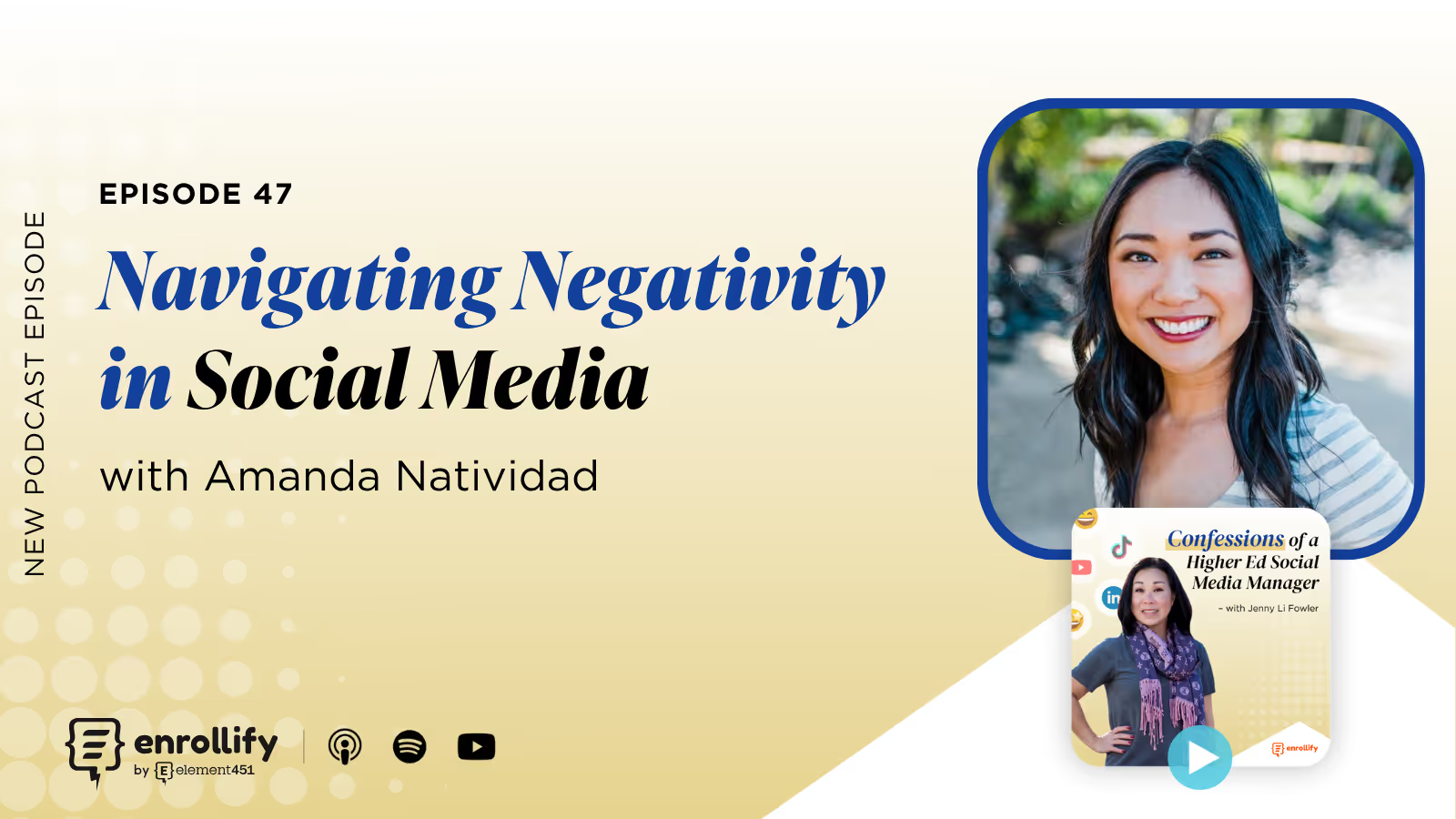




About the Episode
Got a story to tell? An innovative idea to share? Fill out our guest nomination form and let's chat!
About the Episode:
Jenny Li Fowler sits down with Amanda Natividad — marketer, podcaster, and former trained chef — to tackle a challenge every social media manager and content creator eventually faces: handling negative comments and trolls online. From understanding the difference between criticism and trolling to learning when to clap back and when to scroll on, Amanda shares real-life stories, personal missteps, and practical strategies for keeping your cool in the chaotic world of online engagement. If you’ve ever let one bad comment ruin your day, this conversation is your crash course in building resilience and reclaiming perspective.
Key Takeaways
- Not all negative comments are trolling — Learn to distinguish between valid feedback, disagreement, and genuine trolling.
- Your mental health matters more than the last word — You don’t have to respond to everything. Sometimes, the healthiest response is no response.
- Use criticism as a learning tool — Even blunt comments can reveal blind spots or spark valuable perspective shifts.
- Boundaries are essential in social media management — Use platform tools like blocking, muting, and keyword filters to protect your mental space.
- Thick skin is a professional asset — In the digital arena, longevity depends on your ability to separate personal worth from public feedback.
- AI in content creation — Use AI tools thoughtfully, ethically, and with a human touch—never copy and paste blindly.
Episode Summary – Your FAQs Answered
What’s the difference between criticism and trolling?
Amanda explains that criticism (even if blunt) often comes from a place of perspective-sharing or disagreement, while trolling exists solely to provoke a reaction. Trolls typically use inflammatory language, personal attacks, or persist over time, sometimes across platforms. Criticism might sting, but it can also be constructive. Trolling is noise—don’t feed it.
Why do negative comments feel so personal?
Part of it is the parasocial effect—when you post content, you’re putting yourself in front of a digital crowd, and any feedback feels like it’s aimed directly at you. Social media notifications magnify this feeling, and our brains are wired to see “all eyes on us” as a threat. Even when the comment is about the brand, the person reading it can feel personally targeted.
How can marketers stop dwelling on one bad comment?
Perspective is key. If your post has hundreds of positive reactions and one negative reply, that “everyone is saying this” feeling is often just your brain overestimating the scale of the critique. Amanda suggests actively reminding yourself: it’s not “everyone,” it’s one person. Then decide—can this feedback teach me something? If yes, reflect. If no, move on.
What’s the best way to handle trolls?
Amanda says you have two real options: ignore them or use them strategically. Ignoring is often the healthiest choice, especially if you’re not in a position to joke back without risking your brand’s tone. “Using” trolling can mean responding with humor, redirecting attention to your message, or making the troll’s behavior work in your favor—if your brand guidelines and personality allow it.
What tools help protect mental health on social media?
Block, mute, and report liberally. These tools aren’t just for emergencies—they’re preventive care. You can even mute specific words, phrases, or emojis to filter out repetitive negativity. And remember: your blocking criteria are yours to define.
How do you keep perspective as a public-facing creator?
Amanda emphasizes developing “social media literacy”—knowing the difference between personal attacks and disagreement with your content. She shares a story of a creator who mistook a lighthearted critique of their phrasing for personal bullying, highlighting how reframing feedback can save a lot of stress.
What’s Amanda’s take on AI in content creation?
Amanda uses AI sparingly and strategically, often to research or draft a starting point for outreach messages. She stresses the importance of adding a human touch, understanding the ethical and environmental impact, and avoiding blind copy-pasting. AI can enhance productivity, but it can’t replace the authenticity and nuance of human communication.
About the Show: Confessions of a Higher Ed Social Media Manager covers the do's, don'ts, and dynamics of the complex and challenging social media ecosystem. We analyze the successes and failures of those in the higher education social space — what went right, what went wrong, and what are the lessons learned. We’ll share actionable steps so you can push past the pitfalls others have faced. No matter if you're on a team of 20 or a team of one, we've got you covered. Confessions of a Higher Ed Social Media Manager is hosted by Jenny Li Fowler and is a proud member of the Enrollify Podcast Network.
Connect With Our Host:
https://twitter.com/TheJennyLi
About The Enrollify Podcast Network:
Confessions of a Higher Ed Social Media Manager is a part of the Enrollify Podcast Network. If you like this podcast, chances are you’ll like other Enrollify shows, too!
Some of our favorites include Higher Ed Pulse and Confessions of a Higher Ed CMO.
Enrollify is produced by Element451 — the next-generation AI student engagement platform helping institutions create meaningful and personalized interactions with students. Learn more at element451.com.





.svg)
.svg)
