






About the Episode
Got a story to tell? An innovative idea to share? Fill out our guest nomination form and let's chat!
About the Episode:
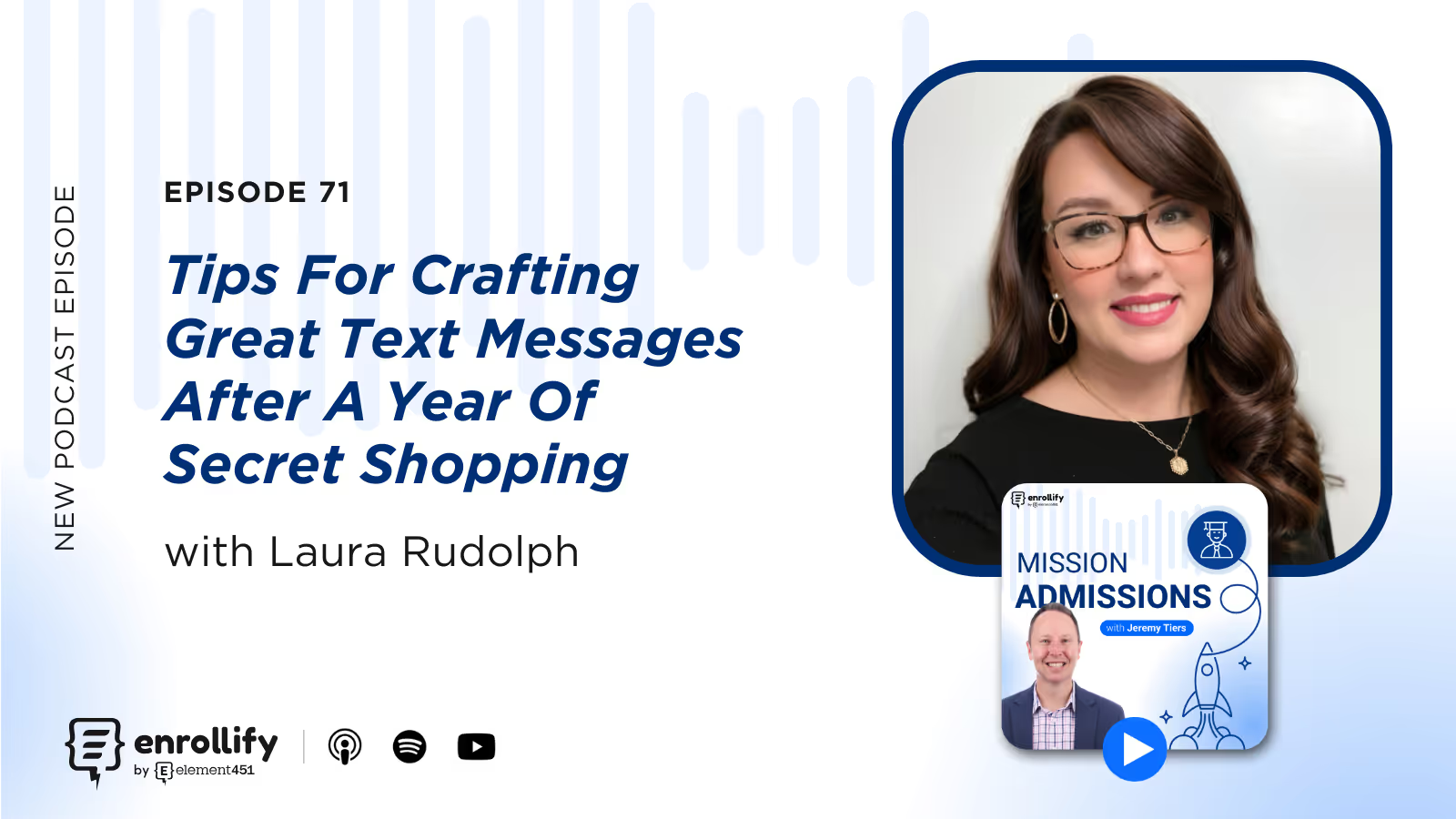
Over the past few years colleges and universities have increased the amount of text messages they send to prospective students, and many have also started texting parents and guardians. In this episode of Mission Admissions, host Jeremy Tiers talks with Laura Rudolph about the secret shopping project she recently completed – signing up as both a student and parent at several institutions.
How are colleges and universities using text messaging to engage students?
Laura Rudolph's secret shopping research found that while a majority of colleges (76%) are texting prospective students, most are still using SMS in a disjointed way—often as one-off reminders rather than as part of a broader, integrated communication strategy. While this shows improvement from previous years, the inconsistency in tone, timing, and segmentation was surprising. Even more shocking? Not a single institution texted parents, despite data from Niche and others showing that more than two-thirds of parents want text updates from colleges.
Colleges are increasingly aware that texting is an essential part of modern communication, but many still treat it like email—focusing on delivering information instead of building relationships. Laura emphasized that students want better texts, not more of them. Effective text strategies start with empathy, personalization, and the understanding that texts are a two-way conversation—not a one-way announcement.
What makes a good enrollment-focused text message?
The most effective texts Laura received were personal, brief, and often ended with a question to spark a reply. One standout example? A message that acknowledged her academic interest and linked to a recent alumni story relevant to that major—demonstrating that the school understood and valued her preferences. Another strong example: inviting juniors specifically to a junior preview day, rather than using a generic campus visit invite.
Tone also mattered. The best messages sounded human—casual but professional, just like you'd text a friend or colleague. They avoided "sinkhole phrases" like “just checking in” or “let me know if you have questions,” which tend to kill conversation. Laura urges institutions to end texts with clear, engaging questions (e.g., “Do you want me to send the link?”) rather than assuming students will take the next step on their own.
Ultimately, the goal is to humanize messaging in a way that builds trust and encourages response. Texting is the most immediate and interactive channel at a school’s disposal—so use it to open doors, not shut them.
What are the most common mistakes colleges make with texting?
Unfortunately, many of the messages Laura received fell flat—or worse, created confusion. Some of the biggest missteps? Not identifying the institution in the message, using confusing mascots or acronyms in place of school names, and sending the same message multiple times with no variation. In one case, a college sent her the exact same message four times over four months—clearly an automated system with no personalization.
Another misstep: asking too much too soon. Several colleges sent texts immediately after an inquiry asking students to visit campus—before building any relationship or trust. Laura advises schools to remember the basics of relationship building: give before you ask. Start with helpful content, learning opportunities, or soft touches before jumping to hard CTAs.
One particularly overlooked issue? Overuse of opt-out language. While it's crucial to follow SMS compliance guidelines, repeatedly ending texts with “Reply STOP to unsubscribe” makes messages feel like spam—even when they come from real people. It’s better to include this in the initial text and occasional reminders rather than in every message.
Where should texting fit within the broader enrollment communication strategy?
Texting isn’t a standalone channel—it should be woven into the larger communication flow. Laura emphasizes that texts should not duplicate email content or act as one-size-fits-all blasts. Instead, they should be timed strategically to complement other touchpoints like email, phone calls, and campus visits. For example, using texts to confirm visit logistics, nudge students to complete an application, or follow up after admission decisions can be highly effective.
But it has to be coordinated. Many institutions struggle with fragmented communication ownership—when admissions counselors manage text messaging, while marketing manages email. To get the most out of SMS, these teams must collaborate to ensure consistency and context. Training staff on texting best practices, tone, and timing is also key. When used correctly, text messaging can move students forward in the funnel—and build a stronger sense of connection along the way.
The big takeaway? Treat texting as a relationship tool, not a transactional one. Start with value. End with a question. And always remember there’s a real person on the other end of the message.
Connect With Our Host:
Jeremy Tiers
https://twitter.com/CoachTiers
Register for the AI Engage Summit — Oct 15–16, 2025
👉 Join us online from 12–4 PM ET each day for two afternoons of AI insights and training. Free to attend with on-demand access included. Register now.






.svg)
.svg)
