






About the Episode
Got a story to tell? An innovative idea to share? Fill out our guest nomination form and let's chat!
About the Episode:
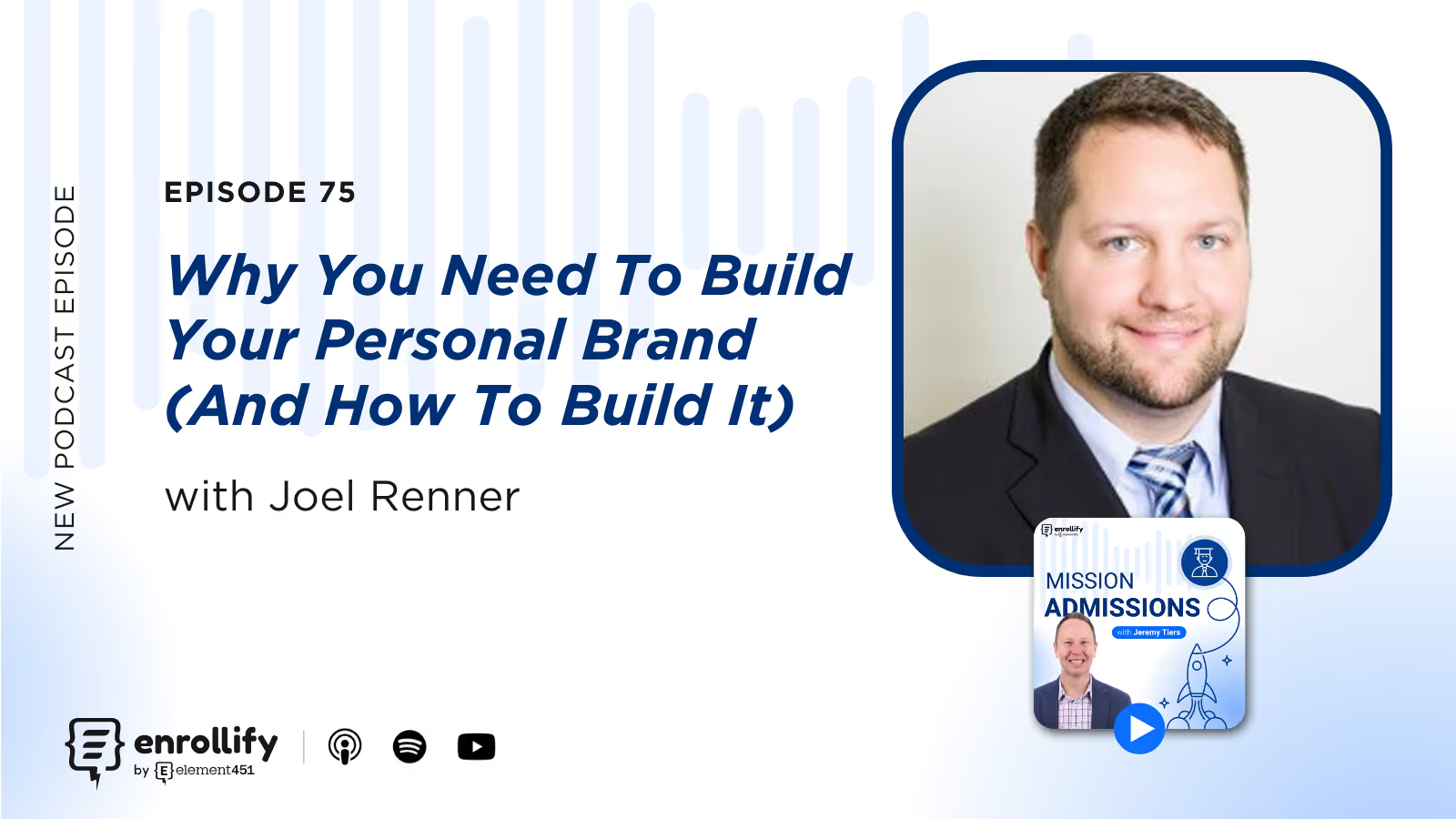
In this episode of Mission Admissions host Jeremy Tiers talks with Joel Renner about the importance of building and developing your personal brand, and how to get started.
Together, they explore why personal branding is critical for higher education professionals, how it differs from social selling, and what tactical steps anyone can take to grow their professional reputation online and offline. Whether you're a VP of Enrollment or a first-year admissions counselor, this episode offers actionable strategies you can implement today.
Key Takeaways
- Your personal brand = your professional personality. It’s not a performance — it’s how you consistently show up and engage in your industry, online and off.
- Trust and credibility are currency in higher ed. Thoughtful personal branding helps build both — leading to stronger networks, new opportunities, and increased professional impact.
- Personal branding ≠ self-promotion. It's about sharing stories, creating community, and offering value to your audience.
- Social selling happens after brand-building. It’s where your network meets opportunity — not a shortcut to leads.
- Imposter syndrome is real, but your story is still valuable. Getting feedback from peers helps validate your strengths and clarify your brand.
- AI will never replace authenticity. It can support your brand, but your voice and lived experiences are what truly resonate.
- Start with small, consistent actions. Comment on posts, share a win, write something weekly — you don’t need a podcast or newsletter to get started.
- Your community is key. Engaging meaningfully with peers builds trust, expands reach, and creates a flywheel of support and opportunity.
Episode Summary: FAQ-Style Insights from Episode 75 of Mission Admissions
What exactly is a personal brand in higher ed?
Joel Renner defines personal branding as your professional personality — not some exaggerated version of yourself, but how you show up every day in your work, your interactions, and your thought leadership. For higher ed professionals, it's a crucial tool for establishing trust and building long-term relationships. It’s not about going viral or promoting yourself endlessly — it's about showing your authentic self in a way that resonates with your peers and community.
Jeremy Tiers shares how his own brand — built through consistent LinkedIn posts, newsletters, and podcasting — reflects who he is in real life. The goal isn’t to impress but to connect. In higher education, where relationships matter deeply, a clear and trustworthy personal brand can be a game-changer.
How is personal branding different from social selling?
Joel breaks this down clearly: personal branding is who you are — your reputation at scale. Social selling, on the other hand, is how you use your brand and network to provide solutions, make connections, and create opportunities. In essence, personal branding builds the foundation; social selling is where the brand and network intersect and convert into action.
This distinction is especially important in enrollment marketing and higher ed leadership, where authenticity is key. When you show up consistently with value — not just sales pitches — you become the person others think of when a relevant opportunity arises.
Why do so many professionals struggle to build their brand?
The short answer? Fear. Joel cites imposter syndrome and the fear of “not having anything valuable to say” as the biggest roadblocks. Jeremy and Joel both agree that personal branding is not about being perfect — it’s about being consistent and honest. Even small wins or reflections are worth sharing, especially if they can help others in similar roles.
For those struggling to start, Joel recommends commenting on other people’s posts as an entry point. It’s a low-risk way to start developing your voice, test your ideas, and connect with others authentically.
What are the benefits of building a personal brand in higher ed?
Personal branding opens doors — to new roles, speaking opportunities, collaborations, and more. But Joel emphasizes that one of the biggest benefits is clarity. When you take the time to reflect on who you are, what you stand for, and what you’re learning, it creates focus and intentionality in your career.
Feedback from your network can also highlight your blind spots and superpowers. By knowing what others remember you for — your skills, your demeanor, your values — you can start to align your personal goals with how others perceive you. That’s where real momentum begins.
What’s the best way to start building a personal brand?
Step one: Audit yourself. Write down 6–7 words that describe who you are professionally. Then ask colleagues, mentors, and even family to do the same. Where do your self-perceptions align with others’ feedback? Where do they differ?
Step two: Craft your story. Use those words to reflect on key moments in your career that exemplify them. Think of this as your brand foundation — not your final product.
Step three: Pick a platform (or two) and start engaging. LinkedIn is a powerful place for many in higher ed, but community conferences, internal trainings, and association leadership roles can also serve as strong brand-building channels. The key is to start small, stay consistent, and focus on giving value.
How do you stay authentic without sounding self-promotional?
Joel offers a great rule of thumb: lead with authenticity and generosity. Celebrate your team. Share credit. Highlight others doing similar work. You don’t have to be the expert to be valuable — just be a participant in the conversation. When you position yourself as a learner and collaborator, your brand becomes a magnet for meaningful relationships and opportunity.
And Jeremy’s mantra is just as important: don’t try to copy someone else’s work-life balance or content strategy. Your cadence, your style, your voice — those should be based on your goals, not someone else’s routine.
How does AI fit into personal brand building?
AI is a powerful tool — but it’s not a shortcut to trust. Joel explains that while AI can streamline writing or idea generation, it cannot replace human stories, messy experiences, or honest mistakes. In fact, in a world full of AI-generated content, your authenticity is your competitive advantage.
Joel emphasizes that those using AI effectively are training it on their own past content. But even then, the voice has to match the values. If a post feels “off” or disconnected from the real person, it erodes trust quickly.
What’s the risk of not building a personal brand?
If you don’t invest in your personal brand, you risk stagnation. You may find it harder to move into new roles, expand your network, or even clearly communicate your value to others. Joel frames personal branding as a learning goal system. It's a structured way to keep evolving, stay visible, and remain relevant in your industry.
Jeremy echoes this — saying many in higher ed already know what they need to do (personalize more, tell better stories, take more risks), but execution is hard. Your personal brand can help bridge that gap by making it easier for others to trust you, recommend you, and invite you to contribute.
Connect With Our Host:
Jeremy Tiers
https://twitter.com/CoachTiers
Register for the AI Engage Summit — Oct 15–16, 2025
👉 Join us online from 12–4 PM ET each day for two afternoons of AI insights and training. Free to attend with on-demand access included. Register now.





.svg)
.svg)
