






About the Episode
Got a story to tell? An innovative idea to share? Fill out our guest nomination form and let's chat!
About the Episode:
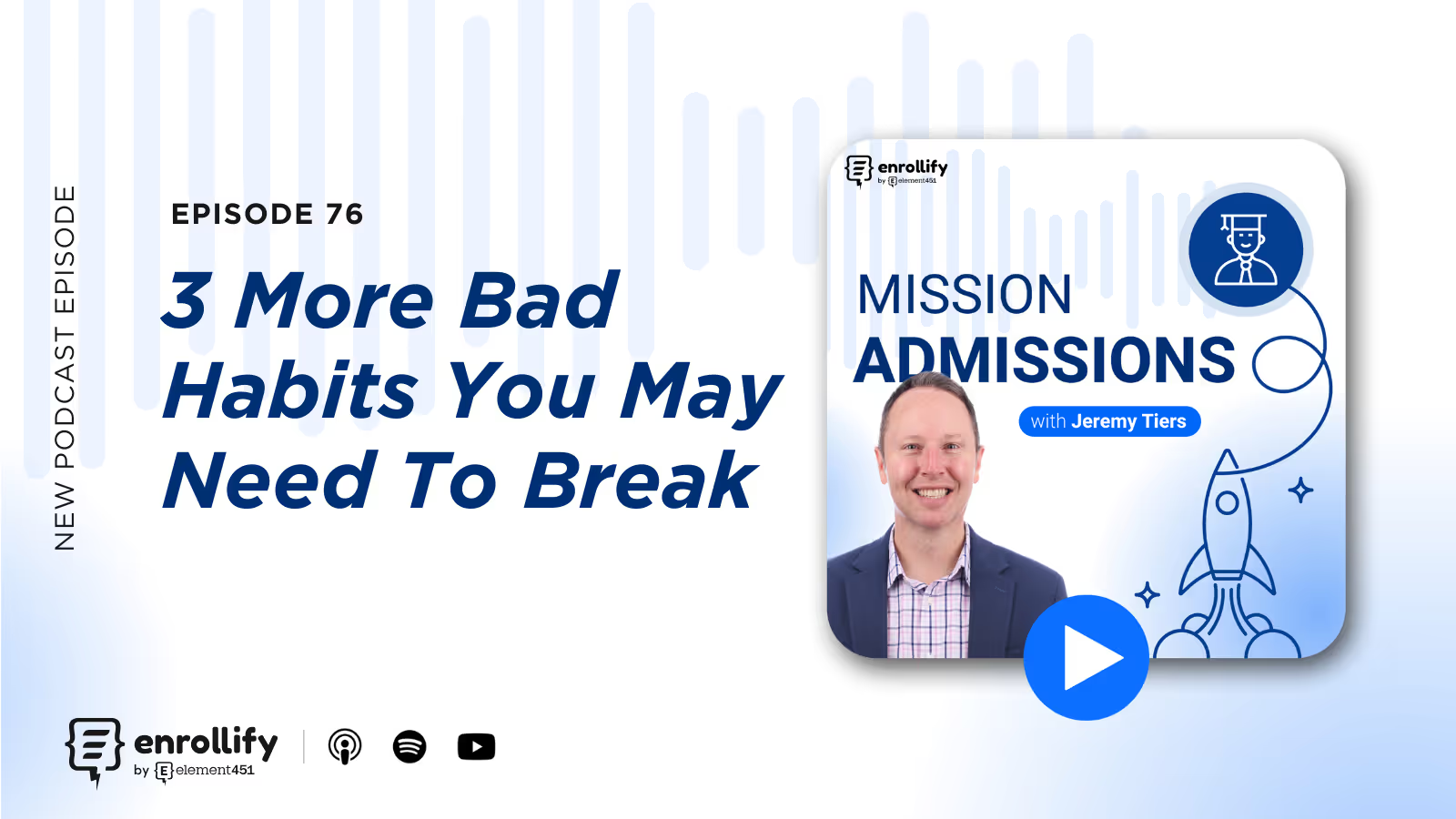
In this quick take episode, Jeremy discusses three more bad habits that he’s continuing to see a lot of admissions counselors and colleges make during the student recruitment process - and he offers practical solutions for each one.
Key Takeaways
- Avoid vague “check-in” outreach — Replace generic communication with purposeful, direct questions that invite real responses.
- Make email subject lines more personal and curiosity-driven — Students are more likely to engage when subject lines sound authentic, not promotional.
- Revamp your post-visit follow-up strategy — The days after a campus visit are a critical mindset-shift window; intentional outreach can uncover invaluable insights.
- Ask narrow, open-ended questions — Whether following up on applications or visits, this questioning style increases student response and engagement.
- Avoid overusing personalization tokens like first names — When every college uses a student's name in every subject line, it quickly loses impact.
Episode Summary: Breaking the Bad Habits in Student Recruitment
Why “Checking In” Just Doesn’t Cut It Anymore
One of the first habits Jeremy Tiers calls out is the seemingly harmless but ultimately ineffective tactic of “checking in.” When admissions counselors text, email, or call students with vague phrases like “just checking in,” it leaves students uncertain about how to respond. This kind of communication lacks intentionality and often leads to dead-end conversations.
Tiers recommends swapping “check-ins” for more specific, open-ended questions that invite thoughtful answers. Instead of emailing an inquiry to see if they’ve started their application, try asking, “How are you and your family deciding which colleges to apply to?” This reframes the conversation from transactional to relational, showing students that their thought process is valued. Not only does this strategy uncover objections and concerns, but it also builds trust and positions the counselor as a helpful guide in the college search journey.
Ultimately, purposeful communication makes the difference between being ignored and sparking a real conversation. As attention spans shrink and inboxes grow, it's crucial for enrollment marketers to become more intentional in how they reach out to students.
Subject Lines That Actually Get Opened
The second habit to break? Boring or overly promotional email subject lines. According to ongoing student survey data collected by Tudor Collegiate Strategies, 27% of students say that subject lines are the top factor in determining whether they open a college email. That’s a staggering insight into the power of a well-crafted opener.
Tiers emphasizes the importance of using subject lines that sound personal, create curiosity, or clearly offer help. Subject lines like “One question for you, Jeremy,” or “You will feel supported here,” are proven examples that outperform more generic marketing language. However, a word of caution: overusing personalization (like dropping a student’s first name into every email) can backfire. If every school does it, it becomes noise.
Enrollment marketing teams must experiment with subject line A/B testing and stay close to their audience’s inbox behavior. This is a prime example of how higher education content marketing must continuously evolve with students’ communication preferences.
The Post-Campus Visit Mindset Shift
The third habit Tiers highlights revolves around what happens immediately after a student visits your campus—a moment when their excitement (or disappointment) is at its peak. Students don’t leave a campus visit feeling “neutral.” They’re either more interested or less. So why are most schools still sending impersonal surveys as their main follow-up?
Tiers urges admissions professionals to rethink their post-visit communication strategy. Instead of defaulting to a survey, he recommends either a short phone call or a personalized email from the student’s admissions counselor within a few days of the visit. The goal? Ask targeted, open-ended questions that help you understand what stood out—and what didn’t.
Great questions include:
- What’s one thing that surprised you during your visit?
- What’s something that didn’t get talked about that you’re still wondering about?
- If you could change one thing about our campus, what would it be?
These questions not only offer insights into what your team is doing well (or missing), but they also deepen the counselor-student relationship. This is enrollment marketing that centers student voice and meets them where they are—a key student success strategy for modern recruiters.
Connect With Our Host:
Jeremy Tiers
https://twitter.com/CoachTiers
About The Enrollify Podcast Network: The Higher Ed Pulse is a part of the Enrollify Podcast Network. If you like this podcast, chances are you’ll like other Enrollify shows too!
Some of our favorites include Generation AI and Confessions of a Higher Education Social Media Manager.
Enrollify is produced by Element451 — the next-generation AI student engagement platform helping institutions create meaningful and personalized interactions with students. Learn more at element451.com.





.svg)
.svg)
