






About the Episode
The AI Engage Summit is a free, virtual experience built to help higher ed leaders actually do something with AI. Over two afternoons, you’ll hear from peers, see practical demos, and walk away with ideas you can use immediately — no travel required, no cost to attend. If you’re ready to move AI from “interesting” to “impactful,” this is the place to be. Register now, don't miss out.
About the Episode:
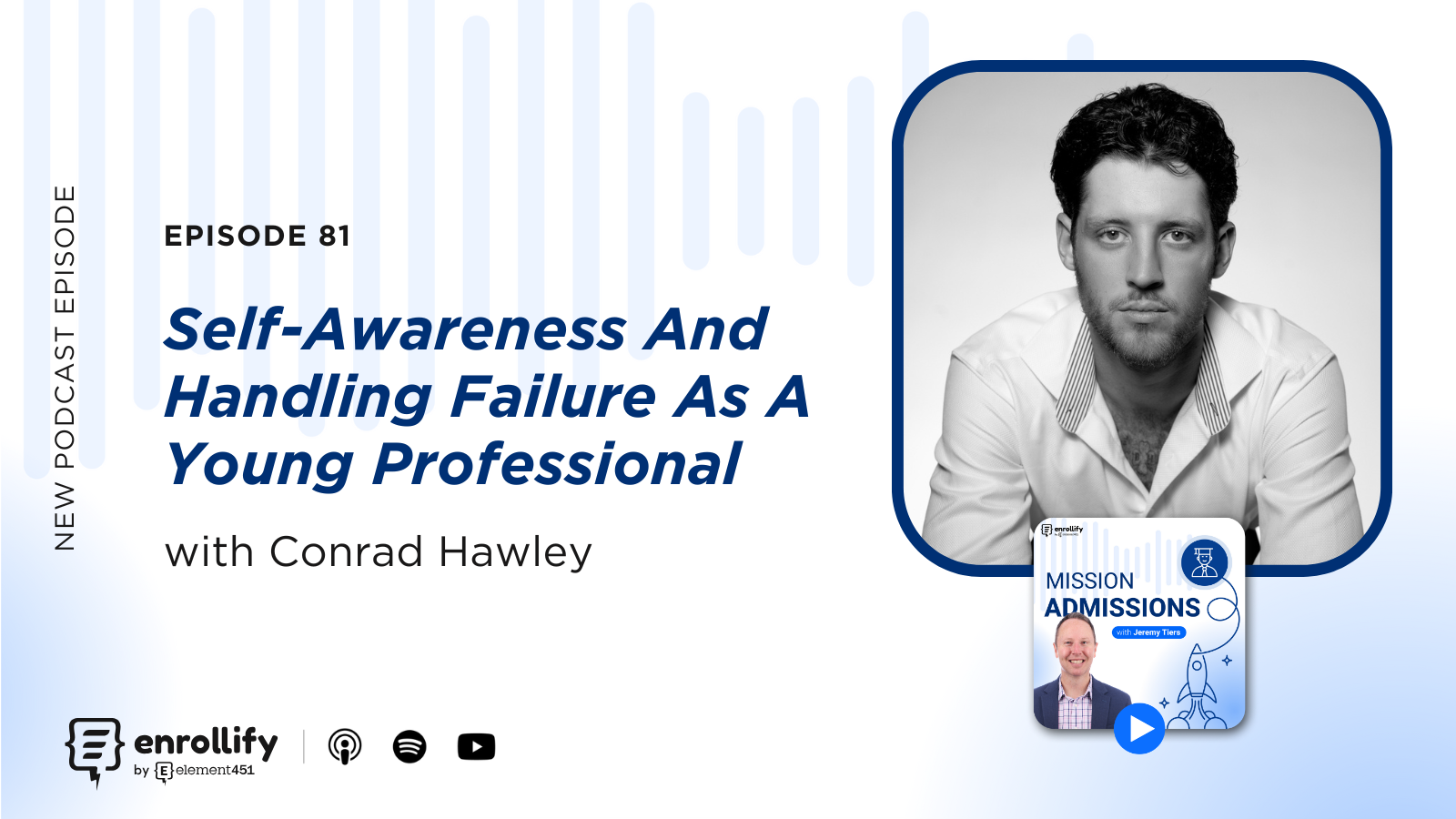
In this episode of Mission Admissions, host Jeremy Tiers chats with Conrad Hawley, a 23 year-old former dual-sport college athlete turned motivational speaker. They break down the importance of self-awareness, handling failure, and how to figure things out as a young professional.
Key Takeaways
- Self-awareness is the foundation for growth — Identify the lies you tell yourself and take action to change them.
- Daily habits drive confidence and clarity — Start with simple, repeatable routines to build momentum and identity.
- Reframe failure as a tool for progress — Mistakes aren't the end; they’re the beginning of your next level.
- Effective communication is rooted in curiosity — Seek to understand others before expecting to be understood.
- Discipline trumps motivation every time — Motivation fades; habits and consistency win.
- Support others by deeply knowing them — You can't effectively lead or help people you don’t understand.
- Instant gratification is the enemy of grit — Embrace the struggle, and lean into the hard parts—that’s where the real growth lives.
Episode Summary
What makes self-awareness such a powerful skill for young professionals?
According to Conrad, self-awareness is the starting point for both personal growth and professional excellence. It’s not just about identifying your strengths and weaknesses—it's about being honest with yourself. Early in his journey, Conrad realized he was telling himself and others lies just to protect his ego. Quitting football forced him to confront that discomfort. From there, he began actively choosing to “attack” the things he didn’t like about himself. The message? Your next breakthrough lies on the other side of the truth you’re avoiding.
Self-awareness also helps you approach challenges with logic, not emotion. Conrad explains that when you can recognize your limits or shortcomings without self-judgment, you gain control over how to improve. It's less about beating yourself up and more about being honest enough to say, “I didn’t do what I said I would do—now what?” That mindset, he says, is the gateway to lasting change.
Finally, Conrad gives listeners a practical starting point: track the small promises you make to yourself daily. Did you wake up when you said you would? Did you follow through on the things you committed to? Build that muscle through small wins, and soon enough, you’ll have the foundation for massive personal growth.
How can enrollment and higher ed professionals apply this mindset?
Many enrollment marketers and admissions counselors face the same challenge Conrad outlines: connecting with people who don’t know them, yet trying to build trust quickly. His advice? Stop focusing on being understood, and start by understanding others. When your approach is rooted in curiosity—asking about someone’s needs, problems, or story—you build credibility naturally. That’s not just sales advice. It’s relationship advice, leadership advice, and life advice.
The same applies to communication with students and parents. Instead of leading with facts or features about your school, lead with empathy. What’s their story? What are their fears or dreams? When people feel seen, they’re more likely to engage. In Conrad’s world of public speaking, the best outcomes happen not when he talks the most—but when he listens the best.
This episode challenges professionals to rethink how they build relationships and show up for others. In short: if you want to build real connections, start by showing people you care more about their growth than your pitch.
What habits help build confidence and consistency?
Conrad breaks it down into something refreshingly simple: string together small wins. He starts his day with a predictable routine—waking up, hydrating, brushing his teeth, showing up on time—because that consistency builds the identity of someone who follows through. When the day throws curveballs, he can rely on the fact that he’s already built momentum.
Why does this matter? Because confidence isn’t something you’re born with—it’s something you build. And it starts with keeping promises to yourself. The more you follow through, the more trust you build internally. That trust turns into action. That action turns into identity.
He also emphasizes the power of choosing discipline over motivation. There will always be days when you don’t feel like doing the thing. But if you’ve built a system around daily habits, you don’t have to feel ready—you just have to follow through.
How should we approach failure, fear, and emotional resilience?
Conrad doesn’t sugarcoat it: he hates failure. He admits he’s a perfectionist who gets frustrated easily. But the difference now is that he chooses logic over emotion. When he fails, he asks, “Why?” and “How can I get better?” instead of spiraling into self-pity or procrastination.
The mindset shift came from experience. Over time, Conrad realized that every major breakthrough in his life came after a major setback. With enough reps, he started to see failure as data—not drama. The more he failed, the more resilient he became. And that resilience built a kind of mental toughness you can’t fake.
For enrollment teams and higher ed leaders navigating rejection, yield rates, or shifting demographics, this lesson is huge. Mistakes are inevitable. What matters is how quickly you move from emotion to action. As Conrad puts it: “Get back on the horse. You fell off? Cool. Get back on. That’s the only way forward.”
How can we better support others—whether that’s teammates, students, or colleagues?
Support starts with knowing people deeply. You can’t lead someone you don’t understand. Conrad challenges us to move past surface-level interactions and genuinely get to know the people around us—their story, their family, what drives them. When people feel truly seen, support becomes intuitive.
He encourages us to ask, “What can I do to make you better?”—and to push through the initial awkwardness or polite answers. Keep asking. Keep listening. Keep showing up. Support isn’t transactional; it’s relational. And in higher ed, where people are often stretched thin, that kind of connection is a game-changer.
So whether you’re managing a team or mentoring a student, remember: curiosity is your superpower. Be relentless in your pursuit of understanding, and you’ll become the kind of leader people remember.
Connect With Our Host:
Jeremy Tiers
https://twitter.com/CoachTiers






.svg)
.svg)
