






About the Episode
About the Episode:
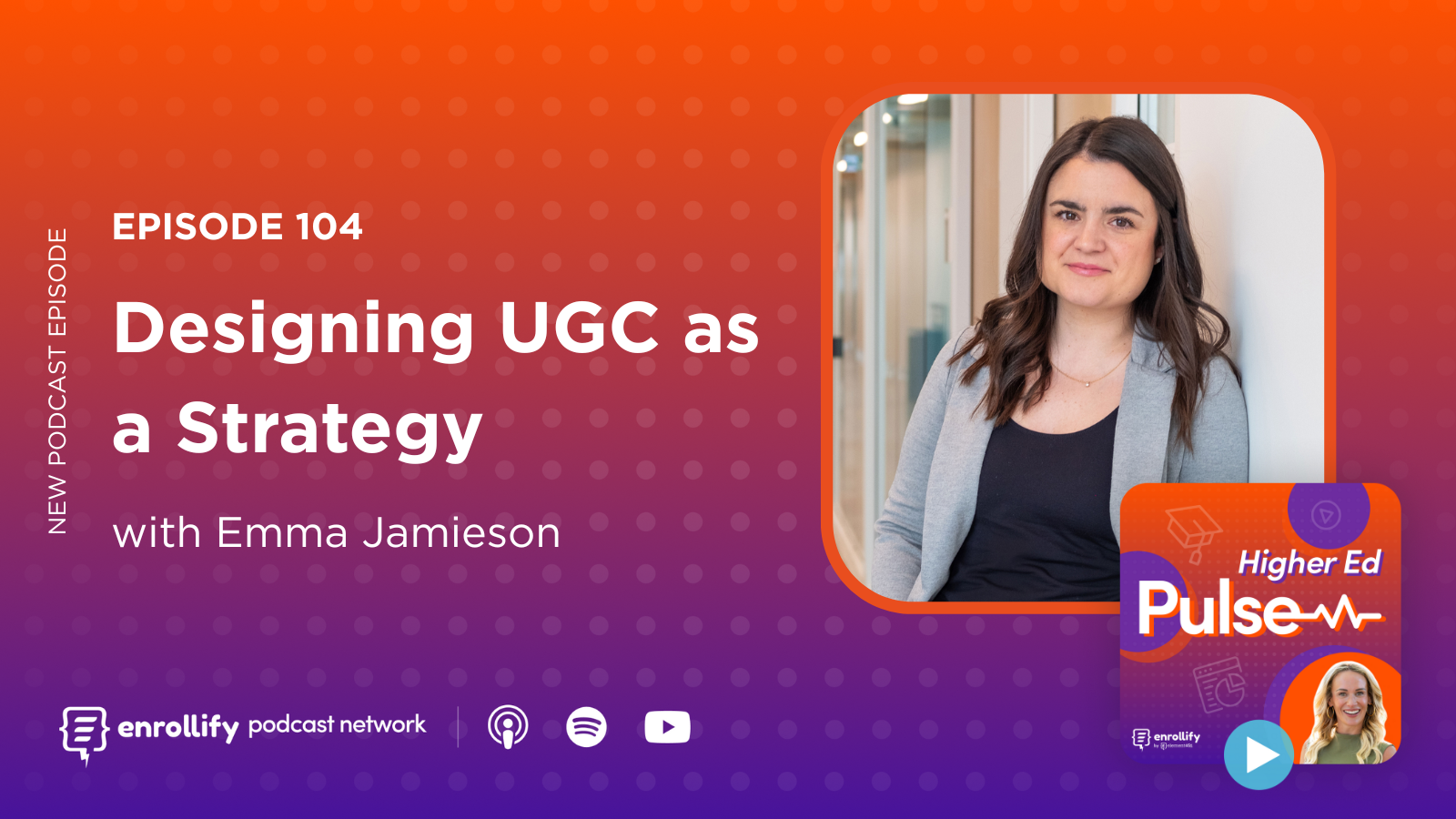
Mallory Willsea sits down with Emma Jamieson, Marketing Manager at Centennial College, to explore how her team has operationalized user-generated content (UGC) into a full-fledged strategy—not a side hustle. Emma reveals how UGC isn’t just performing well; it’s outperforming traditional branded ads in engagement, conversion, and trust. In a world flooded with AI-generated polish, this episode is a must-listen for higher ed marketers looking to prioritize credibility, human-centered storytelling, and results-driven social strategy.
Key Takeaways
- UGC is outperforming branded ads: Centennial’s UGC campaign saw a 2x increase in conversions, 261% lift in paid traffic, and 12% increase in new users to the website.
- Content credibility matters more than polish in an AI-saturated environment—people trust real, honest, human voices.
- Video is king across all demographics, and it plays a leading role in brand awareness and early engagement.
- Operationalizing UGC means aligning it to the student journey, using existing organic content, and mapping it to key campaign moments.
- Guardrails—not creative overreach—are critical to maintaining brand consistency while still enabling authenticity.
- AI tools can enhance—but not replace—authentic storytelling, especially in post-production and content planning.
- Start small by building a content library from your existing social assets before investing in new UGC efforts.
What Is UGC (User-Generated Content) in Higher Ed—and Why Does It Matter?
At Centennial College, UGC means much more than reposting student selfies or ad hoc TikToks. Emma Jamieson defines UGC as intentional, strategic repurposing of student, alumni, and staff voices that are already being captured organically by her social team. These videos feel native to the platforms they live on—TikTok, Instagram Reels, YouTube Shorts—but unlike random viral posts, they are part of a broader marketing strategy mapped to the student journey.
What makes this approach successful? Emma’s team aligns content to specific points in the enrollment funnel—from awareness to application to orientation—and selects content based on its resonance with specific audience segments. And critically, this isn’t about throwing out polished content altogether; it’s about using the right voice at the right moment to build trust and drive results.
How Is This Strategy Performing Against Traditional Ads?
Let’s talk data. Centennial College’s UGC campaigns didn’t just outperform their old brand-first creative—they obliterated it.
- 2x more conversions than traditional branded campaigns
- 261% increase in paid traffic to the college website
- 12% increase in new users, directly linked to UGC-driven campaigns
And here’s the kicker: this performance wasn’t built on a bigger budget. In fact, part of the shift to UGC was in response to financial constraints tied to shifting international student policy in Canada. Instead of pulling back, the team doubled down on smarter content use—repurposing content they’d already created organically.
“Make your content work smarter, not harder,” Emma says—and her team proves it’s possible.
What Does UGC Creative Actually Look Like?
So what’s in the content itself? Emma shares that successful UGC creative includes:
- Walkthroughs of residence halls for incoming students and parents
- Day-in-the-life style content showcasing co-op placements and student life
- Footage from events like orientation and on-campus recruitment fairs
- Interviews with current students and alumni, often led by social team members who are Centennial alumni themselves
The beauty of this approach is its genuine student perspective, even if the production is slightly guided or curated. Whether it's showcasing on-campus life or explaining the co-op experience, the content resonates because it feels real.
How Does UGC Tie Into Brand Strategy and the Student Journey?
UGC doesn’t work when it’s just a collection of posts—it works when it’s mapped to a strategy. Emma explains how her team starts with a clearly defined audience-first segmentation model. That strategy helps them choose the right platforms, target the right prospects, and select the content that’s going to resonate based on where students are in the funnel.
For example, high-intent students might see content about residence life or academic programs, while early-stage prospects get intro videos or clips featuring campus culture.
“Your strategy has to be really tight,” says Emma. Without that clarity, your UGC risks becoming noisy or irrelevant.
Connect With Our Host:
Mallory Willsea
https://www.linkedin.com/in/mallorywillsea/
https://twitter.com/mallorywillsea
Enrollify is produced by Element451 — the next-generation AI student engagement platform helping institutions create meaningful and personalized interactions with students. Learn more at element451.com.



.svg)
.svg)
