






About the Episode
The AI Engage Summit is a free, virtual experience built to help higher ed leaders actually do something with AI. Over two afternoons, you’ll hear from peers, see practical demos, and walk away with ideas you can use immediately — no travel required, no cost to attend. If you’re ready to move AI from “interesting” to “impactful,” this is the place to be. Register now, don't miss out.
About the Episode:
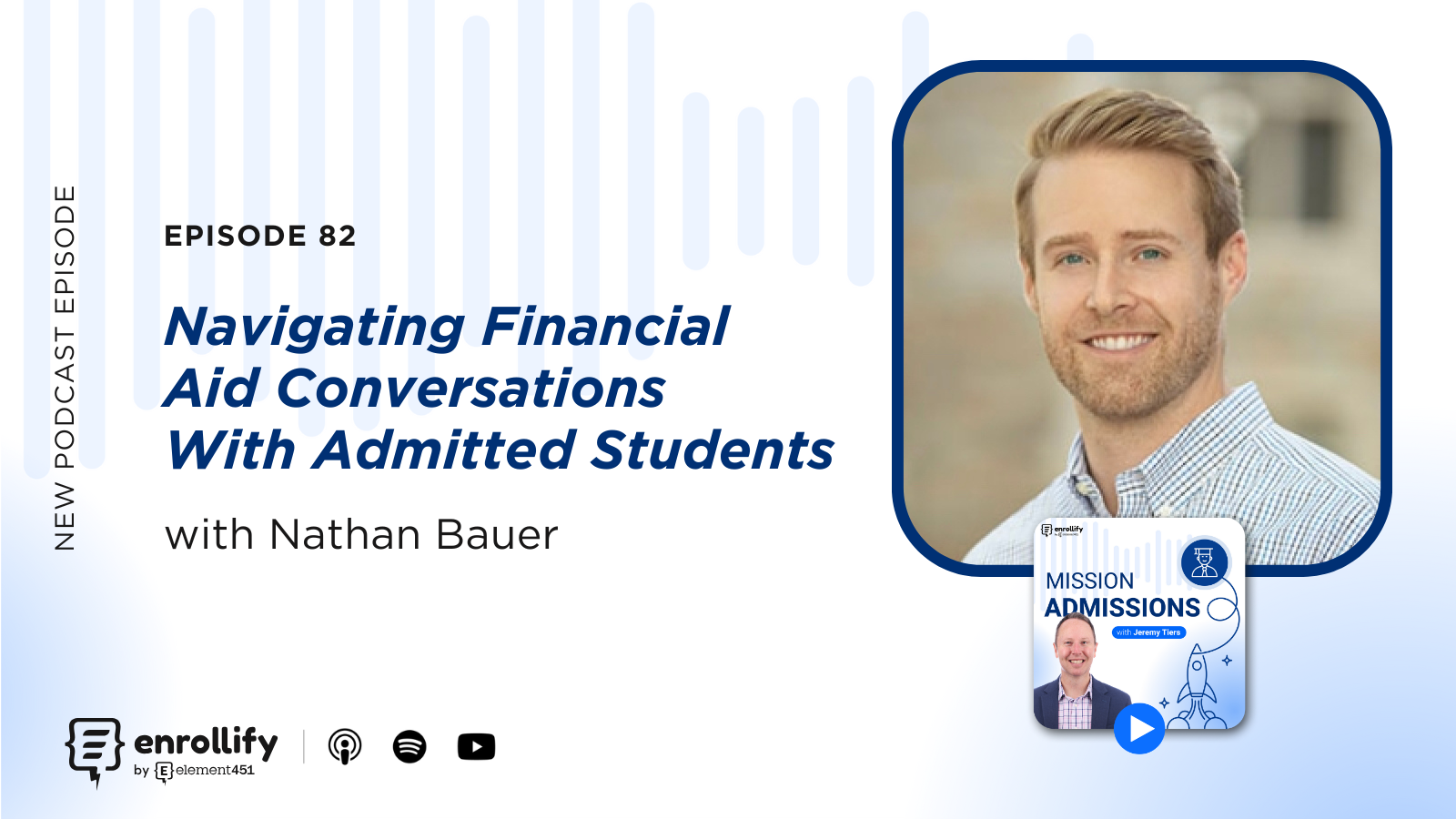
In this episode of Mission Admissions, host Jeremy Tiers chats with Nathan Bauer about navigating the all-important topic of financial aid and paying for college with admitted students and their families.
Key Takeaways
- Personalizing financial aid conversations starts with asking the right questions—not just explaining line items.
- Families want clarity, empathy, and proactive communication—not transactional, one-size-fits-all outreach.
- Understanding both student and parent perspectives is key; each values different outcomes and defines “worth” differently.
- Financial aid and admissions offices must collaborate closely—students can tell when teams are disjointed.
- One big mistake? Giving vague or generic answers that leave families with more questions than they started with.
- The most effective financial aid conversations happen over time, in small, intentional touchpoints.
- More families today are asking tough questions about the value of college—and schools need data to back up their answers.
Episode Summary
How Should We Rethink the Financial Aid Conversation with Admitted Students?
In the rush of yield season, financial aid conversations can easily become a box-checking exercise. But as Nate Bauer emphasizes, generic walkthroughs of aid packages don’t cut it. Instead, admissions and financial aid professionals should focus on humanizing the conversation by asking direct, personal questions like:
- What does value mean to you?
- What goals do you and your family have for college?
- What concerns do you have about cost—emotionally and practically?
These questions give context to financial aid figures and help students and families feel seen and supported. Instead of starting with the aid package itself, start by understanding what the student is hoping to achieve and what their family is worried about. That empathy-first approach makes room for a real conversation.
Who Should You Talk To—The Student or the Parent?
Both—and for different reasons.
Students often feel overwhelmed and unsure what questions to even ask. Parents may be more focused on ROI and affordability. Nate shares that many families—especially first-gen or low-income—may be navigating this process for the first time together, unsure of where to even start.
So the best approach? Start with foundational questions like:
- Are you familiar with the FAFSA process?
- Have you done this before with another child?
- What are your top concerns right now?
From there, admissions and financial aid professionals can tailor their explanations and focus on the issues that matter most to that specific family. As Jeremy puts it, "It’s about figuring out what they know, what they don’t know, and how they’re feeling."
What Makes a School “Worth It” to Families?
Spoiler: it’s different for everyone. That’s why Nate encourages enrollment teams to stop assuming that everyone views value the same way.
For some students, proximity to home is a top priority. For others, it's career outcomes. Some families will be comfortable taking on loans; others may draw a hard line at a certain dollar amount. That means:
- You can’t talk about affordability without understanding values.
- You need to tailor your pitch—whether it's about location, academic support, scholarships, or job placement.
And importantly, don’t shy away from conversations about cost. Be transparent, empathetic, and informative. That’s how trust is built—and decisions are made.
What Role Does Cross-Team Collaboration Play in All of This?
A huge one. Nate emphasizes that financial aid and admissions teams need to feel like one team, not two siloed departments. Students and families can tell when communication is disconnected—and it erodes trust.
Nate recommends building relationships internally through:
- Financial aid "buddy systems" where admissions counselors have a go-to person in financial aid.
- Cross-training, like Financial Aid 101 presentations, to demystify each other's roles.
- Clear, shared messaging so that handoffs between teams feel seamless and supportive.
At the end of the day, says Nate, “We represent the entire university in these conversations.” That means even a financial aid counselor should be able to articulate what makes a school special—and vice versa.
What Are the Most Common Mistakes When Talking About Financial Aid?
One of the biggest missteps? Answering too broadly or generically. Families want to feel heard and understood, not brushed off with stock phrases like “We offer need-based aid” or “We have merit scholarships.”
That kind of language raises more questions than it answers. Instead, Nate advises:
- Ask clarifying questions to dig into what the family is really asking.
- Avoid assumptions about what families understand or value.
- Be transparent about limitations, especially when it comes to appeals or scholarship flexibility.
As Jeremy notes, “The conversation might not go the way they want—but they’ll remember the tone and how they were treated.”
How Do You Handle the “I Don’t Think We Can Afford This” Moment?
This moment is inevitable—and Nate offers two core strategies:
- If it’s early in the process, focus on next steps: completing forms, exploring eligibility, and getting a full aid picture before jumping to conclusions.
- If the family has a full package and still feels it’s out of reach, meet them where they are. Ask:
- What’s your current plan for covering the gap?
- Have there been any changes in your financial situation?
- Are you open to exploring federal loans or work-study?
If your institution doesn’t offer appeal flexibility, say so directly—but empathetically. Don’t send families down a dead-end path. If you do allow appeals, set clear expectations, timelines, and next steps.
The goal isn’t to "win the argument"—it's to build trust and guide decision-making.
What’s Changed in Financial Aid Conversations Over the Last Few Years?
The rise of skepticism. Nate notes a sharp increase in families questioning the value of college itself—especially when loans are part of the picture.
Many students and parents now ask:
- Is this degree worth the cost?
- Will I get a job afterward?
- How does your school compare to others on ROI?
To answer, institutions need concrete, program-level outcomes data—not just fluffy value statements. Families are savvy. If you're not prepared with the proof, you’ll lose the argument before it begins.
Connect With Our Host:
Jeremy Tiers
https://twitter.com/CoachTiers






.svg)
.svg)
