






About the Episode
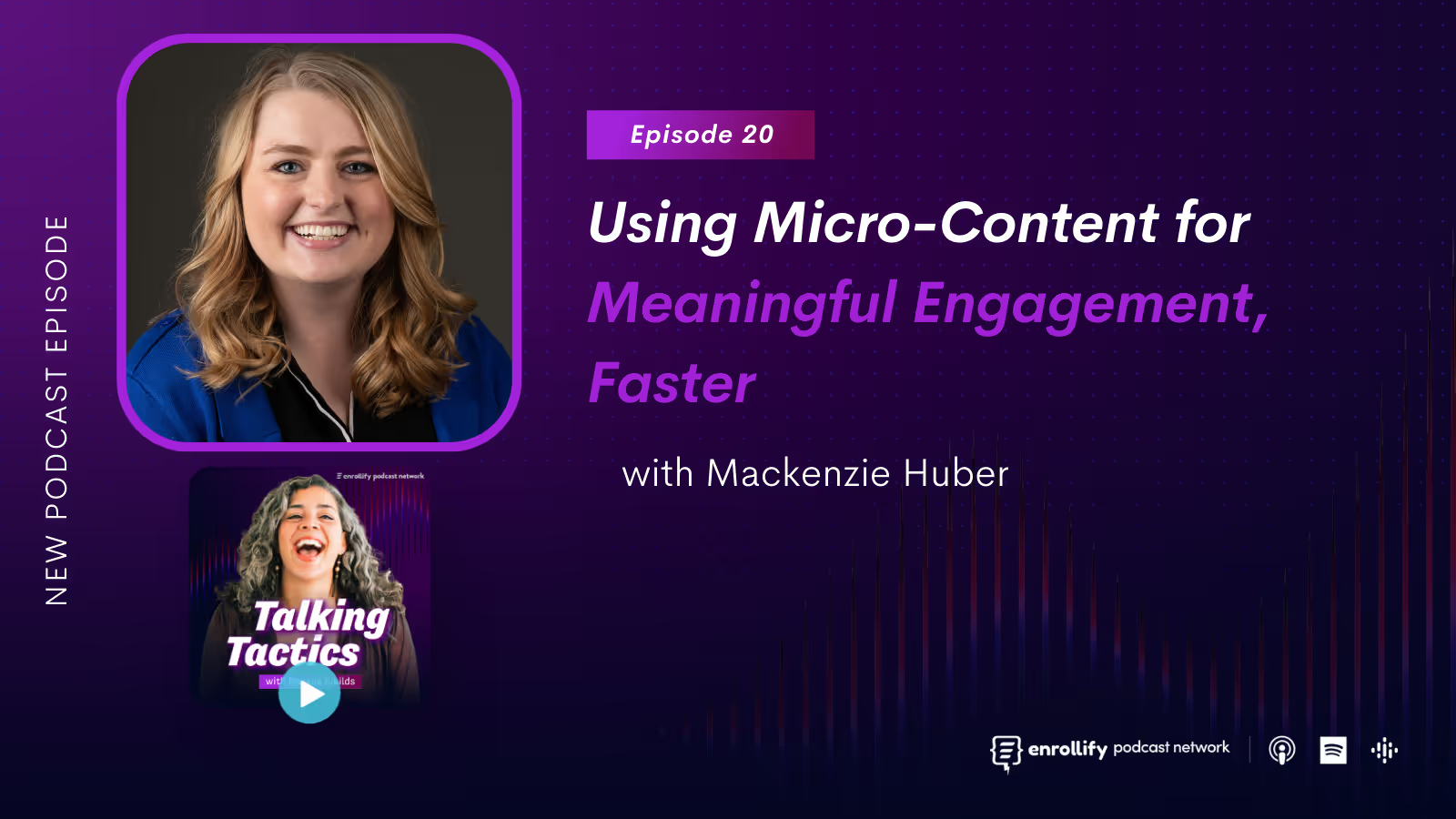
About the Episode: If the atomic unit of content is usually a story, what happens when we redefine it to be a snippet or a single quote? That’s what Mackenzie pondered, then implemented at UW-Eau Claire in preparation to launch their new website. In the process, she realized she had ready access to a treasure trove of content she could use to make quick videos, quotes, or add to emails. The results? Her team can produce meaningful content within hours instead of weeks, and the university is engaging with audiences it hadn’t quite reached before.
The Genesis of Micro Content
Mackenzie Huber’s innovative approach was born out of necessity, amidst a series of challenges including a significant website redesign, transitioning to a new content management system, and the departure of a key team member. These hurdles prompted a reevaluation of content creation methods, leading to the adoption of micro content.
This strategy focuses on producing smaller, more digestible pieces of content that can be rapidly deployed across various channels to engage with prospective students more effectively.
Implementing the Strategy
The implementation of this micro content strategy at UW-Eau Claire was a meticulously orchestrated process that began with a simple yet powerful idea: breaking down traditional, lengthy narratives into bite-sized, engaging content pieces.
This pivot required a shift in mindset from creating comprehensive stories to focusing on capturing the essence of an experience or insight in a more concise format.
Casting Call Approach
One of the most innovative steps taken by Mackenzie and her team was the adoption of a casting call approach to content collection. This method involved conducting intensive interview sessions with students over a short period, allowing the team to gather a diverse array of content.
From testimonials and quick video clips to snapshots of student life and academic opportunities, this approach enabled the creation of a rich content library with minimal time investment.
Content Creation and Deployment
With an arsenal of micro content at their disposal, the team was able to quickly assemble and deploy compelling content narratives. This not only streamlined the content creation process but also ensured that the content was highly relevant and engaging for their target audience.
The ability to swiftly respond to thematic events, such as first-generation student celebrations or international education week, showcased the flexibility and effectiveness of micro content in enhancing audience engagement.
Collaboration and Efficiency
A key factor in the successful implementation of this strategy was the collaboration across different departments. Partnerships, particularly with the foundation for student engagement and recruitment, were instrumental in both the content collection phase and in amplifying the impact of the content created.
This collaborative effort not only enriched the diversity of content but also optimized the use of resources, making the strategy both efficient and scalable.
Reimagining Content Creation
The shift to micro content at UW-Eau Claire represents a significant evolution in content strategy, emphasizing the power of concise, impactful storytelling.
By reimagining what content looks like and how it is produced, Mackenzie Huber and her team have not only addressed operational challenges but have also set a new standard for engaging digital content in higher education marketing.
Key Takeaways
- Micro content streamlines content production and enhances engagement, offering a solution to operational challenges and audience preferences.
- The casting call approach is an innovative method for rapid content collection, providing a diverse and rich library of content.
- Collaboration across departments amplifies the strategy’s impact, leveraging resources and insights for a more holistic content approach.
- Flexibility in content creation and deployment allows for timely and relevant audience engagement, making content more impactful.
About The Enrollify Podcast Network:
Talking Tactics is a part of the Enrollify Podcast Network. If you like this podcast, chances are you’ll like other Enrollify shows too!
Some of our favorites include Mission Admissions and Higher Ed Pulse.
Enrollify is made possible by Element451 — the next-generation AI student engagement platform helping institutions create meaningful and personalized interactions with students. Learn more at element451.com.
Connect with Us at the Engage Summit:
Exciting news — many of your favorite Enrollify creators will be at the 2024 Engage Summit in Raleigh, NC, on June 25 and 26, and we’d love to meet you there! Sessions will focus on cutting-edge AI applications that are reshaping student outreach, enhancing staff productivity, and offering deep insights into ROI.
Use the discount code Enrollify50 at checkout, and you can register for just $99! This early bird pricing lasts until March 31.
Learn more and register at engage.element451.com — we can’t wait to see you there!







.svg)
.svg)
