






About the Episode
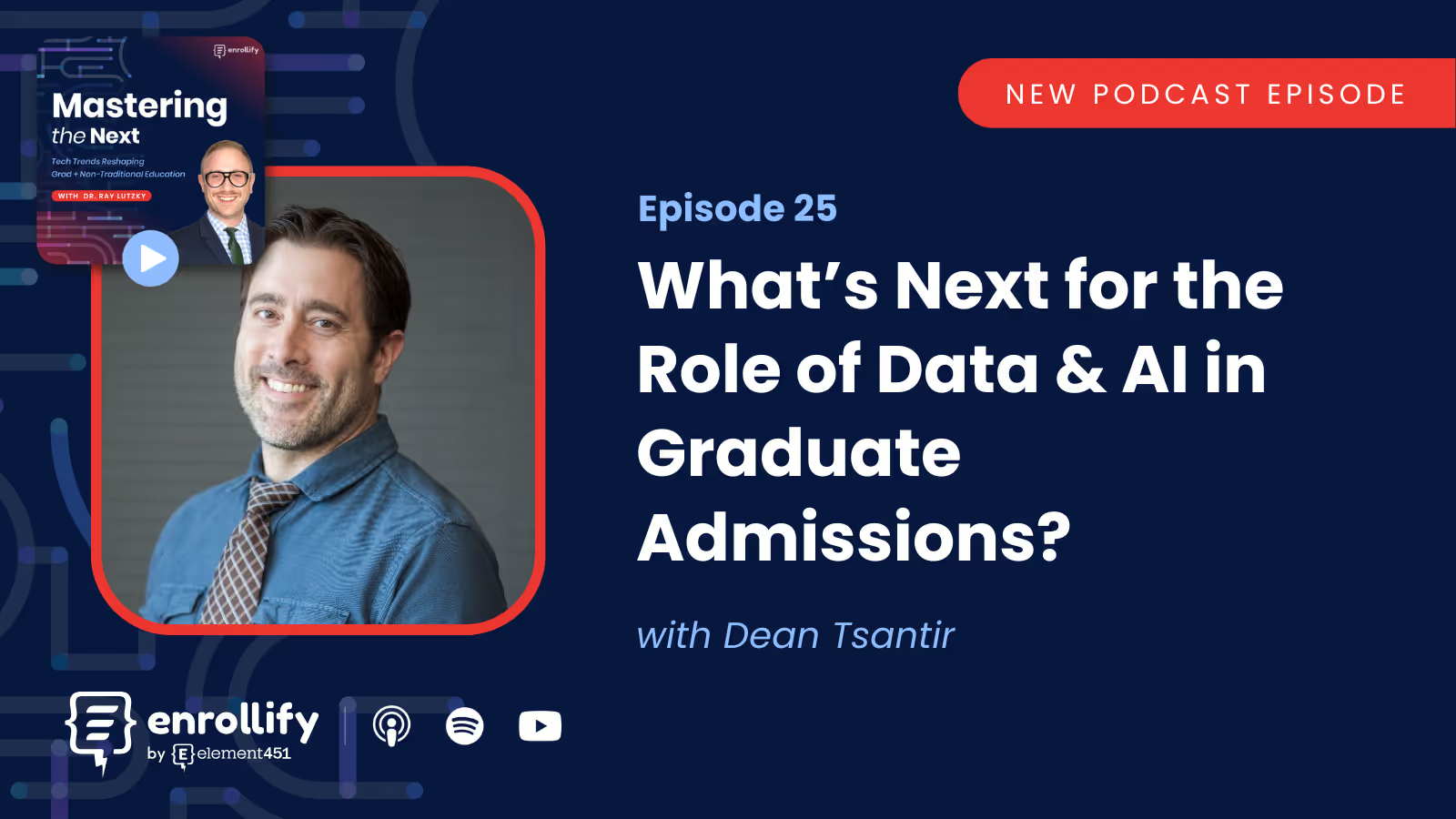
About the Episode: In this episode of “Mastering the Next” we delve into the future of graduate admissions and how data and AI are set to transform the process. I’m joined by Dean Tsantir, Executive Director of the Graduate School Admissions Office at the University of Minnesota, for his perspective on how these technologies are revolutionizing the way institutions select and support their students. Together, we explore what's next for these powerful tools in shaping the future of graduate education.
Key Takeaways
- AI as a Leveler and Potential Advantage: AI has the potential to democratize admissions by offering a level playing field for applicants, but only if its use is carefully monitored and accessible to all.
- Quantitative vs. Qualitative Application Evaluation: While AI could streamline quantitative aspects like GPA analysis, the personal voice in applications remains irreplaceable and crucial for faculty evaluation.
- Data and AI in Long-Term Institutional Success: Dean Tsantir envisions AI and data analytics enhancing fit, retention, and engagement in graduate programs if applied with a human-centered approach.
- Ethical and Security Concerns with AI Integration: Ensuring data security and preventing misuse are top priorities, especially as institutions venture into an uncharted and lightly regulated AI landscape.
How Can AI Enhance Graduate Admissions?
Dean Tsantir and Ray dive into the promise AI holds for streamlining processes in graduate admissions, particularly by standardizing and analyzing quantitative metrics. For example, the potential for AI to evaluate transcripts and calculate GPAs in a more efficient and uniform way could save time and enhance accuracy. However, Dean notes that while AI is advancing rapidly, the higher education sector hasn’t yet fully realized AI’s potential to transform these processes. Vendors are promising new AI-driven tools, but institutions are still in the exploratory phase.
Can AI Increase Accessibility and Equity in Graduate Education?
AI presents an exciting opportunity to make the admissions process more inclusive by leveling the playing field for applicants with limited resources. For instance, prospective students who can’t afford extensive coaching services or application assistance could use AI tools like ChatGPT to draft more competitive applications. Dean shares, however, that faculty have differing views on this potential. While some see AI as a beneficial equalizer, others worry that applicants with more resources may leverage it even more effectively, potentially increasing existing disparities.
How Can Higher Education Maintain the Human Element in AI-Driven Admissions?
AI and data can help identify qualified applicants, but the admissions process remains deeply human, particularly in its need for personalized assessments. Dean underscores that faculty value hearing authentic, personal stories from applicants, especially in light of recent rulings on race-conscious admissions. Maintaining a diverse and inclusive graduate cohort depends on personal elements AI can’t replicate, such as an applicant’s voice and unique aspirations. Dean also sees AI as a potential tool for making admissions materials more accessible, supporting applicants with disabilities through tools like voice recognition or interactive content.
What Are the Key Challenges for AI in Admissions?
As beneficial as AI can be, it introduces significant concerns, from data privacy to potential misuse. Security risks, particularly data breaches, loom large as institutions handle sensitive applicant information. Moreover, there is the challenge of regulation, with institutions receiving inconsistent guidance on best practices for AI. Dean notes that without standardized AI protocols, universities are left to develop their own rules and may apply AI inconsistently, creating disparities across programs. The murky regulatory environment only heightens these challenges, leaving many institutions hesitant to adopt AI tools without clearer oversight.
Where is AI in Higher Education Headed?
In the next decade, Dean envisions a more interconnected and data-informed admissions process that prioritizes transparency and accessibility. Ideally, institutions could use AI to make application processes clearer for students by sharing evaluation rubrics, showing how applications are assessed, and fostering a greater sense of inclusion. This would help prospective students understand the process more fully and see where they fit within each program’s goals. While AI has the potential to strengthen these areas, the industry must prioritize security, ethics, and human-centered practices to truly harness AI’s power.
Connect With Our Host:
About The Enrollify Podcast Network: Mastering the Next is a part of the Enrollify Podcast Network. If you like this podcast, chances are you’ll like other Enrollify shows too!
Some of our favorites include The EduData Podcast and Generation AI.
Enrollify is produced by Element451 — the next-generation AI student engagement platform helping institutions create meaningful and personalized interactions with students. Learn more at element451.com.
Attend the 2025 Engage Summit!
The Engage Summit is the premier conference for forward-thinking leaders and practitioners dedicated to exploring the transformative power of AI in education.
Explore the strategies and tools to step into the next generation of student engagement, supercharged by AI. You'll leave ready to deliver the most personalized digital engagement experience every step of the way.
👉🏻 Register now to secure your spot in Charlotte, NC, on June 24-25, 2025! Early bird registration ends February 1st.





.svg)
.svg)
