






About the Episode
Got a story to tell? An innovative idea to share? Fill out our guest nomination form and let's chat!
About the Episode:
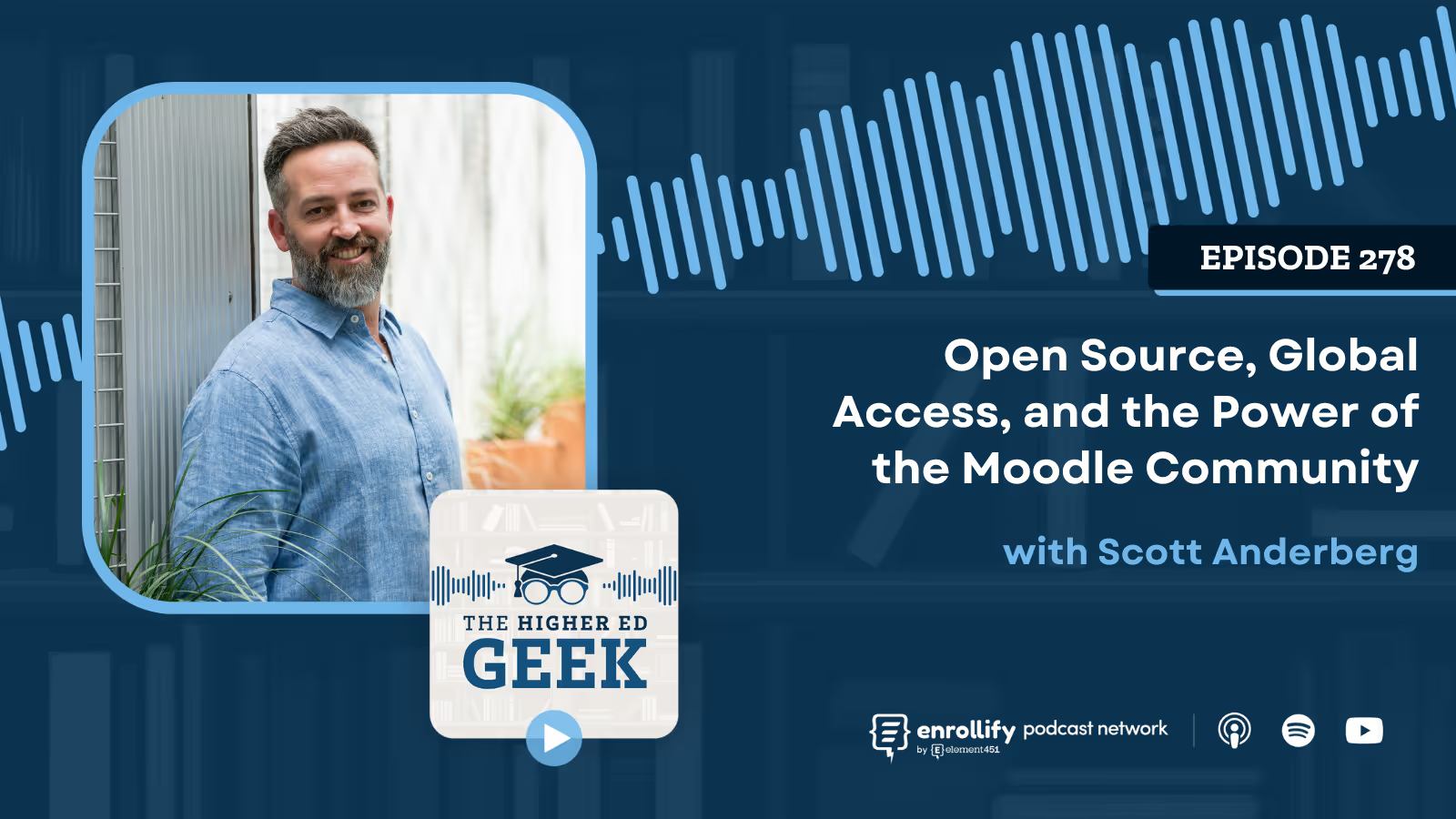
In this episode, Dustin Ramsdell sits down with Scott Anderberg, CEO at Moodle, for a deep conversation on why open source matters more than ever in higher education. Scott shares how Moodle’s global reach, customizable architecture, and vibrant community are shaping more inclusive, creative, and scalable learning experiences. Plus, the duo gets real about AI’s potential—not as a threat, but as a tool to help educators and learners thrive.
Key Takeaways
- Moodle is the most widely used LMS globally, with nearly a billion users and a 25-year history grounded in open-source innovation.
- Open source isn't just a feature—it's a philosophy, enabling inclusivity, diversity, and customization that supports unique educational approaches across the world.
- AI is already reshaping educational infrastructure, not by replacing educators but by enhancing workflows, supporting learners, and increasing teaching capacity.
- Moodle is actively researching AI’s role in edtech, focusing on human-centered applications and empowering institutions to adapt at their own pace.
- The link between education and employability is becoming more critical, and Moodle’s global ecosystem may play a vital role in bridging that gap.
- Budget constraints make open-source solutions more attractive than ever, as institutions seek flexible, scalable, and cost-effective platforms.
What Makes Moodle Stand Out in the EdTech Ecosystem?
Moodle isn’t just another LMS—it’s an open-source powerhouse that empowers institutions to fully customize their digital learning environments. As Scott Anderberg shares, Moodle was founded over two decades ago to provide an alternative to rigid, proprietary platforms. Its open-source DNA means institutions aren’t stuck trying to "force-fit" tools into their teaching models—instead, Moodle molds to their needs. With nearly a billion users and global market dominance, Moodle’s extensive reach is fueled by its flexibility, extensibility, and a passionate international community.
Why Is Open Source Crucial Now More Than Ever?
Anderberg explains that open source means more than access—it means empowerment. It fosters inclusivity by being available to anyone, anywhere, and it nurtures creativity by inviting a diverse global community to contribute code, ideas, and improvements. This decentralized development model not only supports educational equity but also drives innovation. With budget pressures mounting in higher ed, the affordability and adaptability of open-source platforms like Moodle make them increasingly compelling alternatives to costly, proprietary systems.
How Is AI Transforming Moodle—and Higher Ed More Broadly?
Artificial intelligence is the elephant in every edtech room right now, and Moodle is embracing it with intention. Rather than rushing to adopt AI in blanket ways, Moodle has built an AI subsystem into its latest release, giving institutions the ability to explore and adapt AI within their own contexts. Scott discusses how AI can serve as an administrative assistant, content curator, and student coach—not a teacher replacement, but a powerful support system. He emphasizes that AI must be part of the future if we hope to scale global education access to meet surging demand.
What Broader Trends Are Impacting the Higher Ed Landscape?
Beyond AI, Anderberg points to the increasing scrutiny on the value of higher ed degrees. Students are asking harder questions about ROI, especially in connection with employment outcomes. Moodle’s unique positioning—serving both academic and corporate sectors—may allow it to facilitate stronger connections between education and employment. Additionally, budget pressures are forcing institutions to rethink their tech stacks, making Moodle’s value proposition even more relevant.
What Advice Does Moodle Offer Higher Ed Leaders Today?
Scott leaves listeners with a threefold encouragement: 1) Don’t underestimate the enduring power of transformative education; 2) Hold tightly to the liberal arts, which are essential to student development even in career-focused environments; and 3) Remember that education is fundamentally relational. Building connections across departments, institutions, and sectors is essential for navigating higher ed’s current complexities—and opportunities.
About the Show: The Higher Ed Geek Podcast explores the impact of edtech on the student experience by speaking with diverse leaders from institutions, companies, and nonprofit organizations. Each week we aim to provide an engaging, fun, and relevant dose of professional development that honors the wide range of work happening all across the higher ed ecosystem. Come geek out with us! The Higher Ed Geek Podcast is hosted by Dustin Ramsdell and is a proud member of the Enrollify Podcast Network.
Connect With Our Host:
Dustin Ramsdell
About The Enrollify Podcast Network:
The Higher Ed Geek is a part of the Enrollify Podcast Network. If you like this podcast, chances are you’ll like other Enrollify shows too!
Some of our favorites include Generation AI.
Enrollify is produced by Element451 — the next-generation AI student engagement platform helping institutions create meaningful and personalized interactions with students. Learn more at element451.com.
Attend the 2025 Engage Summit!
The Engage Summit is the premier conference for forward-thinking leaders and practitioners dedicated to exploring the transformative power of AI in education.
Explore the strategies and tools to step into the next generation of student engagement, supercharged by AI. You'll leave ready to deliver the most personalized digital engagement experience every step of the way.
👉🏻 Register now to secure your spot in Charlotte, NC, on June 24-25, 2025!




.svg)
.svg)
